


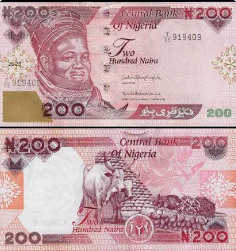
Nigeria's CBN governor links N100, N200 note scarcity to digital payments, lower purchasing power
Translated from English, summarized and contextualized by DistantNews.
At a glance
News
Official statement
Context piece
- The Governor of Nigeria's Central Bank, Olayemi Cardoso, attributed the scarcity of N100 and N200 notes to increased digital payments and reduced purchasing power.
- Cardoso assured that these notes remain legal tender and have not been withdrawn from circulation.
- He reiterated the CBN's commitment to achieving single-digit inflation despite global economic shocks.
Nigeria's Central Bank Governor, Olayemi Cardoso, has explained the perceived scarcity of N100 and N200 notes, attributing it to a shift towards digital payment channels and a decline in the purchasing power of these denominations. Speaking after a Monetary Policy Committee meeting in Abuja, Cardoso dismissed claims that the notes had been withdrawn, emphasizing they are still legal tender.
Yes, they remain legal tender. Unless the Central Bank states otherwise, Nigerians should assume that all existing denominations remain legal tender.
Cardoso stated that the Central Bank of Nigeria (CBN) has not announced any withdrawal of naira denominations and urged the public to continue accepting the lower-value notes. He clarified that the reduced circulation reflects evolving demand patterns within the financial system, driven by increased financial inclusion and the widespread use of electronic payment platforms. This evolution, he noted, has lessened the reliance on physical cash, particularly smaller denominations.
As to why there appear to be fewer of these notes in circulation, it is largely a matter of demand and supply. The financial ecosystem is evolving in the direction we want it to, with greater financial inclusion and increased digitisation.
Furthermore, the CBN governor acknowledged that the naira's depreciation has impacted the purchasing power of these smaller notes, making them less practical for everyday transactions. He highlighted that while currency devaluation plays a role, the primary drivers are the expansion of financial inclusion and the integration of digital payments into daily life. Cardoso also reaffirmed the CBN's commitment to restoring price stability and achieving single-digit inflation, despite recent global economic shocks that have hindered progress. He recalled a period of 11 consecutive months of declining inflation before external factors disrupted the trend, expressing confidence in returning to the target by early 2027.
Of course, we must also acknowledge that currency devaluation has affected the purchasing power of lower-value notes. That is a reality.
DistantNews Editorial
Originally published by Vanguard in English. Translated, summarized, and contextualized by our editorial team with added local perspective. Read our editorial standards.
More Stories


From Our Blog

How the Same Story Looks Different in Different Countries

What Gets Lost (and Found) When News Is Translated

The Critical Role of Diaspora Media in Global News

What Travellers Should Know About Countries with Restricted Press

A Digital Nomad's Guide to Following Local News
