


Nigeria's finance minister defends government borrowing
Translated from English, summarized and contextualized by DistantNews.
At a glance
News
Named sources
New plan
- Nigeria's Finance Minister Taiwo Oyedele defends government borrowing, urging focus on purpose and returns over absolute debt figures.
- He argues that borrowing to finance productive assets that yield returns above capital cost is rational, not reckless.
- Oyedele criticizes the negative perception of debt in Nigeria, calling it a cultural barrier to economic growth and a missed opportunity.
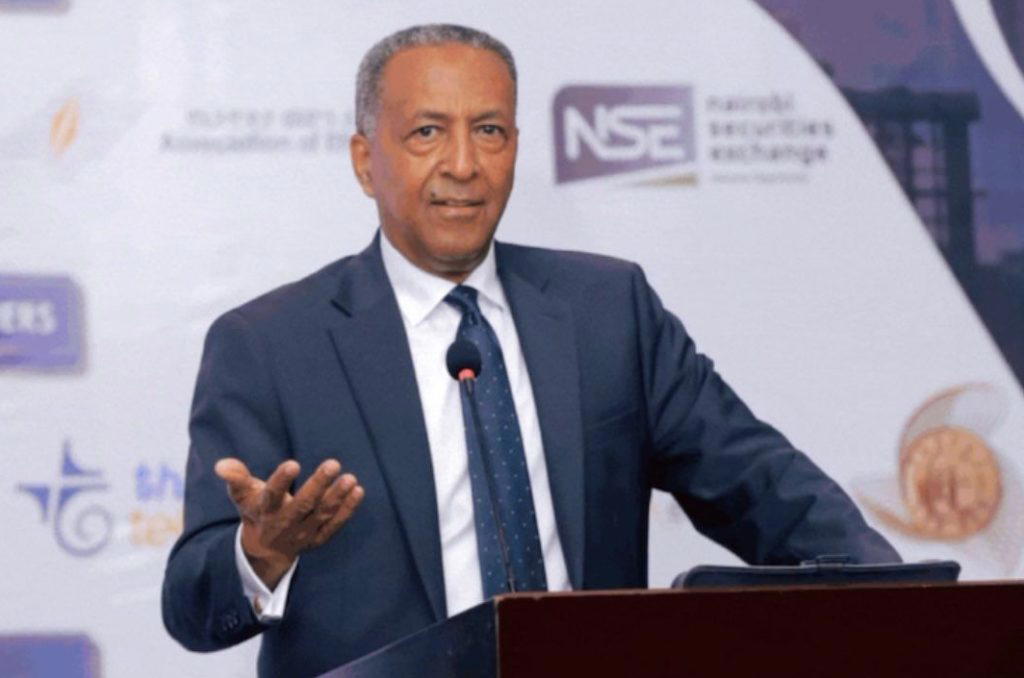
Nigeria's Minister of Finance and Coordinating Minister of the Economy, Taiwo Oyedele, has strongly criticized what he terms the populist view that condemns government borrowing without a nuanced understanding of its purpose, cost, and potential returns. Speaking at a conference in Abuja, Oyedele asserted that the critical question is not merely the amount of debt, but rather 'debt for what and what cost, against what return, and repaid on what terms?'
When analysts go on TV and join the populist view to accuse the government of borrowing, you are doing a disservice. The relevant question is never simply how much debt. It is always debt for what and what cost, against what return, and repaid on what terms?
Oyedele explained that borrowing to fund a productive asset that generates returns exceeding the cost of capital is a rational financial strategy, not an act of recklessness. He believes Nigeria's widespread negative perception of debt has become a significant cultural barrier hindering economic growth. This sentiment, he noted, often treats debt as a moral failing rather than a financial instrument.
A nation, a state, or a business that borrows to finance a productive asset generating returns above the cost of that capital is not behaving recklessly; it is behaving rationally.
Data from the Debt Management Office indicates Nigeria's total public debt reached N159.28 trillion by the end of December 2025. However, Oyedele argued that this figure alone is misleading. He pointed out that historical trauma related to past debt crises influences current public discourse, leading to attitudes that equate borrowing with mortgaging the future. He suggested that refusing to borrow under appropriate conditions represents a missed opportunity and an overly conservative approach that stifles growth.
In most of our public discourse, debt is spoken of as a moral failing rather than a financial instrument. People go to churches and mosques to pray that they may never be in debt. A government that borrows is accused of mortgaging the future.
The minister also addressed entrepreneurial attitudes, criticizing the preference for sole ownership of small businesses over shared ownership models that facilitate scaling. He views equity not as a loss of control but as a multiplication of capacity, and debt, when properly priced, as a tool for acceleration. Oyedele stressed the need for Nigeria to cultivate a stronger financial culture through education.
An instinct formed by historical trauma is not the same as a sound principle of modern finance. Indeed, refusing to borrow under such conditions is itself a missed opportunity, a form of economic conservatism that quietly forfeits growth.
DistantNews Editorial
Originally published by The Punch in English. Translated, summarized, and contextualized by our editorial team with added local perspective. Read our editorial standards.
More Stories


From Our Blog

How the Same Story Looks Different in Different Countries

What Gets Lost (and Found) When News Is Translated

The Critical Role of Diaspora Media in Global News

What Travellers Should Know About Countries with Restricted Press

A Digital Nomad's Guide to Following Local News
