


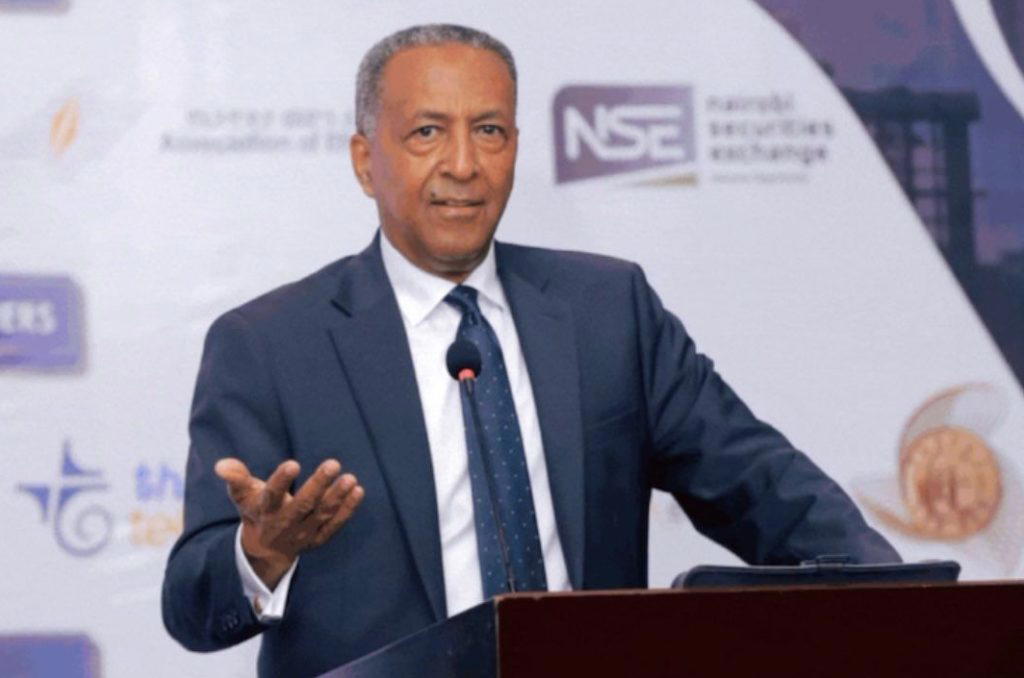
Nigeria’s airline model holding back aviation growth - Negatu
Summarized and contextualized by DistantNews.
At a glance
News
Named sources
Context piece
- Global Chairman of Fairfax Africa Fund, Zemedeneh Negatu, criticized Nigeria's airline ownership model, citing dependence on sole proprietorship.
- Negatu argued that subsidies won't fix the industry's issues and proposed adopting models from successful airlines like Emirates and Ethiopian Airlines, which are government-owned.
- He stressed the need for a well-capitalized national airline to compete globally and serve Nigeria's large population, noting that current carriers are financially vulnerable and charge high fares.
Nigeria's airline industry is hampered by a flawed business model heavily reliant on sole proprietorship, according to Zemedeneh Negatu, Global Chairman of the United States-based Fairfax Africa Fund. Negatu stated that this structure makes Nigerian airlines financially vulnerable and ill-equipped for the capital-intensive aviation sector.
As I had warned publicly and repeatedly over the last four years, Nigeria’s airlines will not survive (except, maybe one) because of their structurally flawed business model: They are all thinly capitalised, heavily leveraged (resulting in perennial losses) and each owned by a single wealthy man as sole proprietor (except the regional state owned airlines and those taken over by Asset Management Corporation of Nigeria, AMCON). No major economy in the world has such an odd business model for its airline industry.
Negatu argued that Federal Government subsidies are not a sustainable solution for the challenges facing domestic carriers. Instead, he advocated for Nigeria to adopt a model similar to successful international airlines such as Emirates, Ethiopian Airlines, Singapore Airlines, Turkish Airlines, and Qatar Airways, which are either fully or partly government-owned. He noted that most major successful national airlines globally, with the exception of those in the United States, have historically benefited from state ownership.
It’s important to note that all major successful national airlines around the world, today or in their past history, were either fully or partly government-owned (except in the United States). Here are just a few examples of successful airlines currently partly or fully government owned: Emirates, Ethiopian Airlines, Singapore Airlines, Turkish Airlines, Qatar Airways, Etihad, Air France. Past government ownership: Lufthansa, British Airways, Qantas.
"As I had warned publicly and repeatedly over the last four years, Nigeria’s airlines will not survive (except, maybe one) because of their structurally flawed business model," Negatu stated on X, formerly Twitter. He highlighted that these airlines are thinly capitalized, heavily leveraged, and owned by single wealthy individuals, leading to perennial losses.
Nigeria, Africa’s 2nd largest economy and most populous country, needs (deserves) a new national airline, fully or partly state-owned, that’s large, well capitalised and sustainably profitable so that it can compete globally and make 240 million Nigerians proud. Virtually none of the airlines in Nigeria today can compete efficiently and profitably even within Africa (despite charging Nigerians some of highest airfares in the world), let alone compete globally. Their cash burn is unsustainably high even when oil prices are low. None of them are sustainably profitable and they have a very small fleet considering the market size. Nigeria has more private jets than commercial aircraft.
Negatu emphasized that Nigeria, as Africa's second-largest economy and most populous country, needs a new national airline that is fully or partly state-owned. Such an airline, he argued, should be large, well-capitalized, and sustainably profitable to compete globally and make Nigerians proud. He pointed out that current Nigerian airlines struggle to compete even within Africa, despite charging some of the highest airfares globally, and have small fleets relative to the market size.
Federal government subsidies will not save these airlines (it’s been tried before) and converting any of them to a national airline won’t work either. Running an airline is a capex heavy, ultra thin margin, heavily regulated, extremely competitive, serious business. Waving the national pride emotion is not a viable business model.
DistantNews Editorial
Originally published by Vanguard. Summarized and contextualized by our editorial team with added local perspective. Read our editorial standards.
More Stories



From Our Blog

How the Same Story Looks Different in Different Countries

What Gets Lost (and Found) When News Is Translated

The Critical Role of Diaspora Media in Global News

What Travellers Should Know About Countries with Restricted Press

A Digital Nomad's Guide to Following Local News
