


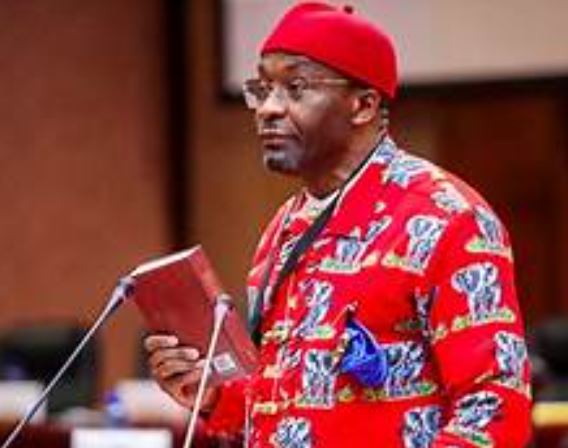
Nigeria Seeks Continued UK Support for Democracy and Electoral Reforms
Translated from English, summarized and contextualized by DistantNews.
At a glance
News
Named sources
Context piece
- Nigeria's Deputy Speaker of the House of Representatives, Benjamin Kalu, urged the UK to continue supporting Nigeria's democracy.
- Kalu requested sustained technical support for democratic governance, electoral integrity, and institutional reforms.
- He highlighted the UK's contributions to legislative capacity building and electoral reforms, including the BVAS and electronic transmission of results.
Deputy Speaker of Nigeria's House of Representatives, Benjamin Kalu, has appealed to the United Kingdom to maintain its technical support for the nation's democratic processes. Kalu specifically requested continued assistance from the UK's Foreign, Commonwealth and Development Office (FCDO) for democratic governance, electoral integrity, and institutional reforms.
On behalf of the House of Representatives and the leadership of the National Assembly, I convey our sincere gratitude to the UK Government and the FCDO for their continued partnership.
During a meeting with senior FCDO officials in London, Kalu acknowledged the strong historical ties and shared commitment to constitutional democracy between Nigeria and the UK. He expressed gratitude for the UK's ongoing partnership in strengthening Nigeria's democratic institutions, citing support for legislative capacity building, evidence-based policymaking, transparency, electoral reform, and citizen participation.
Kalu, who also chairs the House Committee on Constitution Review, emphasized the critical need for sustained technical assistance, comparative learning, and inclusive public consultations. These efforts are vital for ongoing constitutional reforms aimed at addressing issues of inclusion, federalism, devolution of powers, local governance, security architecture, and enhancing representation for women, youth, and persons with disabilities.
Our partnership has contributed meaningfully to strengthening the legislative environment for democratic governance in Nigeria.
The Deputy Speaker also highlighted progress in Nigeria's electoral reforms, drawing lessons from the 2023 general elections. He noted improvements under the 2026 Electoral Act, which has strengthened the legal framework by statutorily recognizing the Bimodal Voter Accreditation System (BVAS) and the electronic transmission of election results, while clarifying legal jurisdictions and timelines for pre-election litigation.
The constitutional review process remains central to addressing questions of inclusion, federalism, devolution, electoral integrity, local governance, security architecture and the representation of women, young people and persons with disabilities.
DistantNews Editorial
Originally published by Vanguard in English. Translated, summarized, and contextualized by our editorial team with added local perspective. Read our editorial standards.
More Stories


From Our Blog

How the Same Story Looks Different in Different Countries

What Gets Lost (and Found) When News Is Translated

The Critical Role of Diaspora Media in Global News

What Travellers Should Know About Countries with Restricted Press

A Digital Nomad's Guide to Following Local News
