


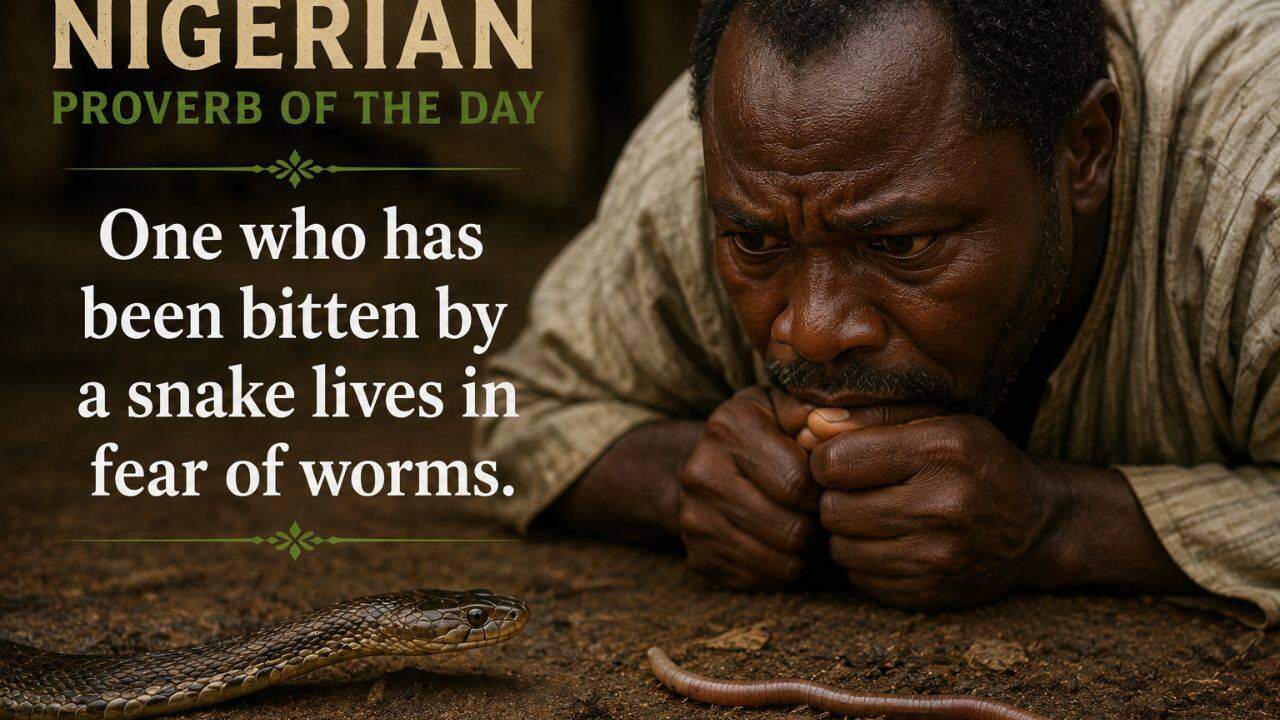
Nigerian proverb: "One who has been bitten by a snake lives in fear of worms"
Translated from English, summarized and contextualized by DistantNews.
At a glance
In-depth
Sources not specified
Context piece
- A Nigerian proverb,
A Nigerian proverb, "One who has been bitten by a snake lives in fear of worms," captures the universal human experience of being overly cautious after a painful event.
One who has been bitten by a snake lives in fear of worms.
This saying, well-known among the Igbo people of southeastern Nigeria, illustrates how a past trauma can cause individuals to fear even harmless things that resemble the source of their pain. Just as a person bitten by a snake might flinch at a simple worm, someone betrayed by a friend may struggle to trust again, or an investor who lost money might become wary of all future opportunities.
After a real and painful bite, even a harmless little worm wriggling in the soil can send a shiver down the spine.
The proverb highlights that while pain teaches caution, this caution can sometimes extend beyond the original danger. The snake may be gone, but the fear it instilled can attach itself to innocuous elements, shaping perception long after the event.
The snake did the damage, but the fear spreads to anything that even faintly resembles it.
Nigeria, a country rich in languages and proverbs, uses such sayings as more than mere decoration. They are woven into daily conversation to impart wisdom, settle disputes, and educate. This particular proverb, rooted in a region where snakes are a tangible threat, uses a vivid rural image to convey a profound lesson about the human psyche and its lasting responses to hurt.
A painful experience leaves a mark, and that mark shapes how we see the world long after the event is over.
DistantNews Editorial
Originally published by Times of India in English. Translated, summarized, and contextualized by our editorial team with added local perspective. Read our editorial standards.
More Stories



From Our Blog

What Press Freedom Means for the News You Read

What Gets Lost (and Found) When News Is Translated

The Critical Role of Diaspora Media in Global News

What Travellers Should Know About Countries with Restricted Press

A Digital Nomad's Guide to Following Local News
