


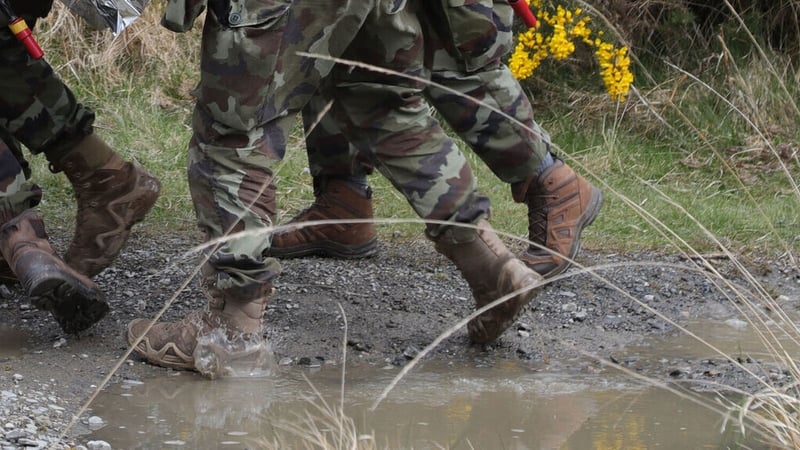
'No ambiguity' on Triple Lock in Programme for Government
Summarized and contextualized by DistantNews.
At a glance
News
Sources not specified
New plan
- Ireland's Minister for Foreign Affairs Helen McEntee affirmed there is no ambiguity regarding the reform of the Triple Lock policy in the Programme for Government.
- The Triple Lock requires UN approval before Ireland can send more than 12 troops abroad.
- McEntee dismissed concerns that changing the policy would compromise Ireland's neutrality, stating the country would remain neutral.
Ireland's Minister for Foreign Affairs Helen McEntee has firmly stated that the government's commitment to reforming the Triple Lock policy is unambiguous. This policy dictates that Ireland requires UN approval before deploying more than 12 troops on overseas missions.
This is absolutely essential, it's in our program for government, so there's absolutely no ambiguity as to what was agreed when all three parties, both Fine Gael, Fianna Fáil and our Independents came together to form this Government.
McEntee's comments come amid pressure from within the Fianna Fáil party, where some members are seeking a discussion on the policy change at an upcoming parliamentary party meeting. She acknowledged the importance of discussing changes to long-standing government policy but emphasized that the agreement is already enshrined in the Programme for Government, forged by Fine Gael, Fianna Fáil, and the Independent Alliance.
Addressing concerns that altering the Triple Lock could dilute Ireland's neutrality, McEntee asserted that the country's neutral status predates the policy and will persist after its reform. She argued that allowing Ireland to direct its own troops is a matter of sovereignty, especially given the tradition of Irish troops serving in peacekeeping missions abroad, particularly in Lebanon.
We were a neutral country before we introduced the triple lock via legislation. When this has changed, we will continue to be neutral, and we will continue to make sure that our troops are on the ground providing peace, as they have done for the last number of decades.
Furthermore, McEntee recommitted the government to enacting new legislation before July 1st, granting the naval service powers to board Russian "shadow fleet" vessels in Irish waters. She highlighted these tankers as both an environmental hazard and a source of funding for the war in Ukraine, stressing the Navy's need to address such emerging threats.
These are large illegal tankers from Russia that are quite literally traversing our waters. Not only are they selling oil that is funding and feeding the war in Ukraine, but they are also an environmental hazard.
DistantNews Editorial
Originally published by RTÉ News. Summarized and contextualized by our editorial team with added local perspective. Read our editorial standards.
More Stories


From Our Blog

What Gets Lost (and Found) When News Is Translated

The Critical Role of Diaspora Media in Global News

What Travellers Should Know About Countries with Restricted Press

A Digital Nomad's Guide to Following Local News

How the Same Story Looks Different in Different Countries
