


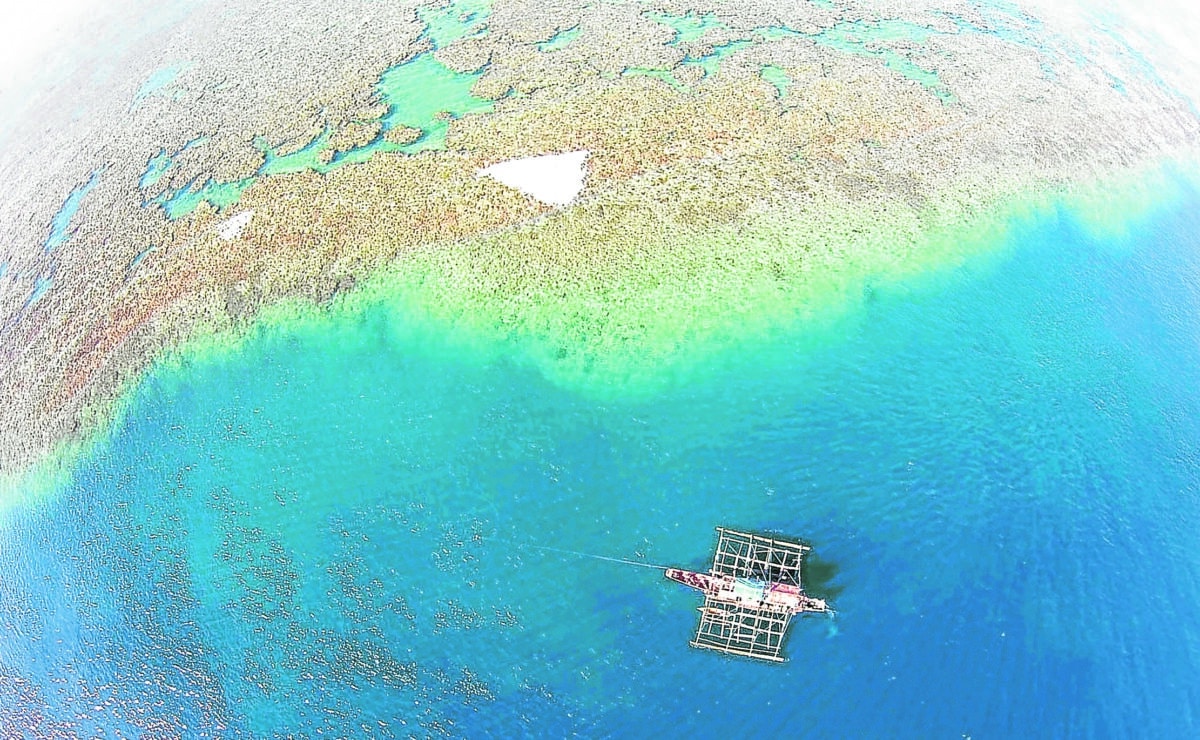
No China warships monitored in West Philippine Sea from Aug. 18-24
Summarized and contextualized by DistantNews.
At a glance
News
Named sources
Context piece
- The Philippine military reported no Chinese navy warships in four key West Philippine Sea areas between August 18-24, marking a notable absence.
- During the same period, 16 Chinese Coast Guard vessels were observed in these areas, with the majority at Ayungin Shoal.
- Military officials cautioned against drawing immediate conclusions, emphasizing the need for longer-term monitoring to determine if this absence indicates a broader shift in Chinese naval presence.
The Armed Forces of the Philippines (AFP) reported a significant observation: no Chinese navy warships were detected in four key areas of the West Philippine Sea from August 18 to 24. This marks a departure from previous monitoring periods, though the AFP spotted 16 Chinese Coast Guard (CCG) vessels within the same timeframe.
Of the 16 CCG ships, 11 were monitored near Ayungin (Second Thomas) Shoal, four at Panatag (Scarborough) Shoal, and one at Pag-asa (Thitu) Island. Notably, no Chinese vessels were observed at Escoda (Sabina) Shoal during this specific week. The absence of People’s Liberation Army Navy (PLAN) warships is a point of interest for the AFP.
Rear Adm. Roy Vincent Trinidad, spokesperson for the West Philippine Sea, urged caution against premature conclusions. He stressed that the AFP requires a more extended period of monitoring, typically one to six months, to assess whether the lack of PLAN warships signifies a lasting change in China's naval deployment patterns. "We need a longer time frame to be able to assess," Trinidad stated.
Trinidad also noted that various factors, including weather conditions like the southwest monsoon, could influence vessel movements. However, he cautioned that weather affects all types of maritime traffic, making it difficult to isolate its specific impact on the absence of PLAN warships based on just one week's data. The AFP remains focused on monitoring all maritime military forces in the West Philippine Sea, regardless of these weekly fluctuations.
We need a longer time frame to be able to assess.
DistantNews Editorial
Originally published by Philippine Daily Inquirer. Summarized and contextualized by our editorial team with added local perspective. Read our editorial standards.
More Stories


From Our Blog

What Gets Lost (and Found) When News Is Translated

The Critical Role of Diaspora Media in Global News

What Travellers Should Know About Countries with Restricted Press

A Digital Nomad's Guide to Following Local News

How the Same Story Looks Different in Different Countries
