

"No plans to negotiate with US": Iran dismisses Trump's claims
Summarized and contextualized by DistantNews.
At a glance
News
Sources not specified
Context piece
- Iran has no plans to negotiate with the United States, stating Washington cannot dictate terms of engagement.
- Iran's deputy foreign minister warned that any European naval vessel approaching the Strait of Hormuz would be a legitimate target.
- Tehran asserted its control over the Strait of Hormuz, citing new defensive capabilities and refusing to return it to its pre-war state.
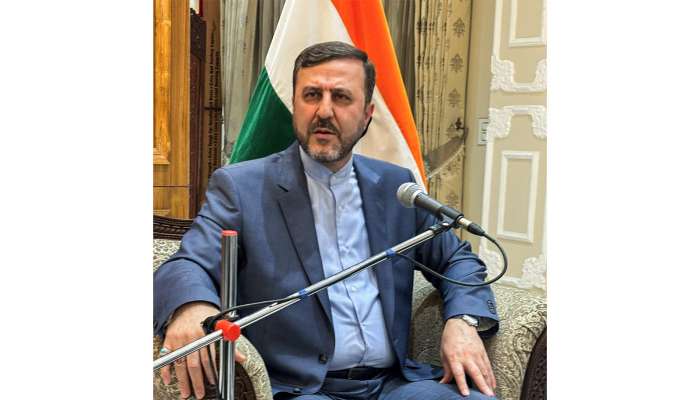
Iran's Deputy Foreign Minister Kazem Gharibabadi declared that Tehran has "no plans to negotiate with the US," asserting that while discussions proceed "step by step," the Islamic Republic will not allow Washington to dictate the terms of engagement. Gharibabadi emphasized that the U.S. cannot unilaterally decide when to engage in conflict or diplomacy, stating, "We should not get America used to fighting whenever it wants and sitting at the negotiating table whenever it wants." He claimed Washington had previously sent messages pleading for an end to the conflict.
These remarks came in response to U.S. President Donald Trump's assertion that the U.S. paused recent military strikes on Iran after Tehran "asked us very nicely, 'Please stop, let's meet.'" Trump also warned that attacks could resume if a new ceasefire agreement was not reached.
We should not get America used to fighting whenever it wants and sitting at the negotiating table whenever it wants.
Gharibabadi further reiterated Iran's refusal to recognize alternative southern shipping routes through the Strait of Hormuz, insisting that all mine removal operations must be exclusively handled by Tehran. He adopted an aggressive posture toward outside naval forces, warning that any foreign intervention in the vital waterway would face direct military retaliation. "Any European naval vessel that approaches the Strait of Hormuz would be a legitimate target for us," Gharibabadi stated in an interview with state TV.
Any European naval vessel that approaches the Strait of Hormuz would be a legitimate target for us.
The senior diplomat's comments were made amid reports that some European countries might join the U.S. in efforts to reopen Hormuz. Gharibabadi stressed that Iran's policy is firm: the Strait of Hormuz will never revert to its pre-war status. He noted that Tehran has "discovered a new defensive capability" by securing control over the key transit corridor. "If the Strait of Hormuz returns to its pre-war status, our success in the war will not be complete," he said, defending earlier actions to block ships. Iran, he added, is "not concerned about any (adversarial) action, not even the resumption of war, as it seeks to consolidate its sovereignty over the Strait... Let the world know that the Islamic Republic of Iran has upgraded its defensive tools."
Gharibabadi concluded by stressing that the corridor is an essential component of national defense and that the international community must understand Iran "cannot, under any circumstances, abandon these capacities." Meanwhile, the U.S. Central Command (CENTCOM) highlighted the scale of its ongoing military operations to secure maritime trade routes, reporting over 20 U.S. Navy vessels in the region.
If the Strait of Hormuz returns to its pre-war status, our success in the war will not be complete.
DistantNews Editorial
Originally published by Times of Oman. Summarized and contextualized by our editorial team with added local perspective. Read our editorial standards.
More Stories
From Our Blog

What Gets Lost (and Found) When News Is Translated

The Critical Role of Diaspora Media in Global News

What Travellers Should Know About Countries with Restricted Press

A Digital Nomad's Guide to Following Local News

How the Same Story Looks Different in Different Countries
