

“Nobody censors anything”: Clash between Ojeda and Cosse over playing an audio of Lacalle Pou in Senate session
Translated from Spanish, summarized and contextualized by DistantNews.
At a glance
News
Named sources
Context piece
- A tense exchange occurred in Uruguay's Senate between Senator Andrés Ojeda and Senate President Carolina Cosse over playing an audio clip of former President Luis Lacalle Pou.
- Ojeda attempted to play the audio to respond to a senator's comments on Batlle y Ordóñez's ideals, but Cosse cut off his microphone, citing procedural rules.
- Ojeda argued against the need for permission, stating it was not a violation of regulations, while Cosse asserted no censorship was occurring and defended the Senate as a house of democracy.
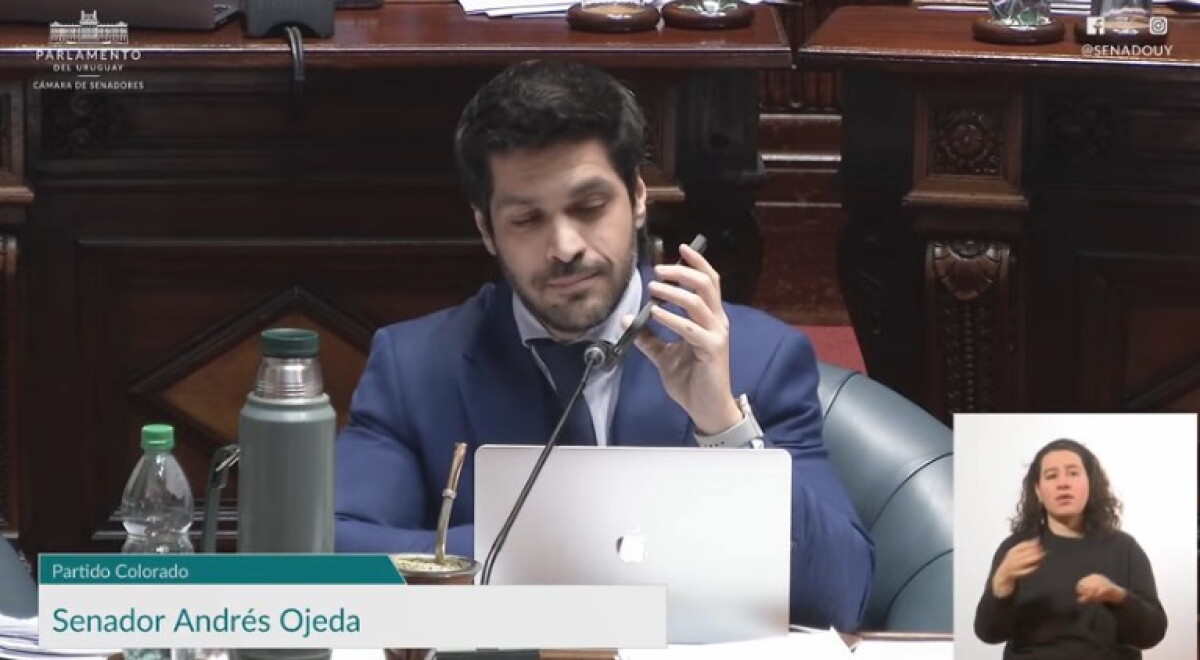
A heated exchange erupted in the Uruguayan Senate between Senator Andrés Ojeda and the chamber's president, Carolina Cosse, over Ojeda's attempt to play an audio recording of former President Luis Lacalle Pou during a session. The incident occurred as senators debated authorizing the minting of a coin to commemorate the 170th anniversary of José Batlle y Ordóñez's birth.
Following comments by Senator Sebastián da Silva expressing disagreement with certain Batllista ideals, including the notion that equality should precede prosperity, Senator Ojeda sought to respond. Ojeda stated that modern Batllismo aligned with Da Silva's view and that former President Lacalle Pou would offer a better response. He then moved his phone towards the microphone to play an audio clip.
As the former president's voice began to be heard, Cosse intervened, cutting off Ojeda's microphone. She explained that Ojeda could not allow another person to speak and that he needed to request permission from the presiding table first. Cosse emphasized that this was not an act of censorship and that the Senate was a space for democratic expression.
Ojeda countered Cosse's decision, asserting that there was no procedural impediment and that he had previously faced similar discussions without needing to request permission. He maintained that he did not require authorization or prior censorship to play the audio. Despite the disagreement, Ojeda concluded his remarks without further attempting to play the recording.
After the session, Ojeda spoke to reporters, reiterating his stance that Cosse, as Senate president, was merely applying the rules. He described her action as an arbitrary and discretionary imposition, deeming it unacceptable. He also commented on the lack of political support for Minister Negro and suggested that a different approach might be needed if the situation involved Orsi.
DistantNews Editorial
Originally published by El País in Spanish. Translated, summarized, and contextualized by our editorial team with added local perspective. Read our editorial standards.
More Stories


From Our Blog

What Gets Lost (and Found) When News Is Translated

The Critical Role of Diaspora Media in Global News

What Travellers Should Know About Countries with Restricted Press

A Digital Nomad's Guide to Following Local News

How the Same Story Looks Different in Different Countries
