

Norman Bethune’s story still holds lessons for China-Canada relations
Summarized and contextualized by DistantNews.
At a glance
In-depth
Sources not specified
Context piece
- Norman Bethune, a Canadian doctor revered in China, is being re-examined beyond his propaganda symbol status.
- A memorial in Shijiazhuang reveals Bethune's life as a thoracic surgeon, artist, and advocate for socialized medicine.
- His complex legacy offers lessons for contemporary Canada-China relations, which are strained by trade disputes and rivalry.
Norman Bethune, the Canadian doctor memorialized in China as a selfless revolutionary hero, is undergoing a re-evaluation that looks beyond the propaganda narrative. Growing up in China, his name was invoked with reverence, famously captured in Chairman Mao's essay "In Memory of Norman Bethune." For years, the author kept a poster of Mao meeting Bethune as a tribute, but a recent visit to the Norman Bethune memorial in Shijiazhuang challenged this perception.
Like every schoolchild in China, I could recite from memory Chairman Mao’s 1939 essay “In Memory of Norman Bethune”, which characterised Bethune as a man who had come from afar, who gave his life to the Chinese revolution, who embodied selflessness and internationalism.
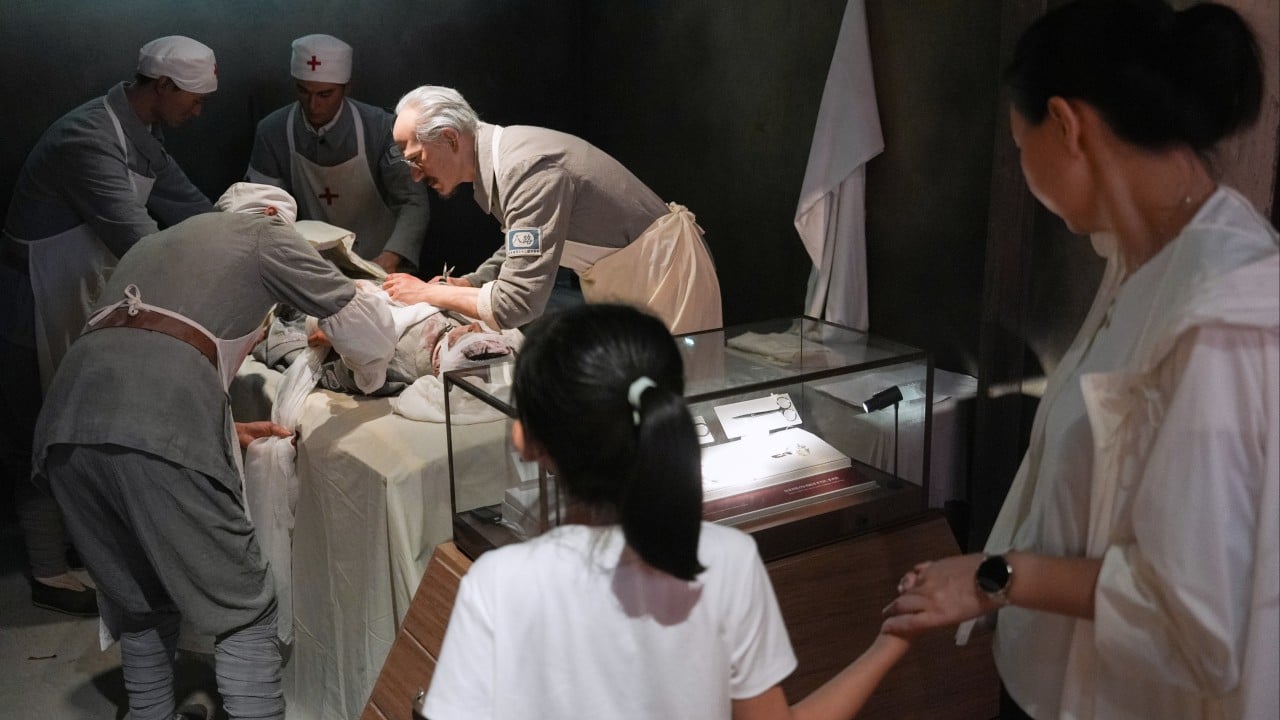
The memorial in Hebei province presents a more complex portrait of Bethune. It showcases artifacts tracing his journey from Detroit to Montreal, highlighting his work as a thoracic surgeon and artist. The exhibition also details his passionate advocacy for socialized medicine and his volunteer service in the Spanish Civil War before arriving on the battlefields of northern China.
As the years passed and Canada-China relations cooled, mention of Bethune began to feel like a cliché, a relic of propaganda.
Visitors can see Bethune's sketches, medical instruments, and letters, revealing a man who was not only a healer but also a creator. The exhibition emphasizes his belief that medicine and art were acts of solidarity. This realization struck the author with force: Bethune, reduced to a symbol of Sino-Canadian friendship, was in fact a multifaceted individual driven by a moral imperative to address inequality, not merely a diplomatic gesture.
The memorial does not merely rehearse the familiar narrative of the Canadian doctor who served in the war against Japanese aggression. It gathers artefacts that trace Bethune’s journey from Detroit to Montreal, as a thoracic surgeon and an artist, from a passionate advocate for socialised medicine to a volunteer in the Spanish Civil War, and finally to the dusty battlefields of northern China.
This deeper understanding of Bethune's life comes at a time when official relations between Canada and China are marked by trade disputes, strategic rivalry, and mutual suspicion. While political developments like Mark Carney's visit to China and Foreign Minister Wang Yi's trip to Ottawa are significant, the author suggests that Bethune's lived experience and unwavering convictions offer a different, perhaps more profound, perspective on the enduring, albeit complicated, connection between the two nations.
One sees his sketches, his medical instruments, letters written in a hand that betrays both urgency and tenderness.
DistantNews Editorial
Originally published by South China Morning Post. Summarized and contextualized by our editorial team with added local perspective. Read our editorial standards.
More Stories
From Our Blog

Countries Without a Free Press: What You Need to Know

What Press Freedom Means for the News You Read

What Gets Lost (and Found) When News Is Translated

The Critical Role of Diaspora Media in Global News

What Travellers Should Know About Countries with Restricted Press
