

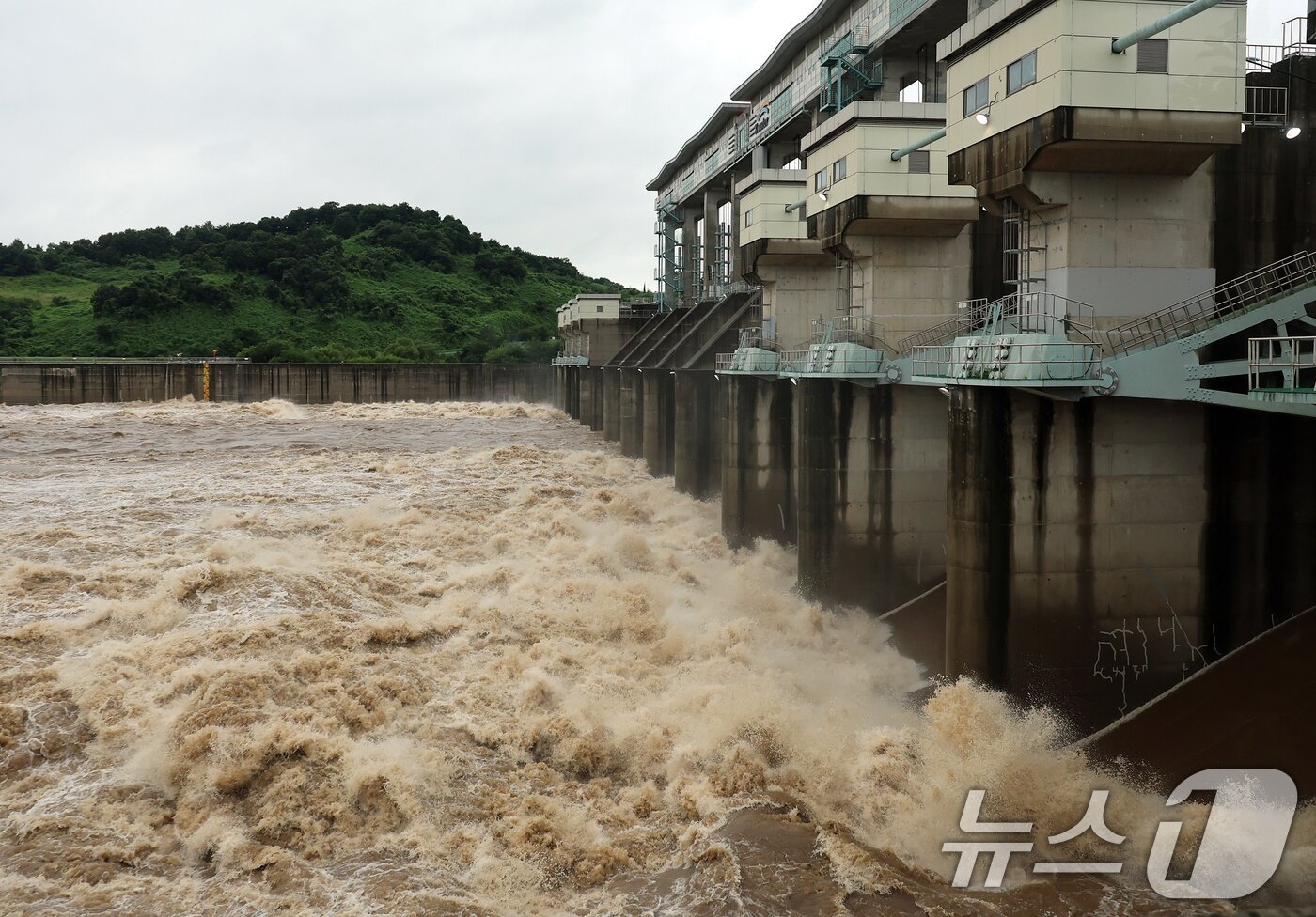

North Korea likely released water from Hwanggang Dam, raising Imjin River levels past 4 meters
Translated from Korean, summarized and contextualized by DistantNews.
At a glance
News
Named sources
Context piece
- North Korea is suspected of releasing water from its Hwanggang Dam, causing the Pilseung Bridge water level on the Imjin River in Yeoncheon, South Korea, to rise significantly.
- The water level surpassed 4 meters overnight, exceeding the evacuation threshold for river visitors.
- South Korea's Ministry of Environment determined the release based on satellite imagery, noting North Korea did not provide prior notification as agreed.
South Korea suspects North Korea released water from the Hwanggang Dam on the upper Imjin River, causing the water level at the Pilseung Bridge in Yeoncheon, Gyeonggi Province, to surge overnight. The water level rose by 3.7 meters in 12 hours, reaching 4.47 meters by 9 a.m. Tuesday, according to the Han River Flood Control Office.
This level significantly exceeds the 1-meter threshold for evacuating river visitors and the 2-meter management level for preventing casualties during non-flood seasons. While still below the 7.5-meter "interest" stage for crisis response in border areas, the rapid rise prompted concern.
The Ministry of Environment concluded that North Korea had partially released water from the Hwanggang Dam after analyzing satellite imagery from the previous evening. Crucially, North Korea did not notify South Korean authorities beforehand. The two Koreas had agreed in 2009 to provide prior notification of dam releases following a deadly incident caused by an unannounced release from the Hwanggang Dam that resulted in casualties downstream on the Imjin River. However, North Korea has not adhered to this agreement since 2013.
Approximately 60% of the Imjin River basin lies within North Korea. Both rainfall in the North Korean section of the river and the dam release are believed to have directly contributed to the rising water levels. Meanwhile, the Gunnam Flood Control Dam downstream in South Korea maintained a water level below its planned flood level, receiving 1,532 tons per second and releasing 955 tons per second as of Tuesday morning.
With more rain forecast for northern Gyeonggi Province, authorities are monitoring the water levels of the Gunnam Dam and the Imjin River. Heavy rainfall, with hourly rates of 30-50 millimeters, is expected in the northern part of the province. Despite the rising water levels, no significant casualties have been reported overnight. The Gyeonggi Northern Provincial Fire and Disaster Headquarters reported managing three road obstructions, including flooding and fallen trees, in Goyang, Ilsan, and Yangju.
DistantNews Editorial
Originally published by Hankyoreh in Korean. Translated, summarized, and contextualized by our editorial team with added local perspective. Read our editorial standards.
More Stories



From Our Blog

What Gets Lost (and Found) When News Is Translated

The Critical Role of Diaspora Media in Global News

What Travellers Should Know About Countries with Restricted Press

A Digital Nomad's Guide to Following Local News

How the Same Story Looks Different in Different Countries
