

Norway Fire, Largest in a Century, Destroys Over 100 Homes; Climate Change Cited
Translated from Finnish, summarized and contextualized by DistantNews.
At a glance
News
Sources not specified
Ongoing story
- A massive fire in Drammen, Norway, described as the country's largest in a century, has destroyed over 100 terraced houses on a mountainside.
- The fire's rapid spread was attributed to unfavorable winds, prolonged hot and dry weather, and the steep terrain, with experts warning of increased risks due to climate change.
- The incident is prompting a review of Norway's fire safety regulations, particularly in wildland-urban interface areas, with Finland also considering its own safety measures.
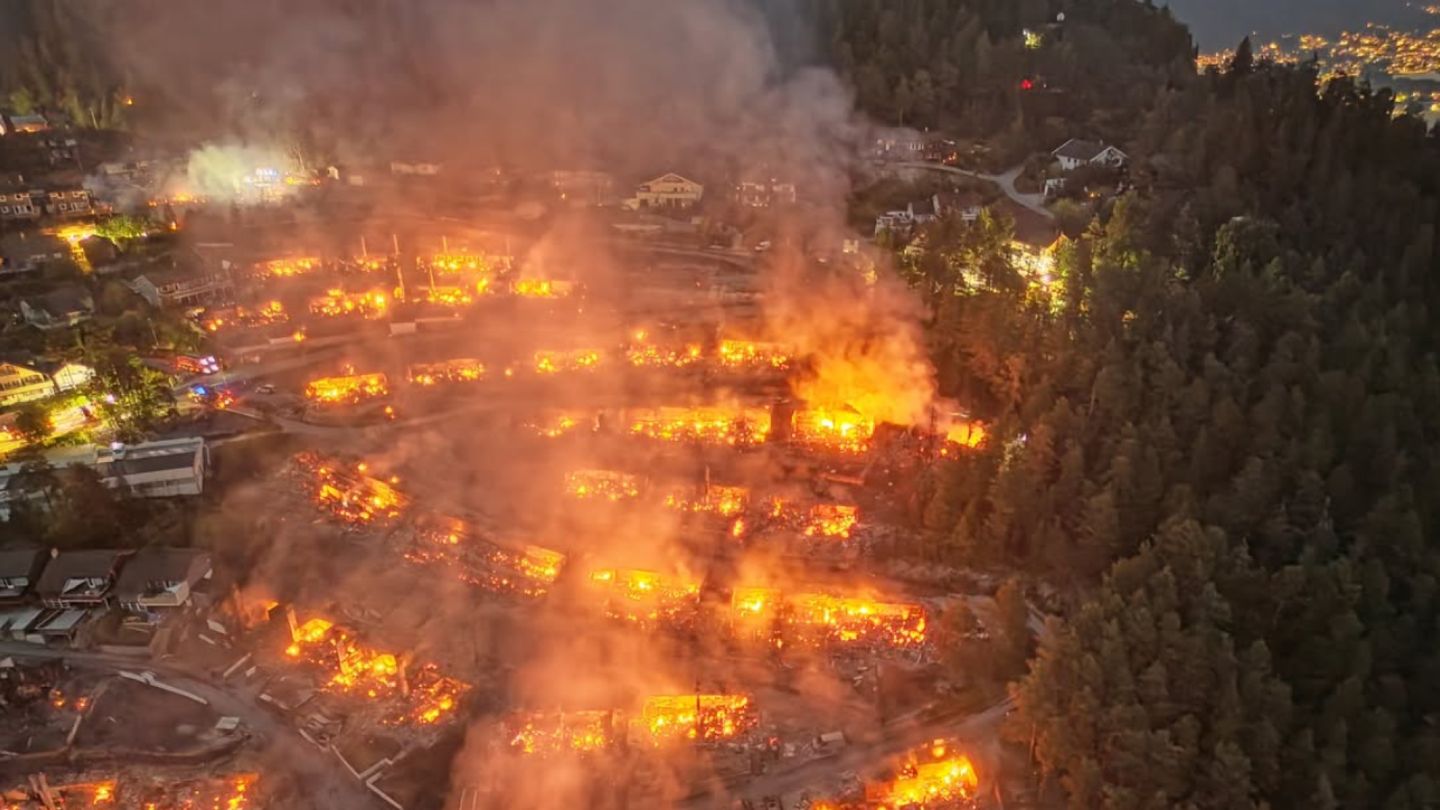
A devastating fire in Drammen, Norway, has consumed over 100 terraced houses built on a mountainside, in what is being called the country's largest blaze in a century. Images from the scene depict a landscape covered in ash, with little remaining of many homes.
As of Sunday afternoon, the fire was still not under control, according to Norwegian broadcaster NRK. Experts believe a combination of factors fueled its rapid spread: unfavorable winds, days of hot and dry weather, and the area's steep terrain. The fire may have started in lower terraced houses and, driven by strong air currents, climbed the mountain to engulf the upper rows.
The wind direction was unfavorable precisely at the moment the fire reached a stage where it could spread to neighboring buildings.
Professor Simo Hostikka from Aalto University highlighted that climate change increases the likelihood of such events, noting its known impact on the probability of strong winds. The prolonged heatwave had dried out wooden cladding on the houses and the surrounding vegetation, further contributing to the fire's intensity. Experts also pointed to trees and bushes between houses as potential fire spreaders during dry summer periods.
Climate change increases the probability of such events.
The incident occurred in a wildland-urban interface (WUI) zone, where built-up areas meet natural landscapes. This type of area has seen increasing wildfire risks globally. Hostikka anticipates that such fires will become more common in boreal regions. He expects the Norwegian fire safety regulations to change significantly, with greater consideration for fire spread in natural terrain, especially in WUI zones, during urban planning and building safety assessments.
While the cause of the fire is still under investigation, police do not suspect arson. Technical investigations have been hampered by the heat. Experts in Finland are also examining the incident to determine if any updates are needed for their own safety regulations.
And now we are just waiting to see when similar wildfires will start to occur here in the boreal region as well.
DistantNews Editorial
Originally published by Helsingin Sanomat in Finnish. Translated, summarized, and contextualized by our editorial team with added local perspective. Read our editorial standards.
More Stories

From Our Blog

What Gets Lost (and Found) When News Is Translated

The Critical Role of Diaspora Media in Global News

What Travellers Should Know About Countries with Restricted Press

A Digital Nomad's Guide to Following Local News

How the Same Story Looks Different in Different Countries
