


Nursing care reform: Coalition divided on burden for relatives
Translated from German, summarized and contextualized by DistantNews.
At a glance
News
Named sources
New plan
- German coalition parties are divided over proposed changes to a law concerning the financial burden on adult children of individuals requiring long-term care.
- Health Minister Nina Warken's reform plan aims to remove the existing income threshold of 100,000 euros, which currently exempts children from contributing if their gross annual income is below this amount.
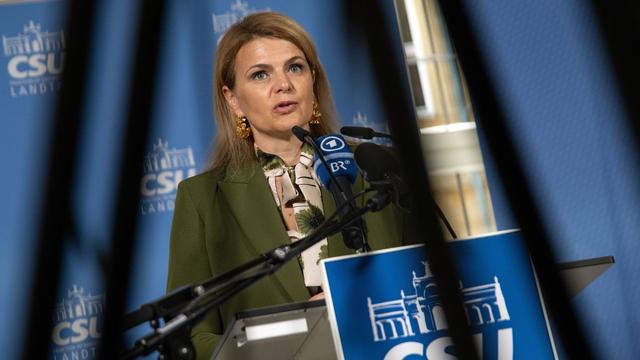
- The government's care representative, Katrin Staffler, opposes completely removing the income limit, arguing that children are already burdened and advocating for a discussion on a fair, remaining income level.
Germany's governing coalition is experiencing internal disagreement regarding proposed reforms to long-term care, specifically concerning the financial responsibilities of adult children whose parents require care. The core of the dispute lies in whether to eliminate the current income threshold that protects adult children from contributing to their parents' care costs.
We cannot get anywhere with 'small steps' given the challenges of care.
Health Minister Nina Warken's proposed Pflegeneuordnungsgesetz (Care Reorganization Act) includes a plan to remove the existing 100,000 euro gross annual income limit. Under current law, adult children earning less than this amount are not required to contribute financially to their parents' long-term care, a measure intended to relieve families of unpredictable financial risks. The reform aims to ease the burden on municipalities facing rising social welfare costs.
I would consider it wrong to completely remove the limit again.
However, Katrin Staffler, the government's representative for care, has voiced strong opposition to completely abolishing the income limit. She argues that adult children already face significant emotional and organizational burdens due to their parents' needs. Staffler believes that removing the threshold entirely would be a mistake and instead advocates for a discussion to determine a fair level of income that should remain exempt, ensuring a "fair distribution of burdens."
We must acknowledge that children are already burdened by the neediness of their parents.
The income limits were initially introduced in 2019 by the previous coalition government. Typically, social welfare offices step in to cover care costs if individuals cannot afford them, but they often seek to recover these costs from the children. The current reform, if passed as proposed by Warken, would shift the financial responsibility more directly onto families, potentially impacting a larger number of adult children. Staffler also urged the Finance Minister to present a reform for state-subsidized private long-term care insurance, criticizing the current "Pflege-Bahr" scheme as a failure.
The current 'Pflege-Bahr' is a flop.
DistantNews Editorial
Originally published by Die Zeit in German. Translated, summarized, and contextualized by our editorial team with added local perspective. Read our editorial standards.
More Stories



From Our Blog

What Gets Lost (and Found) When News Is Translated

How the Same Story Looks Different in Different Countries

The Critical Role of Diaspora Media in Global News

What Travellers Should Know About Countries with Restricted Press

A Digital Nomad's Guide to Following Local News
