


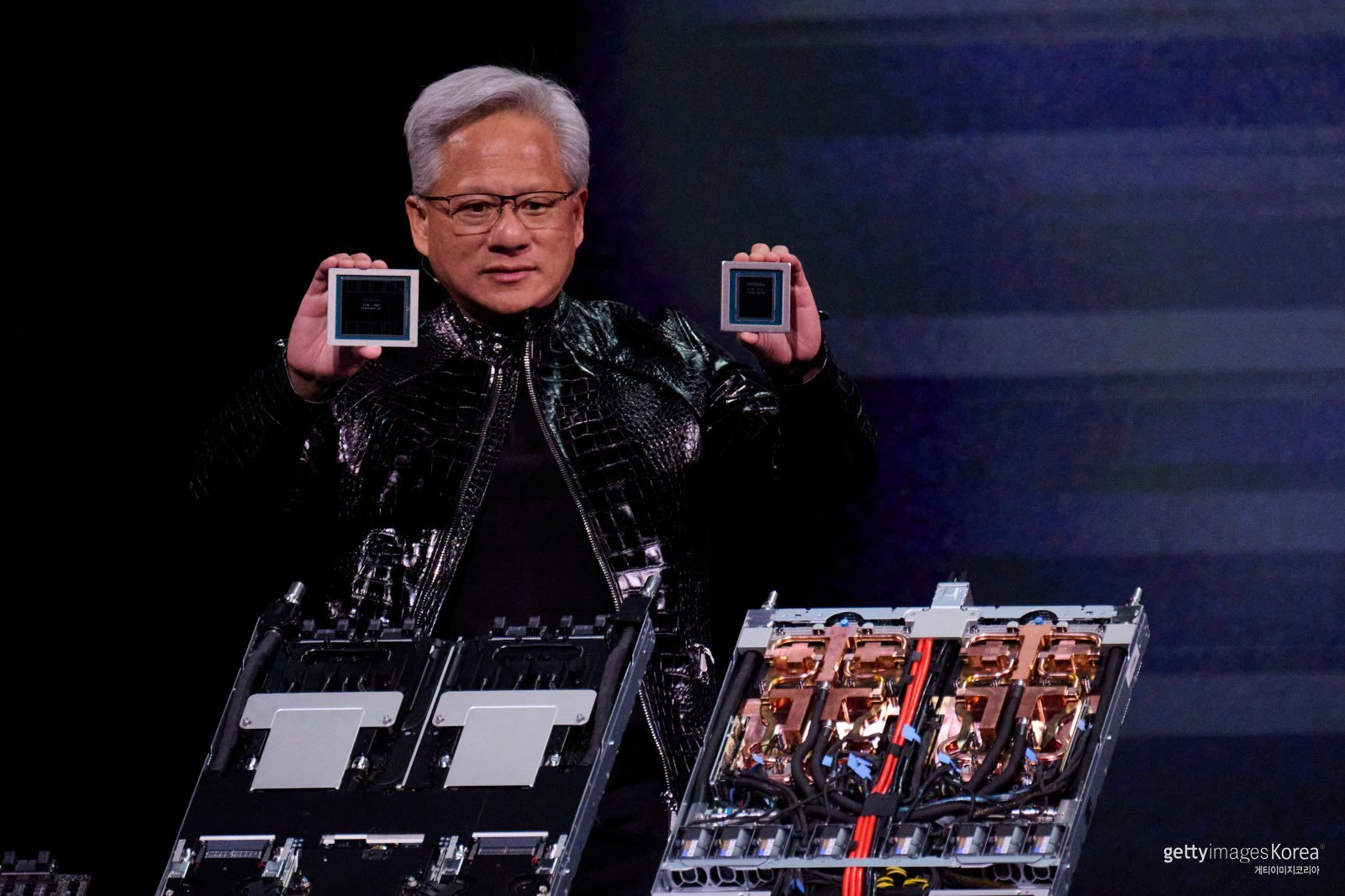
Nvidia's $700 Billion Financial Experiment: Using GPUs as Collateral
Translated from Korean, summarized and contextualized by DistantNews.
At a glance
News
Named sources
Ongoing story
- Nvidia is developing a financial platform to attract over $500 billion in third-party capital for AI infrastructure, using assets like GPUs as collateral.
- The company has signed MOUs with major financial firms including Apollo, BlackRock, and Goldman Sachs to build this platform.
- A key challenge is establishing a reliable market for reselling GPUs if borrowers default, as this process has not yet been proven at scale.
Nvidia is pioneering a novel financial platform designed to channel over $500 billion into artificial intelligence infrastructure, leveraging assets such as graphics processing units (GPUs) as collateral. This initiative aims to tap into third-party capital, moving beyond the reliance on tech companies' internal funding for AI data centers.
The company has entered into memorandums of understanding with six prominent financial institutions, including Apollo, BlackRock, Blackstone, Brookfield, Goldman Sachs, and KKR. The goal is to collectively attract more than $500 billion in capital for investment in AI data centers and computing infrastructure. While this amount has not yet been secured, the plan envisions using not only GPUs but also data center facilities, power infrastructure, and cash flows from customer contracts as part of the financial structure.
The market for recovery is not something that can be created simply by injecting capital or changing contract terms. Actual transaction records must accumulate.
A critical hurdle for this ambitious financial experiment lies in establishing a robust secondary market for GPUs. If a borrower defaults, financial institutions need a clear mechanism to recoup their investment by selling the seized hardware. Currently, while a used GPU market exists, there is no proven precedent for financial firms liquidating thousands of GPUs at scale to recover loan amounts. The success of this venture hinges on demonstrating that these computing assets can function as independent collateral, with reliable resale values and a functioning recovery process in case of default.
Nvidia itself may bear some financial risk, with CEO Jensen Huang indicating the company could back up to $125 billion of the total financing. This suggests that GPUs are not yet entirely detached from Nvidia's own creditworthiness. The platform's ultimate success will likely be tested not during economic booms, but when defaults occur, revealing whether a viable market for reselling seized GPU assets can truly materialize.
Whether used transactions exist is not the point; what matters is whether the procedure of the creditor recovering and disposing of collateral and repaying the loan with the proceeds has actually been implemented when the borrower defaults.
DistantNews Editorial
Originally published by Dong-A Ilbo in Korean. Translated, summarized, and contextualized by our editorial team with added local perspective. Read our editorial standards.
More Stories


From Our Blog

What Gets Lost (and Found) When News Is Translated

The Critical Role of Diaspora Media in Global News

What Travellers Should Know About Countries with Restricted Press

A Digital Nomad's Guide to Following Local News

How the Same Story Looks Different in Different Countries
