


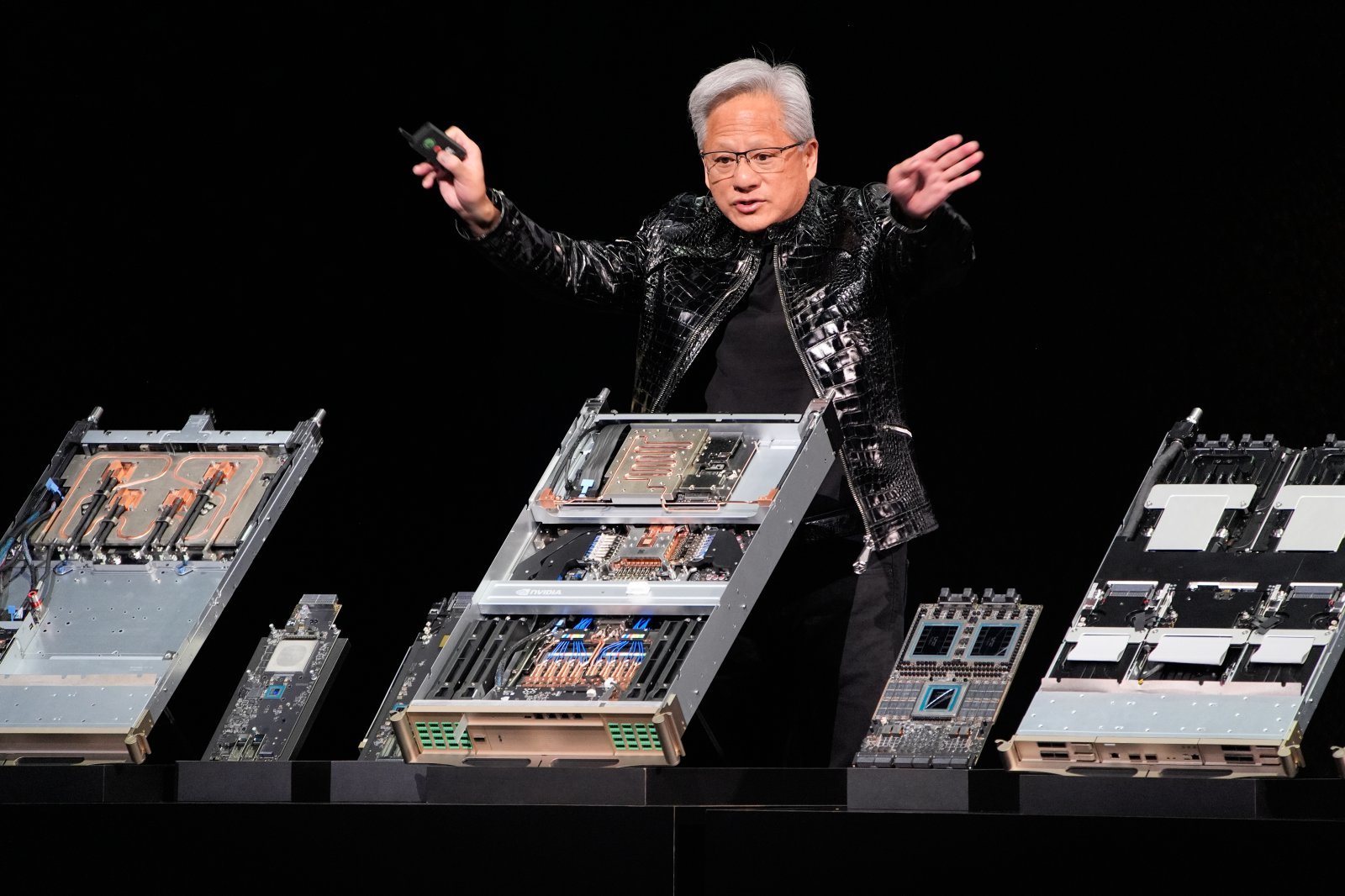
Nvidia surges 9% after earnings, breaking 'post-results slump' jinx
Translated from Korean and summarized by DistantNews. Read the original for the full story.
At a glance
News
Sources not specified
New plan
- Nvidia's stock surged 8.74% after its earnings report, breaking a pattern of post-results declines.
- The company provided guidance for 70% growth next year, boosting market confidence in sustained AI demand.
- This positive outlook signals potential benefits for South Korean memory chipmakers like Samsung Electronics and SK Hynix.
Artificial intelligence chip giant Nvidia has broken its "post-results slump" jinx, with its stock soaring 9% following its latest earnings announcement. This surge has eased market concerns about a potential slowdown in AI demand, as investors appear to trust Nvidia's optimistic outlook for continued investment in AI accelerators and data centers into next year.
Nvidia provided guidance for 70% growth next year, and the market believes this, leading to a significant stock price increase.
Hansang-hee, a senior researcher at Hanwha Investment & Securities, explained on the "Sampro TV" YouTube channel that Nvidia's guidance for 70% growth in the coming year prompted the stock's significant rise. "The market believes Nvidia's forecast," he stated, noting that the company's market capitalization increased by $442 billion in a single day, the second-largest daily jump on record for an individual stock.
If Nvidia's forecast holds true, it means revenue will increase by 70% next year, and the demand for AI accelerators will continue.
Nvidia's strong performance suggests the market anticipates sustained AI demand. The company's projection for continued high revenue growth indicates that the market is confident in the ongoing expansion of AI infrastructure. "If Nvidia's forecast holds true, it means revenue will increase by 70% next year, and the demand for AI accelerators will continue," Hansang-hee added. "This also means that the AI demand we've worried about so far can be accepted as not a concern until next year, as data centers also require regular DRAM and NAND flash memory."
This also means that the AI demand we've worried about so far can be accepted as not a concern until next year, as data centers also require regular DRAM and NAND flash memory.
This positive outlook is seen as a favorable signal for South Korean memory chip manufacturers, including Samsung Electronics and SK Hynix. Increased data center investment could lead to greater server construction, boosting demand not only for High Bandwidth Memory (HBM) but also for server DRAM and NAND flash. However, despite Nvidia's rally, memory chip stocks showed mixed performance, with some declining. Hansang-hee advised against interpreting this as a sign of slowing AI demand, urging observers to "look at the market's reaction as it is."
The market's reaction to memory chip stocks falling in New York is an overthinking result. We need to look at the market's reaction as it is.
About this summary
Originally published by Dong-A Ilbo in Korean. Translated, summarized, and contextualized automatically by DistantNews, with a note on how the source frames the story. Not individually reviewed before publishing. How this works.
More Stories


From Our Blog

What Gets Lost (and Found) When News Is Translated

The Critical Role of Diaspora Media in Global News

What Travellers Should Know About Countries with Restricted Press

A Digital Nomad's Guide to Following Local News

How the Same Story Looks Different in Different Countries
