


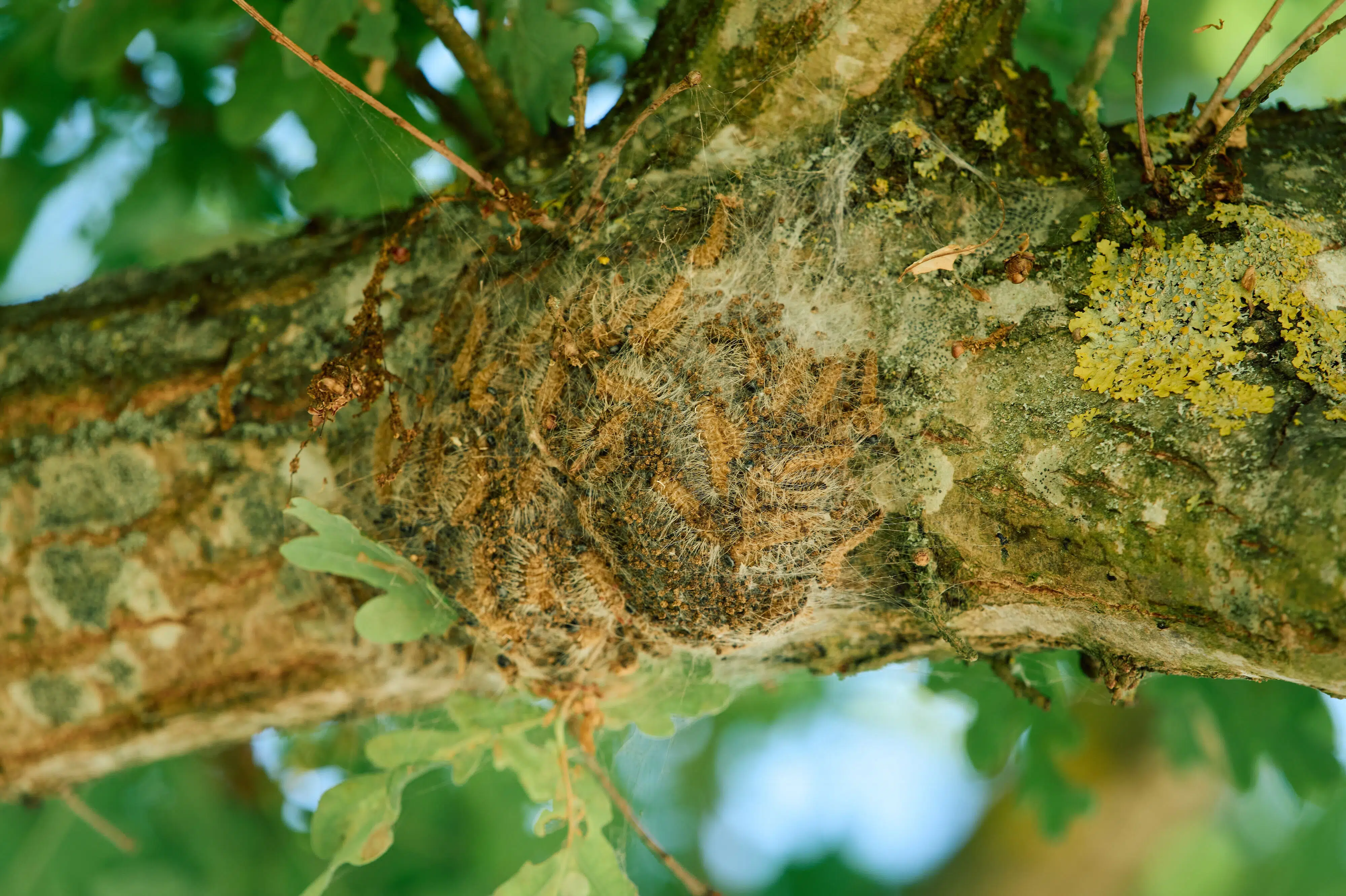
Oak processionary moth found in Sweden for first time in 12 years
Translated from Danish, summarized and contextualized by DistantNews.
At a glance
News
Sources not specified
Context piece
- The oak processionary moth caterpillar has been found in Skåne, Sweden, for the first time in 12 years.
- A software developer captured the larva in a light trap, and a biologist confirmed its identity.
- The moth's spread to Sweden was considered inevitable, with potential establishment in the region now more likely.
The oak processionary moth, a species known for its irritating hairs, has been detected in Skåne, Sweden, marking its first appearance in the country in 12 years. The discovery was made by software developer Jonas Waldeck, who found the larva in a light trap set up at his parents' summer house near Bingsmarken.
Lars Petterson, a biologist at Lund University, confirmed the identification from a photograph provided by Waldeck. He noted that the captured specimen was a male, which are typically more prone to spreading than the larger females. The oak processionary moth has been a subject of concern in Denmark over the summer, with municipalities like Odense and Copenhagen implementing control measures.
This is a male, and they spread more easily. Females are often larger and less likely to spread.
Contact with the moth's hairs can cause itching, swelling, and burning pain, although most people experience only mild symptoms. The species had previously been found in several locations in Denmark before its detection in Sweden. Petterson stated that preventing its spread to Sweden was impossible and that the region's risk of establishing the species has significantly increased following its spread in Denmark.
It remains uncertain whether any female moths are also present in Sweden. Further investigation in the spring, during the moth's larval stage, will be necessary to determine if eggs have been laid and if the species has successfully established itself in the area.
The risk – or the chance – of establishment in Skåne is significantly greater after the establishment in Denmark.
DistantNews Editorial
Originally published by Berlingske in Danish. Translated, summarized, and contextualized by our editorial team with added local perspective. Read our editorial standards.
More Stories



From Our Blog

What Gets Lost (and Found) When News Is Translated

The Critical Role of Diaspora Media in Global News

What Travellers Should Know About Countries with Restricted Press

A Digital Nomad's Guide to Following Local News

How the Same Story Looks Different in Different Countries
