

Offshore balancing: a blueprint for Pak-US ties
Summarized and contextualized by DistantNews.
At a glance
Analysis
Sources not specified
Context piece
- A strategic compact between Pakistan and the US could be possible, viewed through the lens of American security and geopolitical interests.
- Professor Stephen Walt's theory of offshore balancing offers a pragmatic alternative to rivalry, suggesting a light US offshore presence backed by regional bases.
- Afghanistan remains unstable under Taliban rule, posing a threat due to terrorism and organized crime, while regional infrastructure corridors could offer Central Asian states greater autonomy.
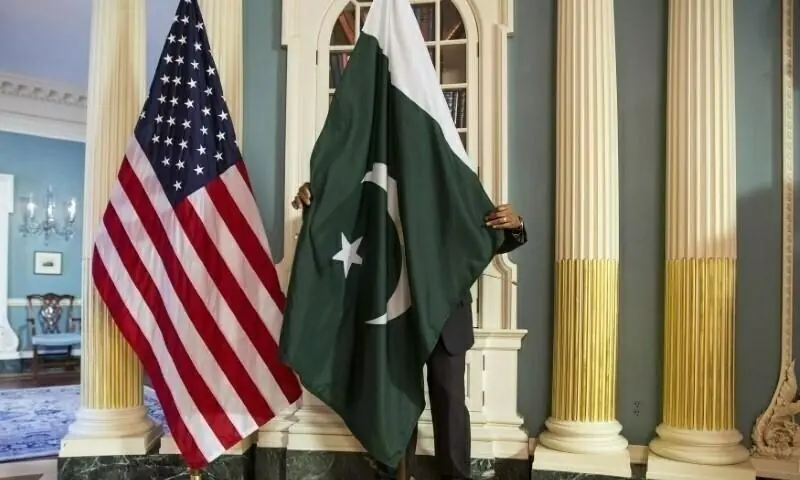
A strategic alignment between Pakistan and the United States is a tangible possibility, particularly when considered through the framework of American security and geopolitical objectives in an era of declining multilateralism. Washington's interest in South Asian stability, especially concerning Pakistan and its neighbor Afghanistan, is significantly influenced by broader great-power competition.
Instead of pursuing a counterproductive rivalry, the concept of offshore balancing, as articulated by Professor Stephen Walt, presents a more practical and cooperative approach. Walt advocates for the U.S. to maintain a minimal offshore presence, supported by regional bases that serve to reassure allies rather than provoke adversaries. This strategy aims to avoid a direct and potentially hazardous military buildup against China.
Pakistan's own efforts in building alliances echo this strategic logic. Walt's 'balance of threats' theory suggests that India's assertive stance, proximity, and growing power compel Pakistan to carefully manage its relationships with both China and the U.S. This dynamic creates an opening for a degree of U.S.-China convergence in South Asia, as neither Washington nor Beijing wishes to cede the region entirely to a rival.
Afghanistan, often labeled the 'graveyard of empires,' has historically been a stage for competing global powers. In this context, a stable Pakistan is strategically positioned to act as a geoeconomic bridge that also aligns with U.S. interests. Even from a more adversarial perspective, such as John Mearsheimer's offensive realism, deeper U.S. engagement in the region remains strategically sound, as ceding ground to a rising rival is rarely beneficial for a great power's long-term interests.
However, Afghanistan itself remains a source of instability. Ruled by a regime that seized power by force, it has become a sanctuary for terrorism and organized crime, threatening not only Pakistan but the wider international community. The Taliban's governance is characterized by medieval cultural norms, a distorted religious understanding, and a suppression of dissent, leading to stalled or reneged commitments.
DistantNews Editorial
Originally published by Dawn. Summarized and contextualized by our editorial team with added local perspective. Read our editorial standards.
More Stories


From Our Blog

What Gets Lost (and Found) When News Is Translated

The Critical Role of Diaspora Media in Global News

What Travellers Should Know About Countries with Restricted Press

A Digital Nomad's Guide to Following Local News

How the Same Story Looks Different in Different Countries
