


Ogoni cleanup won’t be complete without remediating other Niger Delta communities — Activist
Summarized and contextualized by DistantNews.
At a glance
News
Named sources
Ongoing story
- An activist is calling for the Ogoni environmental cleanup to extend to other Niger Delta communities.
- Celestine AkpoBari warns that Ogoniland could be re-polluted if neighboring areas are neglected.
- He also criticized oil companies for not being held accountable for environmental degradation and misleading local populations.
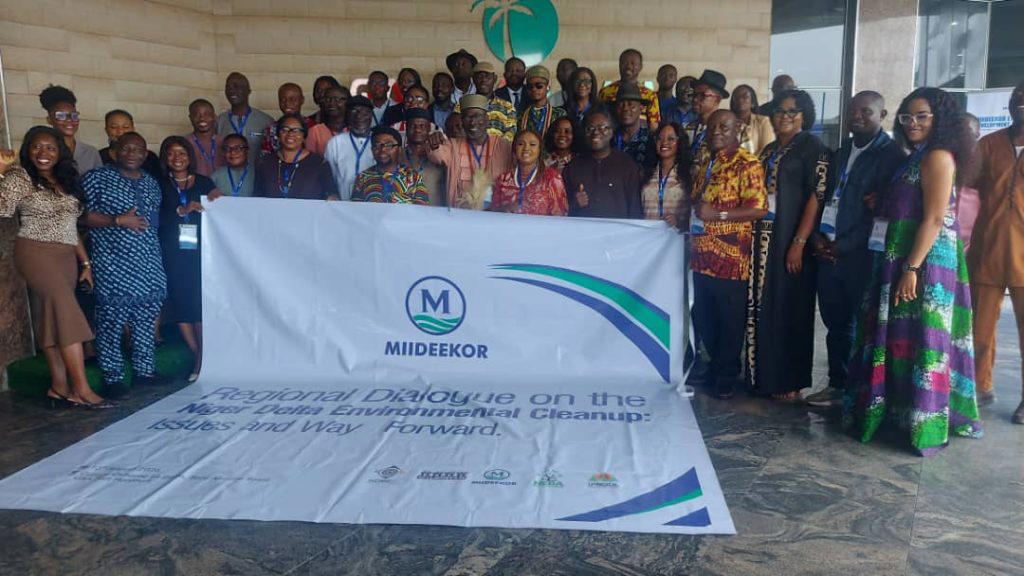
Environmental rights activist Celestine AkpoBari is urging the expansion of the ongoing Ogoni environmental cleanup to encompass other polluted communities throughout the Niger Delta. AkpoBari, Team Lead of Miideekor Environmental Development Initiative (MEDI), warned that Ogoniland risks being re-polluted if adjacent impacted areas are left unattended. He made this call during a regional dialogue on Niger Delta environmental cleanup issues in Port Harcourt.
A great thing has happened to us as people of Niger Delta. This is what brought our people into agitation. This brought our people to Isaac Adaka Boro. It took Ken Saro-Wiwa and others to their early grave.
AkpoBari argued that remediating Ogoniland in isolation is unsustainable due to the interconnected nature of the region's coastal communities and waterways. He stressed the government's urgent need to extend environmental remediation efforts to all communities affected by decades of oil exploration and production. The activist also voiced concern over the divestment of some oil companies, alleging that those responsible for environmental degradation have not faced adequate accountability for the pollution they left behind.
They lied to our people who are farmers and fishermen that when they start exploration, the people will make more money. They polluted our environments and have run away.
The environmental consequences of oil exploration have historically fueled agitation in the Niger Delta, with figures like Isaac Adaka Boro and Ken Saro-Wiwa becoming symbols of resistance. AkpoBari noted that while significant dialogues are ongoing, the companies that spoiled the environment have largely departed, rebranding themselves. He accused these companies of misleading local populations by promoting oil exploration as a superior alternative to traditional livelihoods like farming and fishing, only to degrade the environment and disrupt residents' lives. "They lied to our people who are farmers and fishermen that when they start exploration, the people will make more money. They polluted our environments and have run away," AkpoBari stated.
The cleanup going on in Ogoni today was not dashed. We did not get it for free. We took it by force.
AkpoBari emphasized that the current cleanup in Ogoniland is the result of persistent agitation by affected communities and activists, not a government concession. "The cleanup going on in Ogoni today was not dashed. We did not get it for free. We took it by force," he asserted. He reiterated his warning that the cleanup's objectives will not be fully met if other polluted communities in the region are excluded from remediation efforts, stating, "Ogoniland cannot be clean until other areas of the region are clean. Ogoni is not an island. It is connected to other coastal communities."
Ogoniland cannot be clean until other areas of the region are clean. Ogoni is not an island. It is connected to other coastal communities.
DistantNews Editorial
Originally published by Vanguard. Summarized and contextualized by our editorial team with added local perspective. Read our editorial standards.
More Stories


From Our Blog

How the Same Story Looks Different in Different Countries

What Gets Lost (and Found) When News Is Translated

The Critical Role of Diaspora Media in Global News

What Travellers Should Know About Countries with Restricted Press

A Digital Nomad's Guide to Following Local News
