


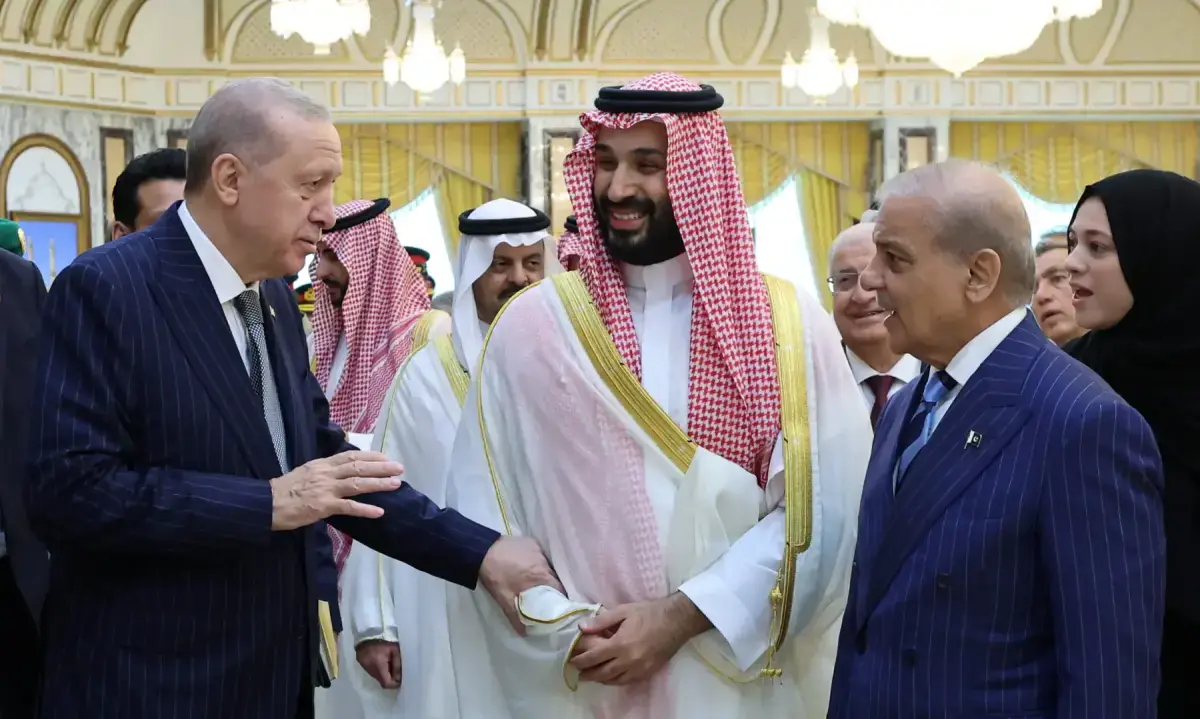
OIC welcomes Pak-Saudi-Turkiye joint defence pact, calls it 'important strategic step'
Summarized and contextualized by DistantNews.
At a glance
News
Named sources
New plan
- The Organization of Islamic Cooperation (OIC) welcomed a new joint defense agreement between Pakistan, Saudi Arabia, and Türkiye, calling it a significant strategic step.
- The Makkah Joint Defence Agreement aims to bolster collective deterrence, treating an attack on one signatory as an attack on all.
- OIC Secretary General Hissein Brahim Taha praised the pact for strengthening regional security, stability, and solidarity among member states.
The Organisation of Islamic Cooperation (OIC) has expressed strong support for the newly signed Makkah Joint Defence Agreement between Pakistan, Saudi Arabia, and Türkiye. OIC Secretary General Hissein Brahim Taha hailed the pact as an "important strategic step" that reinforces collective deterrence and regional security.
strong appreciation and support
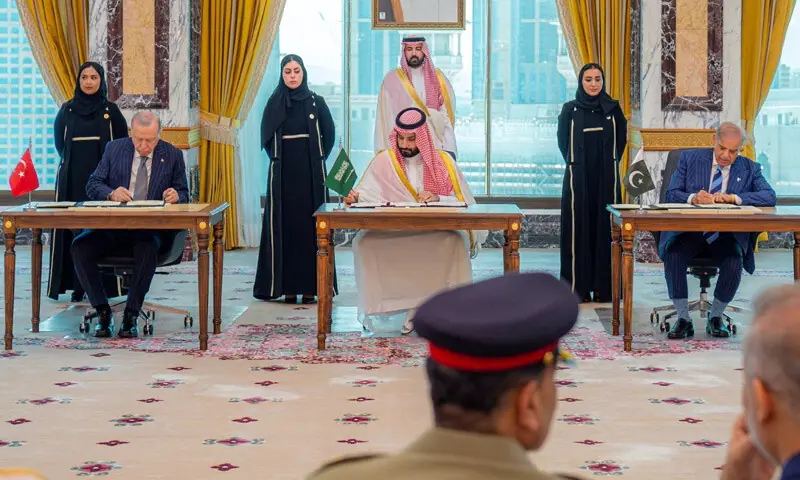
The agreement, signed at a trilateral summit in Makkah, stipulates that an attack against any one of the three nations will be considered an attack against all. Taha emphasized that this pact serves as a fundamental pillar for security and stability within the region and the broader Muslim world. He highlighted the "shared resolve to address growing security challenges and strengthen solidarity and constructive partnerships" among OIC member states.
important strategic step
Turkish President Recep Tayyip Erdogan stated that the agreement is not targeted at any specific country and remains open to participation from other friendly nations committed to peace. The pact was signed by Prime Minister Shehbaz Sharif, Saudi Crown Prince Mohammed bin Salman, and President Erdogan during the "Makkah Al-Mukarramah Summit for Joint Defence." The OIC, the second-largest international organization after the United Nations, comprises 57 member states.
a fundamental pillar for supporting security and stability in the region and across the Muslim world
DistantNews Editorial
Originally published by Dawn. Summarized and contextualized by our editorial team with added local perspective. Read our editorial standards.
More Stories


From Our Blog

What Gets Lost (and Found) When News Is Translated

The Critical Role of Diaspora Media in Global News

What Travellers Should Know About Countries with Restricted Press

A Digital Nomad's Guide to Following Local News

How the Same Story Looks Different in Different Countries
