


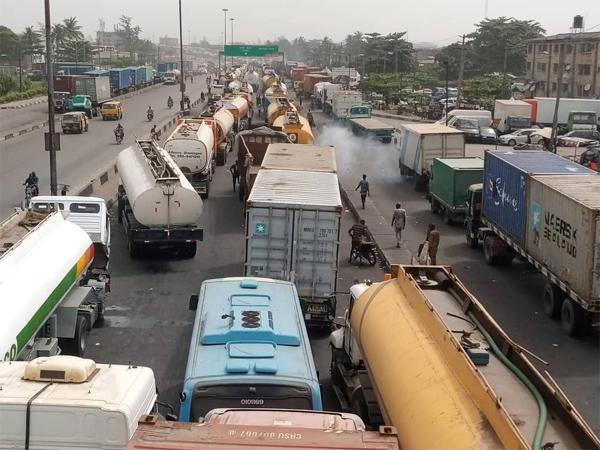
Oil Cartels, Agencies Blamed for Crippling Lagos Gridlock
Translated from English, summarized and contextualized by DistantNews.
At a glance
News
Named sources
Context piece
- Oil cartels, marketers, tanker operators, and enforcement agencies are blamed for the persistent traffic gridlock in Lagos' Apapa and Kirikiri areas.
- The congestion cripples businesses, disrupts daily life, and hampers economic activities, with thousands of businesses and residents bearing significant costs.
- Poor logistics planning, inadequate holding facilities, indiscriminate parking, weak enforcement, and corruption contribute to major roads becoming permanent truck parks.
A severe and persistent traffic gridlock in Lagos' Apapa and Kirikiri corridors is crippling businesses and disrupting daily life, with oil cartels, independent petroleum marketers, tanker owners, drivers, transport unions, and enforcement agencies all accused of sustaining the problem. Thousands of businesses, commuters, and residents in these industrial and commercial hubs are bearing enormous economic and social costs due to the congestion.
The crisis is largely centered on petroleum distribution activities. Stakeholders point to poor logistics planning, a lack of adequate truck holding facilities, indiscriminate roadside parking by tankers, weak enforcement, and corruption as key factors turning major roads into permanent truck parks. This situation severely impacts the nationwide supply of petroleum products.
Consequences of the gridlock include rising transport costs, deteriorating road infrastructure, delayed cargo evacuation from ports, disrupted business operations, and worsening living conditions for residents. Vanguard observed hundreds of petroleum tankers frequently occupying major roads leading to Apapa, Kirikiri, Coconut, and Tin Can Port, queuing for products from depots and tank farms. Instead of using designated holding bays, many trucks queue for kilometers along the roads, reducing traffic flow and making movement extremely difficult for other road users.
While some depots have holding bays, many are now inadequate for the current volume of tanker traffic. Allegations suggest that available parking facilities are underutilized because some independent marketers, tanker owners, drivers, unions, and enforcement personnel allegedly prefer roadside operations to collect and share illegal payments amounting to millions of naira.
DistantNews Editorial
Originally published by Vanguard in English. Translated, summarized, and contextualized by our editorial team with added local perspective. Read our editorial standards.
More Stories


From Our Blog

How the Same Story Looks Different in Different Countries

What Gets Lost (and Found) When News Is Translated

The Critical Role of Diaspora Media in Global News

What Travellers Should Know About Countries with Restricted Press

A Digital Nomad's Guide to Following Local News
