


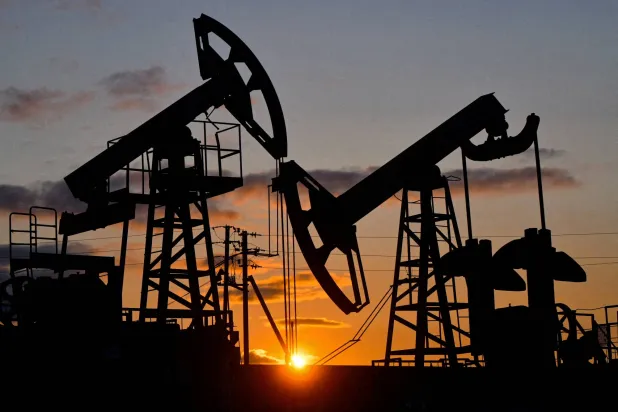
Oil Prices Rise Despite US-Iran Ceasefire Extension
Translated from English, summarized and contextualized by DistantNews.
TLDR
- Oil prices rose slightly on Wednesday, with Brent crude nearing $100 a barrel and West Texas Intermediate trading above $90.
- The increase occurred despite an extension of the US-Iran ceasefire, as concerns persist about the impact of the Middle East conflict on global energy supplies.
- Investors are also monitoring the confirmation hearing of Kevin Warsh, a nominee for the Federal Reserve, and inflation data showing a jump in UK inflation to 3.3% in March.
Oil prices continued their upward trajectory on Wednesday, with Brent crude hovering near the significant $100 per barrel mark and West Texas Intermediate surpassing $90. This rise is occurring against a backdrop of persistent geopolitical tension, specifically the ongoing conflict in the Middle East. Despite an extension of the US-Iran ceasefire, aimed at facilitating peace talks, market sentiment remains cautious. The core issue remains the uncertainty surrounding energy supplies, with shipments from the region in a state of flux and a definitive resolution to the conflict still elusive.
The ceasefire extension hasn't done much to calm nerves given that worries remain about the impact of the energy squeeze on the global economy.
Susannah Streeter, chief investment strategist at Wealth Club, noted that the ceasefire extension has done little to alleviate market anxieties. The fundamental worry about the "energy squeeze" and its potential ramifications for the global economy continues to weigh on investors. The strategic Strait of Hormuz remains a focal point, with reports of Iranian gunboats attacking a container ship, even as diplomatic efforts are underway. This highlights the delicate balance between de-escalation attempts and the volatile reality on the ground.
Shipments from the Middle East are in limbo and a resolution to the conflict remains elusive, and the price of Brent crude, the benchmark, reflects this.
Beyond the immediate concerns of oil prices and the Middle East conflict, the financial world is closely watching other key developments. In the United States, the confirmation hearing for Kevin Warsh, President Trump's nominee to replace Federal Reserve Chair Jerome Powell, is underway. Warsh's testimony before senators addresses his financial assets and his commitment to central bank independence, particularly in light of Trump's calls for more aggressive interest rate cuts. Meanwhile, in the UK, inflation figures for March revealed a significant jump to 3.3%, largely attributed to the surge in oil and gas prices driven by the Middle East war.
The US and Iran may be trying to shore up leverage and playing a game of who blinks first.
From the perspective of Asharq Al-Awsat, a publication deeply attuned to Middle Eastern affairs, the interplay between the ceasefire extension, the ongoing conflict, and oil prices is paramount. While Western media might focus on the broader economic implications or the US Federal Reserve nominee, the regional outlet emphasizes the immediate impact on energy markets and the persistent risks emanating from the Strait of Hormuz. The narrative underscores the region's central role in global energy security and the complex diplomatic and military maneuvers at play. The article reflects a nuanced understanding of how localized conflicts can have far-reaching global economic consequences, particularly for energy-dependent economies.
Whatever the outcome, the suspense in the interim may see risk appetite being curtailed.
DistantNews Editorial
Originally published by Asharq Al-Awsat in English. Translated, summarized, and contextualized by our editorial team with added local perspective. Read our editorial standards.
More Stories


From Our Blog

What Gets Lost (and Found) When News Is Translated

The Critical Role of Diaspora Media in Global News

What Travellers Should Know About Countries with Restricted Press

A Digital Nomad's Guide to Following Local News

How the Same Story Looks Different in Different Countries
