


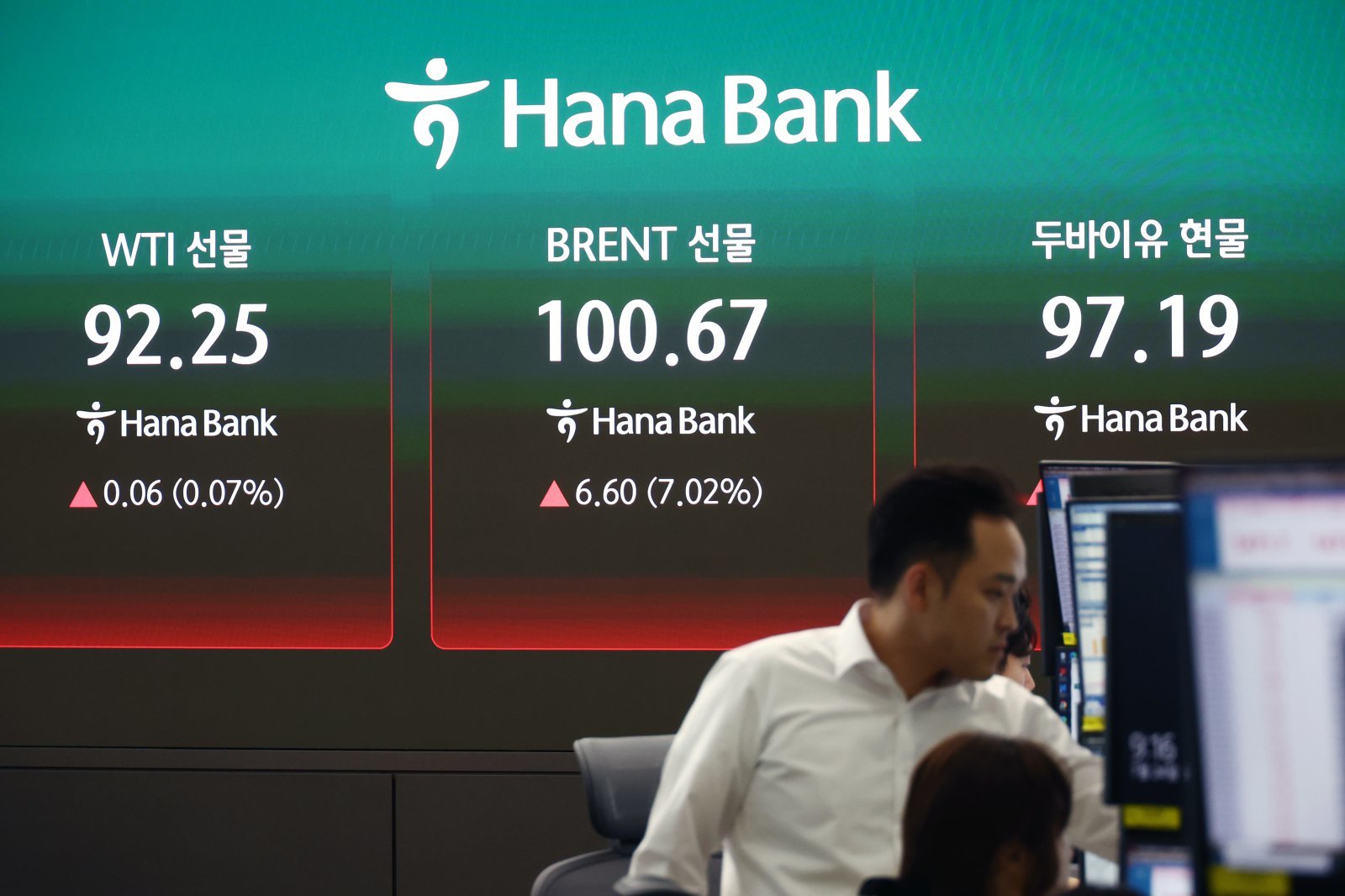
Oil prices top $100, raising inflation fears and pressuring Trump and the Fed
Translated from Korean, summarized and contextualized by DistantNews.
At a glance
News
Named sources
New plan
- International oil prices surpassed $100 per barrel, reigniting inflation concerns.
- Rising crude prices are impacting financial markets, pushing up bond yields and stock indices lower.
- The surge in oil costs, coupled with high interest rates, poses a significant challenge for the U.S. economy and political landscape.
International oil prices have surged past the $100 per barrel mark for the first time in over two months, raising fresh concerns about inflation and economic stability. The benchmark Brent crude oil exceeded $100 per barrel on July 23rd, following warnings from U.S. President Donald Trump about potential "strong military retaliation" against Iran. U.S. West Texas Intermediate (WTI) crude also saw a significant increase, rising 6.2% to $92.19 per barrel.
The impact of the oil price hike is rippling through financial markets. U.S. 10-year Treasury yields have climbed to their highest levels since President Trump's second term began, while major stock indices like the Dow Jones Industrial Average and the S&P 500 have fallen by approximately 1%. The Nasdaq Composite experienced a steeper decline of over 2%, exacerbated by the added burden of significant investment costs in artificial intelligence by major tech companies.
This renewed inflationary pressure comes at a sensitive time. The national average gasoline price in the U.S. has now surpassed $4 per gallon, with diesel prices showing an even more rapid increase. President Trump has previously expressed frustration with high oil prices, and White House staff are reportedly concerned about the political implications for the Republican party ahead of the midterm elections. The administration has explored options to pressure oil companies and the energy industry.
The rising cost of fuel is also affecting the aviation industry, with airlines like American Airlines and Southwest Airlines revising their annual earnings forecasts downward. While airlines attempt to offset increased fuel expenses through fare hikes, they are reportedly only recovering about half of the additional costs. The bond market is also reacting, with the spread between U.S. Treasury bonds and Treasury Inflation-Protected Securities (TIPS) indicating expectations of continued inflation. Market analysts suggest that the Federal Reserve may be compelled to maintain higher interest rates for a longer duration to combat rising prices.
DistantNews Editorial
Originally published by Dong-A Ilbo in Korean. Translated, summarized, and contextualized by our editorial team with added local perspective. Read our editorial standards.
More Stories



From Our Blog

What Gets Lost (and Found) When News Is Translated

The Critical Role of Diaspora Media in Global News

What Travellers Should Know About Countries with Restricted Press

A Digital Nomad's Guide to Following Local News

How the Same Story Looks Different in Different Countries
