


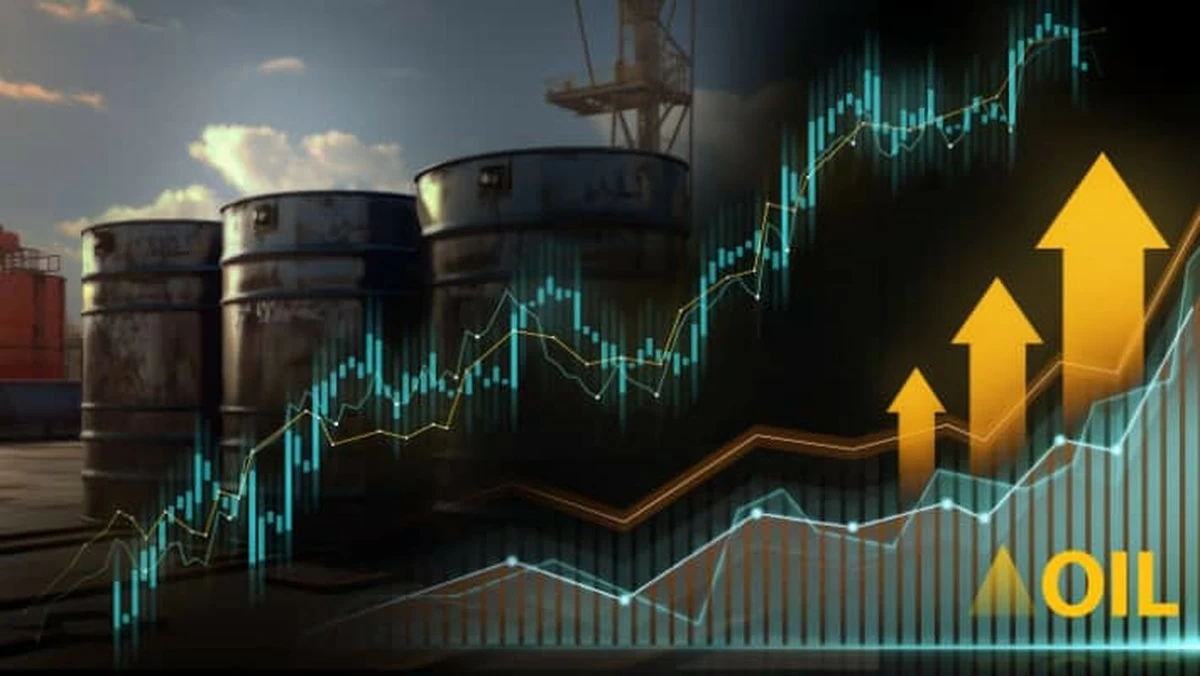
Oil Supply Risks Escalate Amid Renewed Middle East Tensions
Translated from English, summarized and contextualized by DistantNews.
At a glance
News
Named sources
Context piece
- Oil markets face renewed supply risks due to rising tensions involving Iran and the Strait of Hormuz, pushing Brent crude near $90 per barrel.
- Attacks on commercial vessels and stalled U.S.-Iran negotiations heighten concerns, though rising U.S. inventories and weaker demand forecasts temper price increases.
- Geopolitical developments continue to significantly influence energy prices, with potential for further volatility depending on diplomatic progress or escalation.
Global oil markets are experiencing renewed supply risks, with tensions surrounding Iran and the critical Strait of Hormuz injecting significant uncertainty into energy flows. Brent crude futures are approaching the $90 per barrel mark, reflecting growing concerns over potential disruptions in one of the world's most vital energy corridors.
The waterway, through which approximately 20% of global oil is transported, remains a focal point. Recent attacks on commercial vessels and a reduction in shipping activity have intensified worries. Even without a complete closure, persistent security risks can lead to increased insurance premiums, higher freight costs, and transportation delays, effectively raising the price of supplying international markets.
"The ongoing tensions in the Middle East have rattled global energy markets, with no clear signs of a ceasefire in sight," said Li Xing Gan, Financial Markets Strategist at Exness. "This has driven oil prices higher." He noted that Brent crude futures rose 55 cents and WTI crude gained 17 cents on August 17 amid diplomatic uncertainty surrounding the Strait of Hormuz.
The ongoing tensions in the Middle East have rattled global energy markets, with no clear signs of a ceasefire in sight. This has driven oil prices higher.
Adding to the volatility, stalled U.S.-Iran negotiations and Washington's threat to maintain its naval blockade of Iran indefinitely have contributed to price increases. While credible diplomatic progress could ease these pressures, further tanker attacks or military escalation could significantly boost the geopolitical premium in crude prices.
However, the market outlook is not entirely bullish. U.S. crude inventories saw a substantial increase of 17.4 million barrels in the week ending August 7, reaching 424.4 million barrels. Furthermore, both OPEC and the International Energy Agency have revised down their oil demand expectations for 2026. These factors are currently limiting the extent to which geopolitical tensions can drive an uninterrupted rally in oil prices.
On August 17, Brent crude futures rose 55 cents from the previous close, while WTI crude gained 17 cents amid continued diplomatic uncertainty surrounding the Strait of Hormuz.
DistantNews Editorial
Originally published by Arab Times in English. Translated, summarized, and contextualized by our editorial team with added local perspective. Read our editorial standards.
More Stories


From Our Blog

What Gets Lost (and Found) When News Is Translated

The Critical Role of Diaspora Media in Global News

What Travellers Should Know About Countries with Restricted Press

A Digital Nomad's Guide to Following Local News

How the Same Story Looks Different in Different Countries
