



Oktoberfest: Trachten Trends Turn “Properly Conservative” at the Wiesn
Translated from German and summarized by DistantNews. Read the original for the full story.
At a glance
In-depth
Named sources
Context piece
- Traditional clothing is returning to Munich’s Oktoberfest, with longer dirndls, red, green and brown tones, and coordinated, higher-quality materials.
- Fashion experts say midi-length dirndls, velvet, lace, muted colors and tone-on-tone styling are gaining popularity, while sneakers and poorly fitted leather trousers are discouraged.
- Designers also highlight silk scarves woven into apron bows and a growing mix of high-quality historical garments for men.
The dirndls are getting longer and more traditional ahead of Munich’s Oktoberfest. Red, green and brown shades are prominent, while sneakers are firmly out of favor, according to traditional clothing experts.
Thomas Appl, the district heritage officer for Upper Palatinate, said this year’s styles draw heavily on traditional models. The shift applies to both colors and shapes. Dirndls now generally fall below the knee, and many have high necklines, a look that young wearers might have called “properly conservative” a decade ago.
Properly conservative.
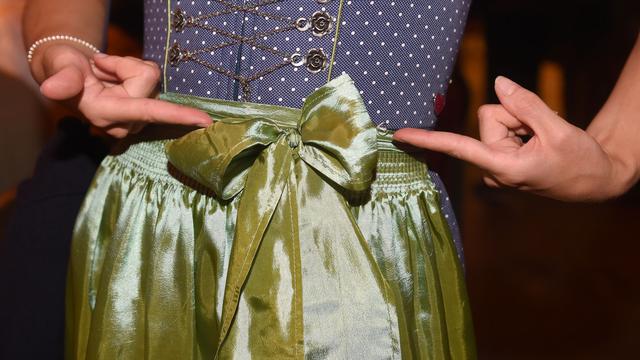
Cheap dirndls that once filled pop-up shops near Munich’s main railway station have largely disappeared. Axel Munz, managing director of the Angermaier traditional clothing company, sees red and green as the leading colors for women. Fashion and art expert Rainer Wenrich highlighted long dirndls in muted apple and olive greens, earthy shades, elegant pastels, vanilla and berry tones.
A beautiful and new idea is to incorporate high-quality silk scarves into the apron bow.
The tone-on-tone look is particularly strong. Blouses with subtle puffed or ruffled sleeves are matched to the dress, creating an elegant outfit in linen, velvet, corduroy or softly shimmering silk. Detachable wing sleeves, lace and velvet embroidered with gentian or edelweiss are also in demand. Alongside 65- and 70-centimeter midi styles, Munz said 75- and 80-centimeter models are becoming more common.
Alexander Wandinger of the Upper Bavaria district heritage advisory service suggested tying a high-quality silk scarf into the apron bow. For men, he sees a growing mix of especially fine, historically authentic traditional garments. Angermaier’s Munz lists tennis socks with lederhosen, badly fitting trousers, short-sleeved shirts and plastic lederhosen among the main mistakes. Influencer Cathy Hummels offered a broader rule: “My biggest no-go is dressing up for the Wiesn. Traditional clothing is not a costume. You can be fashionable and daring, but for me the look should always retain a certain quality.”
My biggest no-go is dressing up for the Wiesn. Traditional clothing is not a costume. You can be fashionable and daring, but for me the look should always retain a certain quality.
About this summary
Originally published by Die Zeit in German. Translated, summarized, and contextualized automatically by DistantNews, with a note on how the source frames the story. Not individually reviewed before publishing. How this works.
More Stories



From Our Blog

News in Translation: What Gets Lost, and How We Keep the Framing

The Same Story, Different Countries: How Coverage Changes at the Border

Diaspora Media: How Communities Follow News From Home

Traveling Where the Press Is Not Free: How to Read the News There

The Digital Nomad's Guide to Local News
