


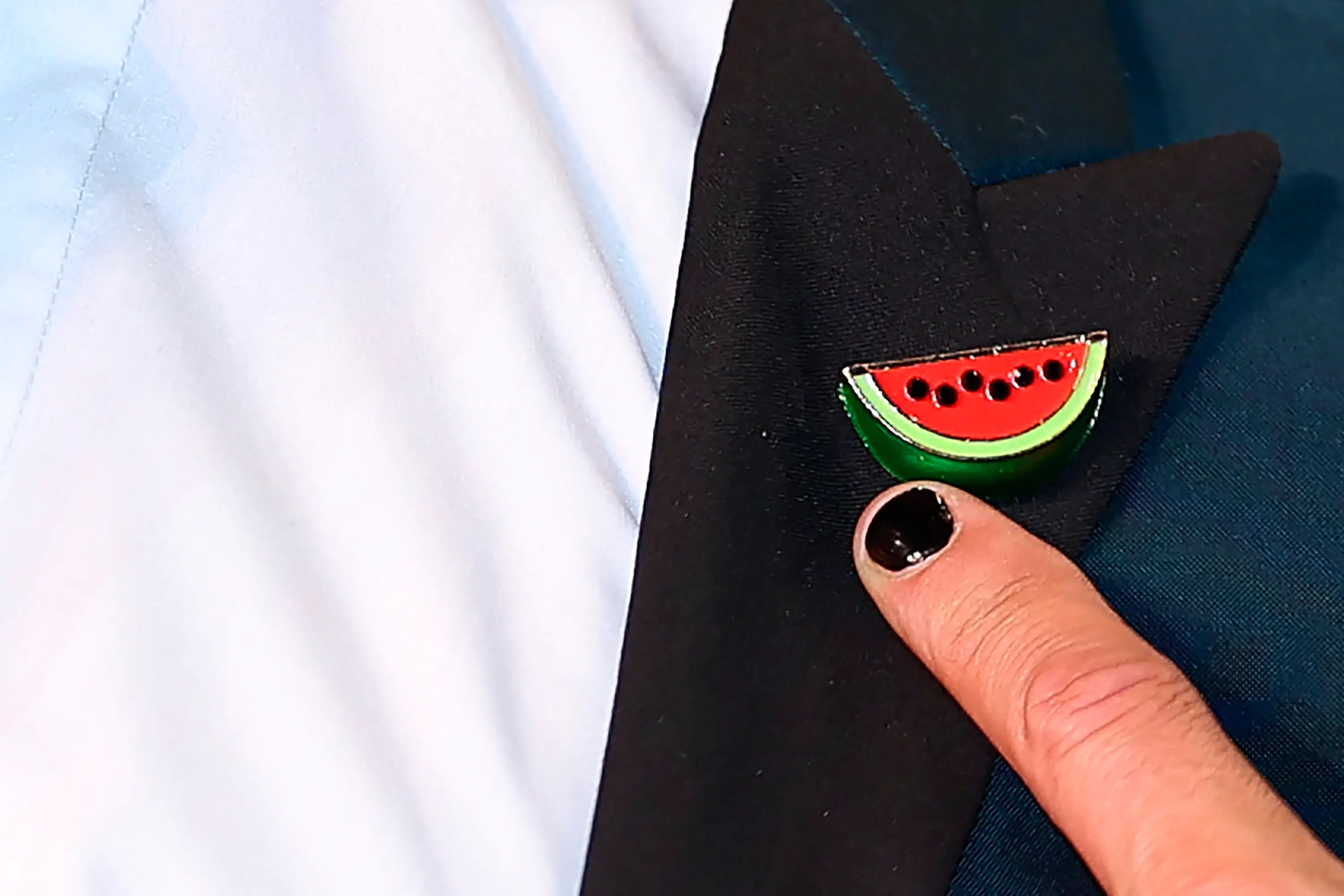
Old anti-Jewish hatred is now wrapped in 'fashionable emojis': We could call it the 'watermelon alliance'
Translated from Danish, summarized and contextualized by DistantNews.
At a glance
Opinion
Sources not specified
Context piece
- The article argues that old anti-Jewish hatred is now being disguised with modern symbols like emojis.
- It suggests that the colors of the watermelon symbol, often used for the Palestinian cause, can represent three radical ideologies: far-left, Islamism, and far-right.
- The authors claim these ideologies share a common thread of anti-Semitism.
Old anti-Jewish hatred is now being repackaged with trendy emojis and symbols, according to a debate piece in Berlingske. The authors suggest calling this phenomenon the "watermelon alliance," referencing the fruit's colors which mirror the Palestinian flag and have become a symbol of the Palestinian cause.
However, Jan Kapusnak, a political scientist and freelance writer, and Felix Haibach, a historian and political scientist, propose an alternative interpretation. They argue that the watermelon's colors, red, green, and black/brown, can symbolize three radical ideologies: the far-left, Islamism, and the far-right. Crucially, they contend that anti-Semitism is a common element across all three.
The piece draws a parallel to the controversy surrounding Israel's participation in the Eurovision Song Contest, highlighting how easily cultural events can become platforms for anti-Israel agitation that often escalates into anti-Semitism. Since the Hamas attacks on October 7, 2023, similar displays have been visible in Western capitals, including Palestinian flags, keffiyehs, slogans like "Stop the genocide in Gaza," and the chant "From the river to the sea, Palestine will be free," which the authors interpret as a call for Israel's abolition.
DistantNews Editorial
Originally published by Berlingske in Danish. Translated, summarized, and contextualized by our editorial team with added local perspective. Read our editorial standards.
More Stories

,xPosition=.5,yPosition=.5;Resize=(1200,675)&impolicy=medium)

From Our Blog

What Gets Lost (and Found) When News Is Translated

The Critical Role of Diaspora Media in Global News

What Travellers Should Know About Countries with Restricted Press

A Digital Nomad's Guide to Following Local News

How the Same Story Looks Different in Different Countries
