


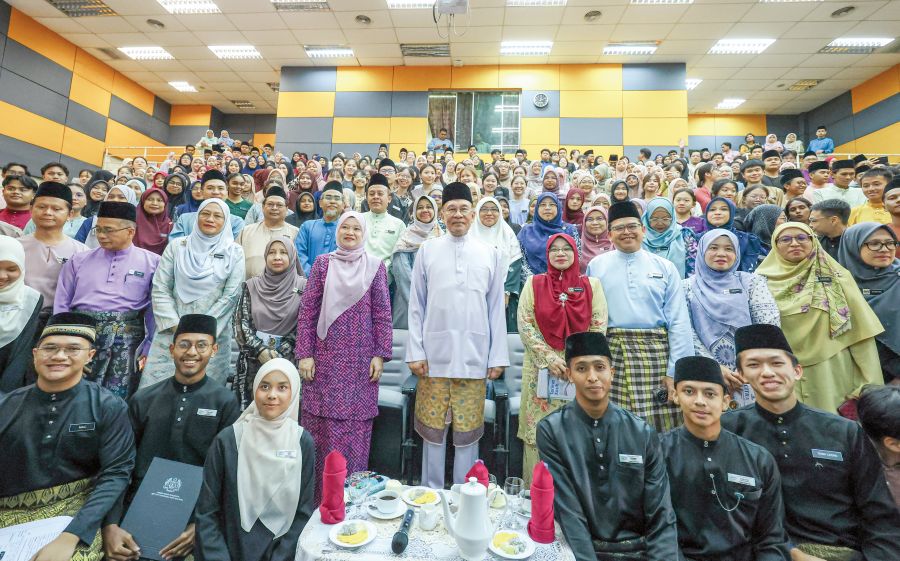
Old Culture, Corruption Hinder National Reform: Anwar
Translated from Malay, summarized and contextualized by DistantNews.
At a glance
News
Sources not specified
Context piece
- Malaysia's biggest reform challenge stems from resistance to change, particularly from elites clinging to corrupt practices, Prime Minister Anwar Ibrahim stated.
- He noted that efforts to combat corruption and improve governance face opposition from those benefiting from existing inefficiencies.
- Anwar also emphasized the need to stop hiding school bullying incidents to protect institutional image, advocating for humanistic values over mere disciplinary action.
Prime Minister Anwar Ibrahim identified resistance to change, particularly from elites entrenched in corrupt practices, as the primary obstacle to implementing reforms in Malaysia. He stated that after more than three years leading the government, efforts to reform the system and eradicate corruption consistently encounter pushback from individuals comfortable with the status quo.
Anwar explained that implementing the reform agenda requires political courage and sustained commitment to ensure the nation's administrative system becomes more transparent, ethical, and effective. He observed that combating corruption and strengthening governance perpetually face opposition from those who profit from current loopholes and inefficiencies.
Drawing on change theory, Anwar noted that societies typically divide into two groups: those inclined toward reform and those who resist it. He challenged the notion that only rural or less educated populations struggle with change, asserting that highly educated individuals, intellectuals, and those in power can exhibit similar resistance. He described this resistant group as "backward, stagnant, and viewing every change as a threat."
Separately, Anwar addressed the issue of school bullying, urging an end to the practice of concealing such incidents to protect institutional image. He argued that such concealment exacerbates the problem. He stressed that efforts to combat bullying must extend beyond disciplinary measures to incorporate humanistic values and mutual respect within the educational system. "We can be technocrats, IT experts, or hold PhDs, but what is the point if we are not educated to be humans who understand human values and respect others?" he questioned.
DistantNews Editorial
Originally published by Utusan Malaysia in Malay. Translated, summarized, and contextualized by our editorial team with added local perspective. Read our editorial standards.
More Stories


From Our Blog

What Gets Lost (and Found) When News Is Translated

The Critical Role of Diaspora Media in Global News

What Travellers Should Know About Countries with Restricted Press

A Digital Nomad's Guide to Following Local News

How the Same Story Looks Different in Different Countries
