


Oman's salt industry enters a new era of specialised industrial development
Summarized and contextualized by DistantNews.
At a glance
News
Named sources
New plan
- Oman's salt industry is shifting towards specialized industrial projects, focusing on downstream products like high-purity salt, food-grade salt, and chemical derivatives.
- Export markets are the largest consumers of Omani salt, though domestic demand from sectors like oil and gas is also growing.
- Investments exceeding $1 billion are backing four marine salt concession areas, aiming for a combined production capacity of 5 million tonnes annually.
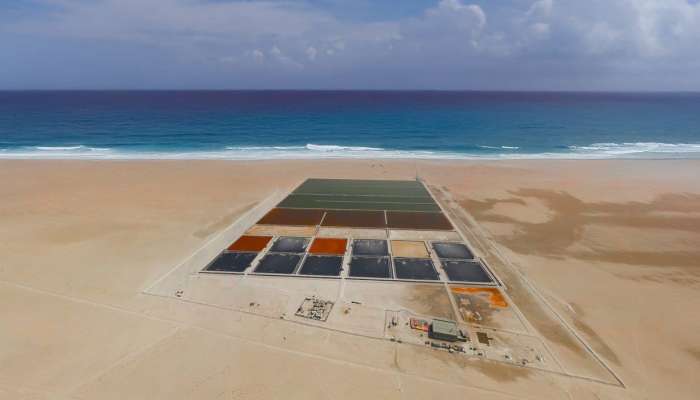
Oman's salt sector is embarking on a new phase of development, driven by specialized industrial projects that aim to expand the production of salt-based downstream industries. The focus is on creating higher economic value from this resource by producing high-purity industrial salt, food-grade salt, and valuable chemical compounds such as bromine, caustic soda, soda ash, and polyvinyl chloride (PVC).
Currently, export markets represent the most significant share of Omani salt production, highlighting its international competitiveness. Simultaneously, the domestic market is experiencing steady growth, fueled by increasing demand from crucial sectors including oil and gas, food processing, and various chemical industries. Preliminary data for 2025 indicates that approximately 40,000 tonnes of salt were produced, with about 30,000 tonnes exported and 10,000 tonnes consumed locally.
industrial minerals, including industrial salt, represent a strategic resource for local, regional, and international markets.
This burgeoning salt industry is supported by substantial investments, exceeding $1 billion, across four marine salt concession areas located along Oman's coastline in the Al Wusta Governorate. These areas are projected to achieve a combined annual production capacity of around 5 million tonnes. Future plans include the allocation of additional salt concession areas to further bolster the sector's growth and support the establishment of related manufacturing industries.
Recent years have seen a significant transformation in production methods within the salt industry. Modern projects now incorporate detailed technical studies and analyses of seawater and coastal environments. Evaporation ponds are meticulously designed to maximize efficiency in producing both salt and its derivatives, ensuring a competitive edge in both local and international markets. Eng. Saud bin Khamis Al Mahrouqi, Director General of Minerals at the Ministry of Energy and Minerals, emphasized that industrial minerals like salt are strategic resources with significant potential for local, regional, and international markets. He noted that Omani salt benefits from competitive advantages including high product quality, a strategic geographic location, favorable climatic conditions for natural evaporation, and expanding downstream industry opportunities, all of which enhance its market value and contribution to industrial development.
Omani salt possesses competitive advantages that strengthen its position in global markets.
DistantNews Editorial
Originally published by Times of Oman. Summarized and contextualized by our editorial team with added local perspective. Read our editorial standards.
More Stories



From Our Blog

What Gets Lost (and Found) When News Is Translated

The Critical Role of Diaspora Media in Global News

What Travellers Should Know About Countries with Restricted Press

A Digital Nomad's Guide to Following Local News

How the Same Story Looks Different in Different Countries
