



Oman-Saudi Talks Gain Weight as Gulf Security and Hormuz Risks Intensify
Translated from English and summarized by DistantNews. Read the original for the full story.
At a glance
Analysis
Named sources
Ongoing story
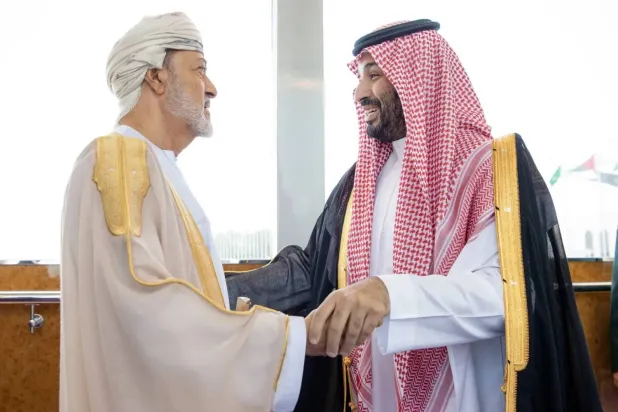
- Oman’s Sultan Haitham bin Tariq met Saudi Crown Prince Mohammed bin Salman as regional security and shipping concerns grow.
- Omani experts said the talks could strengthen coordination between Muscat and Riyadh, including efforts to support dialogue between the United States and Iran.
- The Strait of Hormuz, Gulf security, energy flows and international shipping are expected to feature prominently in discussions.
The visit of Oman’s Sultan Haitham bin Tariq to Saudi Arabia comes at a moment when Gulf security, energy markets and international shipping are all under pressure. His meeting with Saudi Crown Prince and Prime Minister Mohammed bin Salman has therefore taken on weight well beyond the two countries’ bilateral relationship.
at a critical time, not only for Omani-Saudi relations but also because of the dangerous and rapidly unfolding political and security developments in the region.
The region is facing an escalating confrontation between the United States and Iran, along with growing risks in the Strait of Hormuz. Omani experts and writers told Asharq Al-Awsat that the timing could encourage broader Saudi-Omani coordination in support of settlement efforts. Muscat brings its channels with the parties involved, while Riyadh has regional and international influence.
Omani political and strategic affairs writer and researcher Mohammed al-Araimi described the visit as coming “at a critical time, not only for Omani-Saudi relations but also because of the dangerous and rapidly unfolding political and security developments in the region.” He said the relationship rests on “a solid foundation of mutual respect and shared interests,” with increasing recognition of the need for coordination as the region and the wider world change.
a solid foundation of mutual respect and shared interests
Al-Araimi said the talks would cover political, security and economic issues, including the future of Gulf security and the safety of shipping and energy flows through Hormuz. Oman’s mediation between Washington and Tehran is expected to receive particular attention. Muscat has worked “to contain the dangerous escalation between the two sides, open paths for constructive dialogue and strengthen the foundations of trust between the warring parties,” he said.
to contain the dangerous escalation between the two sides, open paths for constructive dialogue and strengthen the foundations of trust between the warring parties
He called navigation through the strait one of the most sensitive issues, arguing that its security cannot be treated as a concern for one country or the Gulf alone. “Protecting the strait and ensuring the smooth flow of shipping through it are therefore shared interests of every country in the region and the international community,” Al-Araimi said. Oman’s position, he added, is that Hormuz and the region must not become arenas for confrontation or instruments of political conflict.
Protecting the strait and ensuring the smooth flow of shipping through it are therefore shared interests of every country in the region and the international community.
About this summary
Originally published by Asharq Al-Awsat in English. Translated, summarized, and contextualized automatically by DistantNews, with a note on how the source frames the story. Not individually reviewed before publishing. How this works.
More Stories
From Our Blog

What Gets Lost (and Found) When News Is Translated

The Critical Role of Diaspora Media in Global News

What Travellers Should Know About Countries with Restricted Press

A Digital Nomad's Guide to Following Local News

How the Same Story Looks Different in Different Countries
