

On first visit to Syria in 17 years, UN chief meets Sharaa
Summarized and contextualized by DistantNews.
At a glance
News
From a news agency
Ongoing story
- UN Secretary General Antonio Guterres visited Damascus, marking the first visit by a UN chief since 2009.
- Guterres pledged support for Syria's reconstruction and backed its request for EU aid.
- He called the situation in the Golan Heights 'totally unacceptable' and urged Israeli withdrawal from a buffer zone.
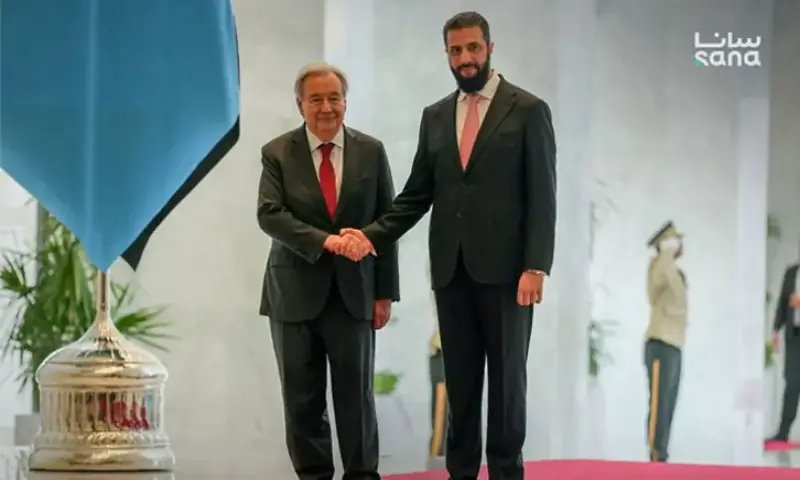
United Nations Secretary General Antonio Guterres arrived in Damascus on Saturday for his first visit to Syria in 17 years, pledging support for the nation's reconstruction efforts. The visit marks a significant moment, as it is the first time a serving UN chief has visited Damascus since 2009, prior to the devastating civil war.
Syrian President Ahmed al-Sharaa received Guterres at the presidential palace. During a joint press conference, Guterres emphasized the need for international assistance, stating, "No country emerges from a very severe conflict and rebuilds itself on its own." He assured Syria of the UN's support in its determination to rebuild.
No country emerges from a very severe conflict and rebuilds itself on its own. We must help Syria in its determination and resolve to do so.
Syrian Foreign Minister Asaad al-Shaibani reiterated Syria's appeal for greater international support, particularly from the European Union. Discussions between Guterres and Syrian officials focused on enhancing UN aid for reconstruction and a government initiative to close displacement camps.
What is happening in the region around the Golan Heights is totally unacceptable.
Guterres also addressed the volatile situation in the Golan Heights, describing it as "totally unacceptable." He urged Israeli forces to withdraw from a UN-patrolled buffer zone established in 2024. Shaibani echoed this sentiment, calling for an "immediate and unconditional Israeli withdrawal" from the occupied area.
This visit signifies a milestone for Syria, following the end of the civil war in late 2024. Guterres expressed hope for Syria's future, noting the opportunity to "lay the foundations for a future for Syria that will be more stable, more inclusive, and more prosperous for all Syrians." He is expected to meet with other government officials, civil society representatives, and address the Syrian parliament.
The United Nations stands with Syria at this pivotal moment.
DistantNews Editorial
Originally published by Dawn. Summarized and contextualized by our editorial team with added local perspective. Read our editorial standards.
More Stories
From Our Blog

What Gets Lost (and Found) When News Is Translated

The Critical Role of Diaspora Media in Global News

What Travellers Should Know About Countries with Restricted Press

A Digital Nomad's Guide to Following Local News

How the Same Story Looks Different in Different Countries
