


One in Ten South Koreans Have 'Borderline Intelligence,' Facing Welfare Gaps
Translated from Korean, summarized and contextualized by DistantNews.
At a glance
In-depth
Named sources
New plan
- Approximately 10% of South Korea's population falls into the 'borderline intelligence' category, struggling with daily life despite not meeting disability criteria.
- These individuals often face significant difficulties in education, employment, and social integration as adults.
- Experts point to a lack of tailored support systems, leaving them in a welfare blind spot, and advocate for improved social awareness and community-based assistance.
An estimated 10% of South Korea's population struggles with what is termed 'borderline intelligence,' a condition that hinders academic, professional, and social functioning without meeting the criteria for intellectual disability. This significant segment of the population often finds themselves in a critical welfare blind spot, facing escalating challenges as they transition into adulthood.
Experts highlight that these individuals frequently fall outside the scope of existing disability welfare programs. While they may receive some support during their school years, the transition to adulthood brings increased demands for self-sufficiency in employment, relationships, and economic activity. Without adequate support structures, their difficulties in adapting to society become more pronounced.
Good practice starts with good questions.
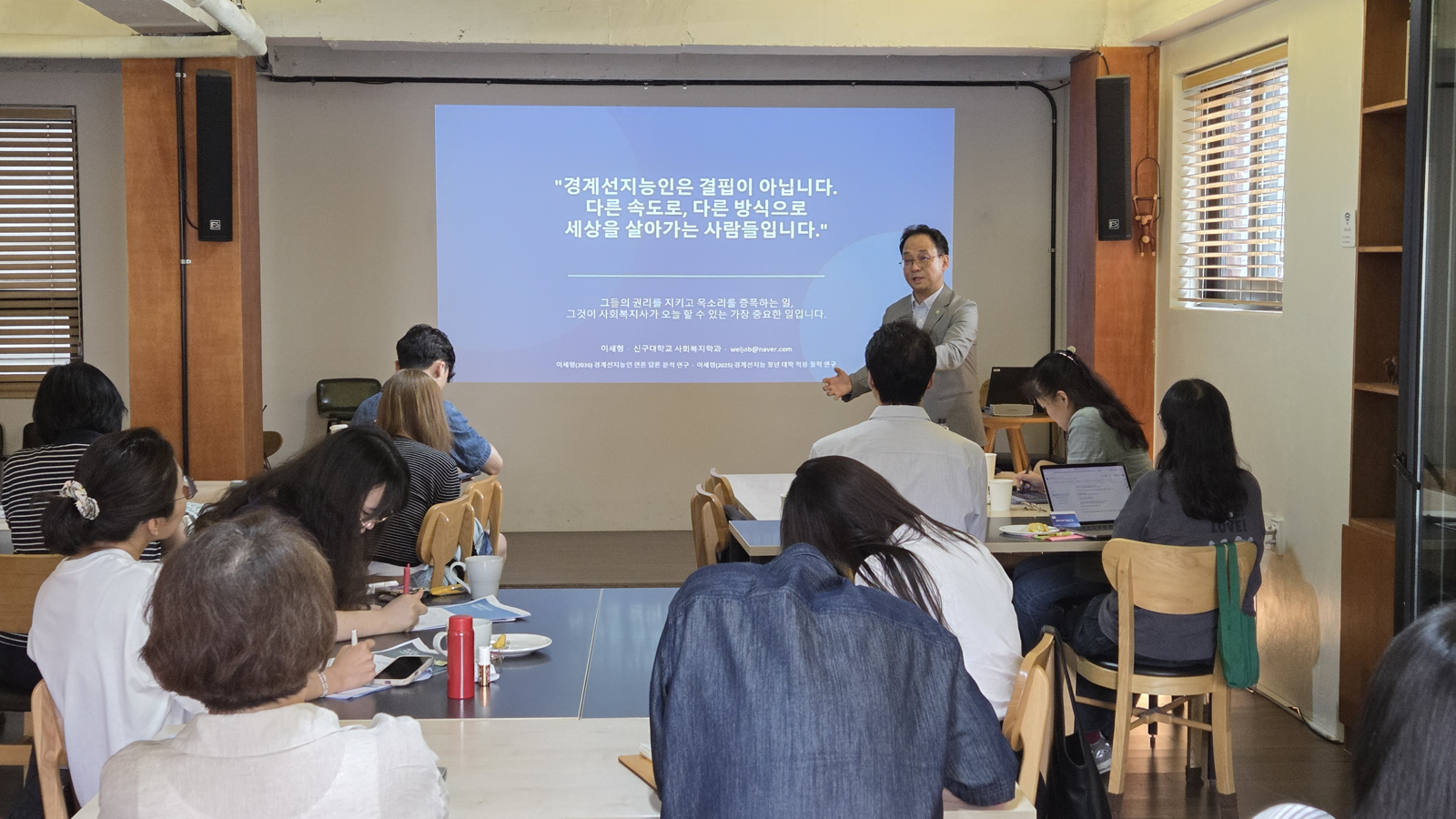
A recent discussion, hosted by the Seoul Welfare Education Center under the Seoul Welfare Foundation, focused on understanding and addressing the needs of individuals with borderline intelligence. The event brought together welfare professionals to explore necessary competencies for social workers in an evolving landscape, emphasizing the importance of human understanding and effective questioning over mere technological proficiency.
Discussions at the forum underscored the need for improved societal recognition and the expansion of community-based support systems tailored to the unique challenges faced by this group. The goal is to create more effective pathways for social adaptation and integration, ensuring that individuals with borderline intelligence can lead more fulfilling lives.
In the future, we will continue to consider the questions from the field amidst the changing social welfare environment and support the professionalism and practical capabilities of social workers.
DistantNews Editorial
Originally published by Dong-A Ilbo in Korean. Translated, summarized, and contextualized by our editorial team with added local perspective. Read our editorial standards.
More Stories



From Our Blog

What Gets Lost (and Found) When News Is Translated

The Critical Role of Diaspora Media in Global News

What Travellers Should Know About Countries with Restricted Press

A Digital Nomad's Guide to Following Local News

How the Same Story Looks Different in Different Countries
