


 Image: EFE
One month into the Ceuta crisis, social tension and disinformation fuel the far right
Translated from Spanish and summarized by DistantNews. Read the original for the full story.
At a glance
Analysis
Named sources
Ongoing story
- A month after a mass arrival of migrants in Ceuta, hundreds remain outdoors while residents hold daily protests and migrants camping on a beach face attacks.
- Authorities do not have a confirmed figure for how many people entered or remain, although estimates put the number who arrived at about 80,000.
- Analysts say the crisis has fueled disinformation, social tension and far-right political messaging in the Spanish city.
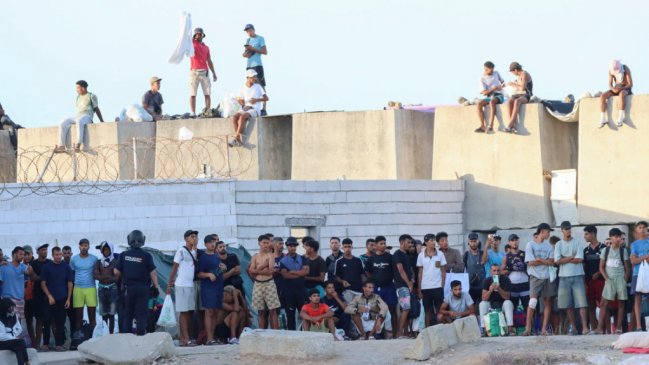
A month after tens of thousands of people entered Ceuta, hundreds of migrants remain outdoors in the Spanish city while residents protest daily and attacks target people camping on the beach.
The crisis has become a source of political opportunity for the far right, according to analysts consulted by EFE. They also warn that the episode has contributed to a harder tone from the broader right and created fertile ground for disinformation.
Ceuta has about 83,000 residents. No confirmed figure has been given for how many people entered the city, although estimates put the number at around 80,000. It is also unclear how many remain.
Migrants have gathered while waiting to enter a temporary center equipped with military tents at the Loma Colmenar holding area. Political scientist Ruth Ferrero of Madrid's Complutense University said it was incorrect to equate the situation with other migration crises in Spain's recent history.
The continuing presence of migrants, public protests and attacks has left the city facing sustained social tension. The humanitarian emergency has therefore become not only a question of accommodation, but also a contested issue in Ceuta's political debate.
I think it is incorrect to equate it with other migration crises in Spain's recent history.
About this summary
Originally published by Cooperativa in Spanish. Translated, summarized, and contextualized automatically by DistantNews, with a note on how the source frames the story. Not individually reviewed before publishing. How this works.
More Stories



From Our Blog

What Gets Lost (and Found) When News Is Translated

The Critical Role of Diaspora Media in Global News

What Travellers Should Know About Countries with Restricted Press

A Digital Nomad's Guide to Following Local News

How the Same Story Looks Different in Different Countries
