


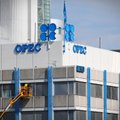
OPEC+ increases July production quotas
Translated from Lithuanian, summarized and contextualized by DistantNews.
At a glance
News
Official statement
New plan
- OPEC+ agreed to a modest increase in oil production quotas for July, adding 188,000 barrels per day.
- Analysts suggest the increase is largely symbolic, as physical supply remains constrained, particularly with the Strait of Hormuz potentially closed.
- The group aims to stabilize the market while maintaining flexibility to adjust production levels based on evolving conditions.
OPEC+ nations have agreed to a slight increase in their oil production quotas for July, planning to add 188,000 barrels per day to the market. This decision follows a video conference among key members including Saudi Arabia, Russia, Iraq, Kuwait, Kazakhstan, Algeria, and Oman.
This means very little as long as the Strait of Hormuz remains closed.
However, analysts express skepticism about the real-world impact of this increase. Jorge Leon, an analyst at Rystad Energy, noted that the move signifies little as long as the Strait of Hormuz remains a potential choke point. He described the quota increase as more of a "policy signal" than a genuine boost to physical supply, emphasizing that the market is currently starved for barrels that can actually be transported.
The market is not short of quota announcements; it is short of physical barrels that can actually move. In this regard, an increase of 188,000 barrels per day would be more of a policy signal than real supply growth.
The group's statement indicates the goal is to "support oil market stability." The seven participating states also see this as an opportunity to "accelerate compensation" amid historically high oil prices. They reaffirmed their commitment to a cautious approach, maintaining full flexibility to increase, pause, or cancel voluntary production adjustments, including the unwinding of cuts announced in November 2023.
The goal of the latest increase is to 'support oil market stability,' but the seven mentioned countries also saw the possibility to 'accelerate compensation' in the face of historically high oil prices.
Leon further suggested that OPEC+ is being prudent, anticipating potential shifts in the Middle East conflict that could reopen the Strait of Hormuz. Should the strait become accessible again, the market could rapidly transition from fearing shortages to fearing a surplus. This potential surplus could be exacerbated by returning OPEC+ supply, a stronger response from U.S. shale producers, and weaker demand following a period of high prices, creating a significant oversupply problem.
When the Strait of Hormuz reopens, the market could very quickly move from fear of shortage to fear of surplus.
DistantNews Editorial
Originally published by Delfi in Lithuanian. Translated, summarized, and contextualized by our editorial team with added local perspective. Read our editorial standards.
More Stories


From Our Blog

What Gets Lost (and Found) When News Is Translated

The Critical Role of Diaspora Media in Global News

What Travellers Should Know About Countries with Restricted Press

A Digital Nomad's Guide to Following Local News

How the Same Story Looks Different in Different Countries
