



Operator Switch in Currency Suitcase Case Sparks Denunciations in Bolivia
Translated from Spanish, summarized and contextualized by DistantNews.
At a glance
News
Named sources
Under investigation
- A Bolivian congressman alleges that 31 suitcases containing foreign currency entered the country with a different operator than authorized.
- The suitcases, weighing 620 kilograms, were declared as diplomatic baggage.
- Congressman Rolando Pacheco claims no formal investigation has occurred in 51 days since the incident.
Bolivian congressman Rolando Pacheco has raised serious questions regarding the irregular entry of 31 suitcases filled with foreign currency into the country. He asserts that 51 days after the incident, no formal investigation has been initiated into the matter. Pacheco presented a report to a special investigative commission detailing the events, compiled from written requests and public statements by authorities.
The authorization for entry-exit N° DGAC/ING/509/2025 was issued by the Directorate General of Civil Aeronautics in favor of the operator Southern Cross Aircraft Llc; however, the flight operated and presented its general declaration under the name of a different company, Proflite Llc. Neither of the two companies is registered in the SUMA system of the National Customs.
The congressman highlighted a discrepancy in the flight's operator. The Gulfstream G-550, with registration N585JC, flew from Burbank, California, to Viru Viru Airport in Santa Cruz on November 28-29, 2025. While the Directorate General of Civil Aeronautics issued entry-exit authorization N° DGAC/ING/509/2025 to Southern Cross Aircraft Llc, the flight operated and filed its general declaration under the name Proflite Llc. Pacheco noted that neither company is registered in the National Customs SUMA system.
Further raising concerns, Pacheco stated that on November 29, 2025, a Brazilian Federal Police liaison officer alerted Bolivian anti-narcotics police that the plane was transporting suitcases with money potentially intended for drug payments, based on prior information from the U.S. Homeland Security Investigations (HSI). This alert was reportedly relayed to an aide of the Minister of Government. That same afternoon, the 31 suitcases, weighing 620 kilograms, were unloaded, declared as diplomatic baggage. The documents listed Bruno Sánchez as the flight charter representative, but he was neither a crew member nor a passenger.
the police official of the Federal Police of Brazil, Fernando Augusto Battaus, (...) alerted the lieutenant Marvin Manzaneda Rojas, of the Special Force to Combat Narcotrafficking (Felcn), that the plane transported suitcases with money allegedly intended for the payment of drugs, based on prior information from the agency Homeland Security Investigations (HSI) of the United States.
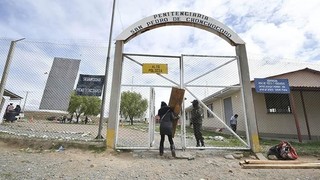
According to Pacheco, former congresswoman Laura Rojas Ayala retrieved the 31 suitcases from customs on December 3, presenting a diplomatic passport that had been annulled 20 days prior. The luggage was transported from Viru Viru in a minibus escorted by motorcycles to the warehouse of Ebose S.R.L., owned by Judge Hebert Zeballos. Despite these events, Pacheco claims that "during 51 days, no formal criminal investigation act has been registered in the available documentation." Six individuals are currently detained in Palmasola prison, while Gabriel Giuliano Leoni remains a fugitive.
during 51 days no formal criminal investigation act has been registered in the available documentation.
DistantNews Editorial
Originally published by El Deber in Spanish. Translated, summarized, and contextualized by our editorial team with added local perspective. Read our editorial standards.
More Stories

From Our Blog

What Gets Lost (and Found) When News Is Translated

The Critical Role of Diaspora Media in Global News

What Travellers Should Know About Countries with Restricted Press

A Digital Nomad's Guide to Following Local News

How the Same Story Looks Different in Different Countries
