


Opposition Parties Explore Recreating 2015 Alliance to Defeat Tinubu
Translated from English and summarized by DistantNews. Read the original for the full story.
At a glance
News
Named sources
Ongoing story
- Six Nigerian opposition parties met in Abuja and pledged to explore an alliance ahead of the 2027 presidential election.
- G100 convener Salihu Mohammed Lukman cited the 2015 opposition coalition as an example of parties agreeing on rules and a candidate before the election.
- Speakers argued that opposition divisions helped President Bola Tinubu’s party win power in 2023 despite opposition candidates collectively receiving more votes.
Nigeria’s opposition parties are looking back to the 2015 election for a strategy to challenge President Bola Tinubu in 2027: agree on how to work together before choosing a candidate.
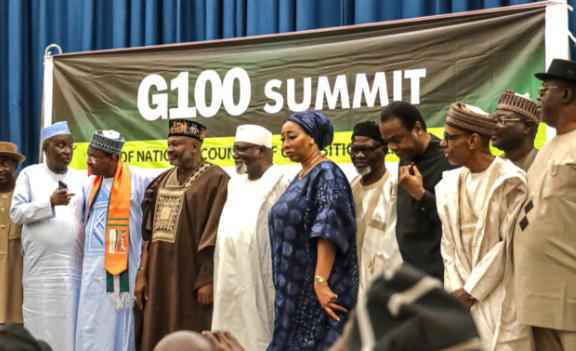
Six parties, including the African Democratic Congress, Nigeria Democratic Congress, Peoples Redemption Party, a faction of the Peoples Democratic Party led by Tanimu Turaki, Allied Peoples Movement and Social Democratic Party, pledged at a summit in Abuja to cooperate. The meeting was convened by civil society groups under the G100 initiative.
What they had was not affection. What they had was sequence. They agreed on the rules before they knew the outcome.
G100 convener Salihu Mohammed Lukman said the 2015 coalition succeeded because parties that distrusted one another negotiated rules and agreed on how their candidate would emerge before knowing who that candidate would be. “What they had was not affection,” Lukman said. “What they had was sequence. They agreed on the rules before they knew the outcome.”
This is not a conspiracy. Nobody stole 13 million votes. We divided them ourselves, in public and we did it knowing exactly what the consequence would be.
He contrasted that approach with the 2023 election. Lukman said the winner received just under nine million votes, while one opposition candidate secured close to seven million and another won just over six million. The opposition votes were divided, allowing the side with fewer votes to form the government through a lawful and constitutional process, he said.
“This is not a Nigerian lesson” alone, Lukman said, pointing to Kenya’s 2002 election and Malaysia’s 2018 election as examples of opposition forces defeating long-governing parties after uniting. The Abuja gathering was intended to begin further discussions on an opposition alliance, rather than announce a final coalition or candidate.
This is not only a Nigerian lesson.
About this summary
Originally published by ThisDay in English. Translated, summarized, and contextualized automatically by DistantNews, with a note on how the source frames the story. Not individually reviewed before publishing. How this works.
More Stories


From Our Blog

How the Same Story Looks Different in Different Countries

What Gets Lost (and Found) When News Is Translated

The Critical Role of Diaspora Media in Global News

What Travellers Should Know About Countries with Restricted Press

A Digital Nomad's Guide to Following Local News
