


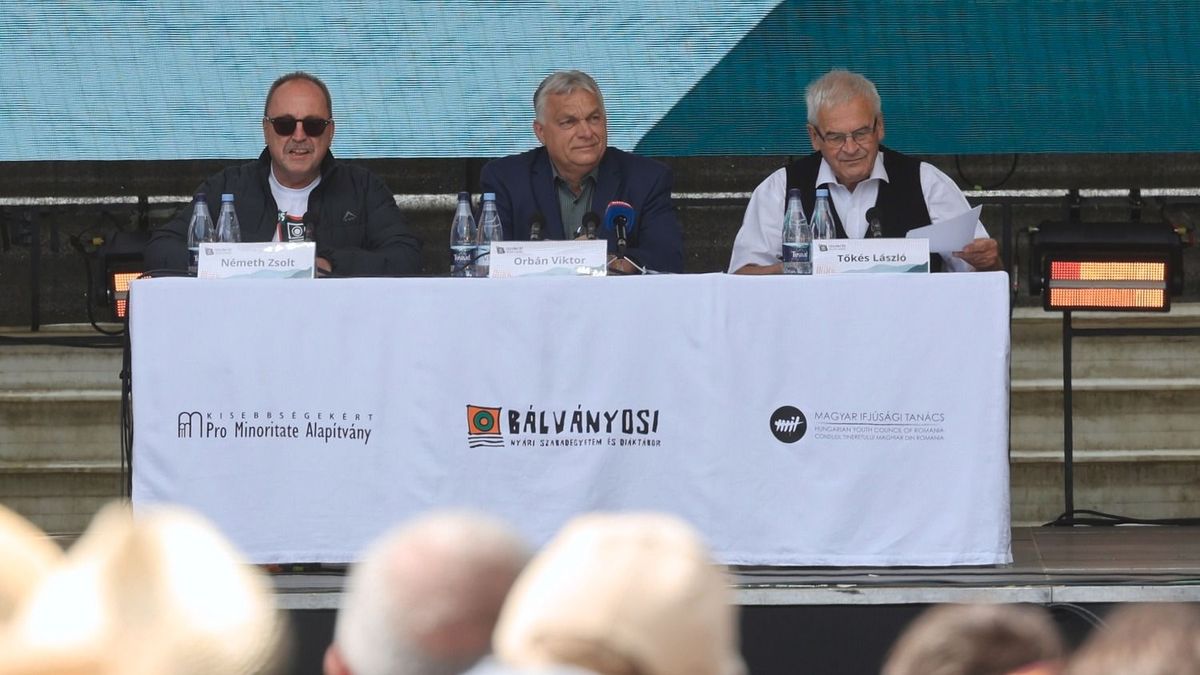
Orbán Declares New Era for Hungarian Right, Analyst Says
Translated from Hungarian, summarized and contextualized by DistantNews.
At a glance
Analysis
Named sources
Context piece
- Analyst Deák Dániel interprets Viktor Orbán's recent speech as a declaration of a new era for the Hungarian right, signaling a potential renewal and generational shift.
- Orbán's remarks suggest upcoming economic measures with significant political consequences, possibly addressing international challenges like an oil crisis.
- The concept of Fidesz as a "seedbed" for new politicians indicates a deliberate program for rejuvenation and the cultivation of future leaders within the party and broader right-wing movements.
Political analyst Deák Dániel views Prime Minister Viktor Orbán's recent speech as a pivotal moment, heralding a new era for the Hungarian right and potentially initiating a significant renewal within its ranks. Dániel suggests that Orbán's strategic direction aligns with the KDNP's desire for greater political independence, echoing earlier statements from Zsolt Semjén about pursuing a more distinct policy path.
Dániel anticipates that the coming years could see the emergence of various independent political actors and initiatives on the right. While these may operate under different structures, they are expected to pursue common strategic objectives. This outlook suggests a potential fragmentation and subsequent realignment within the Hungarian right-wing political landscape.
Orbán Viktor beszédében a Fideszt egy „faiskolához” is hasonlította, amely új politikai szereplőket nevel ki.
Regarding the economic aspects of Orbán's speech, Dániel highlighted the prime minister's assertion that economic governance has stalled amidst serious international challenges facing Hungary. The analyst found Orbán's specific mention of the danger of an oil crisis particularly noteworthy. The speech implied that significant economic measures, potentially carrying substantial political ramifications, could be introduced in the autumn, requiring a response from opposition parties.
Furthermore, Orbán's comparison of Fidesz to a "seedbed" (faiskola) for nurturing new political talent was interpreted by Dániel as a clear reference to the party's generational change program. This aligns with the idea of "elders in the council, youth in the battle," signifying a deliberate move towards rejuvenation and renewal. Dániel cited Gábor Tüske, who took over Orbán's parliamentary mandate, as an example of this generational shift. He believes these new, younger politicians are gaining recognition and support within the right-wing base, and the "seedbed" concept points to the cultivation of figures who could become leading faces of resistance policy in the coming years, potentially within Fidesz, other right-wing movements, or even opposition formations, all aiming to build a political alternative capable of achieving government change by 2030.
A „faiskola” kifejezés azt jelenti, hogy most kell kinevelni azokat a politikusokat, akik az elkövetkező években az ellenállási politika meghatározó arcai lehetnek
DistantNews Editorial
Originally published by Magyar Nemzet in Hungarian. Translated, summarized, and contextualized by our editorial team with added local perspective. Read our editorial standards.
More Stories
From Our Blog

Countries Without a Free Press: What You Need to Know

What Press Freedom Means for the News You Read

What Gets Lost (and Found) When News Is Translated

The Critical Role of Diaspora Media in Global News

What Travellers Should Know About Countries with Restricted Press
