


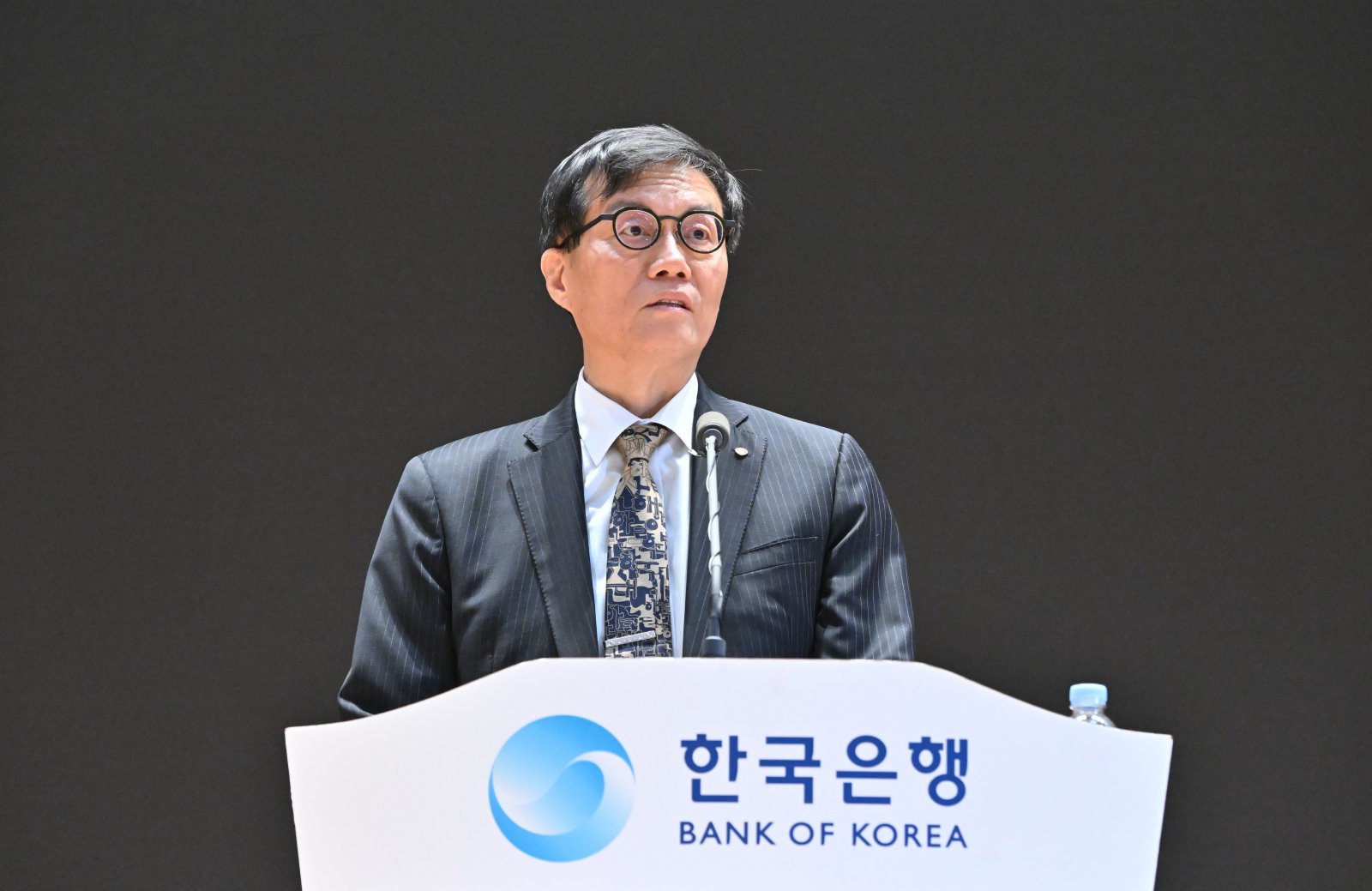
Outgoing Bank of Korea Governor Warns of Production Crisis Beyond Inflation Amid Mideast Tensions
Translated from Korean, summarized and contextualized by DistantNews.
TLDR
- South Korea's central bank governor warned that the nation faces severe economic challenges beyond inflation if Middle East conflicts disrupt oil supplies.
- He emphasized that monetary and fiscal policies alone are insufficient to address low birth rates and slow growth.
- Fundamental structural reforms in labor, education, and industry are crucial for South Korea's future economic health.
As the Governor of the Bank of Korea concludes his four-year term, he leaves behind a stark warning for the nation's economic future. The recent global turmoil, marked by conflicts in the Middle East and the ongoing war in Ukraine, has highlighted South Korea's vulnerability. The Governor pointed out that a prolonged disruption in oil supplies, stemming from escalating tensions between the US and Iran, could cripple not just inflation but also the country's manufacturing sector, impacting the entire industrial ecosystem.
This situation underscores a critical point often overlooked in international discussions: South Korea's heavy reliance on imported resources. While Western media might focus on global market fluctuations, for us in Korea, the immediate threat to production and daily life is a tangible reality. The Governor's call for fundamental structural reforms in labor, education, and industry is not merely an economic suggestion; it's a national imperative for survival and sustained growth.
Our country has no oil. If we cannot receive oil for a few more months, the problems caused not only by inflation but also by the inability to produce will be significant.
He rightly asserted that the Bank of Korea's interest rate decisions and government fiscal stimulus, while important, cannot single-handedly solve deep-seated issues like low birth rates and sluggish economic expansion. These are complex societal challenges that demand a holistic approach. The Governor's final address serves as a crucial reminder that without bold, structural changes, South Korea risks falling further behind, unable to adapt to a rapidly changing global landscape. His tenure, marked by navigating high inflation and currency fluctuations, ends with a powerful plea for a more resilient and adaptable economic framework.
Even freezing the base rate is a very courageous and important decision.
DistantNews Editorial
Originally published by Dong-A Ilbo in Korean. Translated, summarized, and contextualized by our editorial team with added local perspective. Read our editorial standards.
More Stories

From Our Blog

What Gets Lost (and Found) When News Is Translated

The Critical Role of Diaspora Media in Global News

What Travellers Should Know About Countries with Restricted Press

A Digital Nomad's Guide to Following Local News

How the Same Story Looks Different in Different Countries
