


'Outrageous': Punjab's Proposed Law Reminiscent of Colonial Era Draws Criticism
Translated from English, summarized and contextualized by DistantNews.
At a glance
News
Named sources
New plan
- Punjab, Pakistan's provincial government, proposed a bill that critics say resembles colonial-era laws.
- The bill grants executive committees broad powers, including freezing bank accounts and seizing property, based on assessments of conduct rather than criminal convictions.
- Activists and legal experts warn the legislation undermines the rule of law and concentrates excessive power in the executive branch.
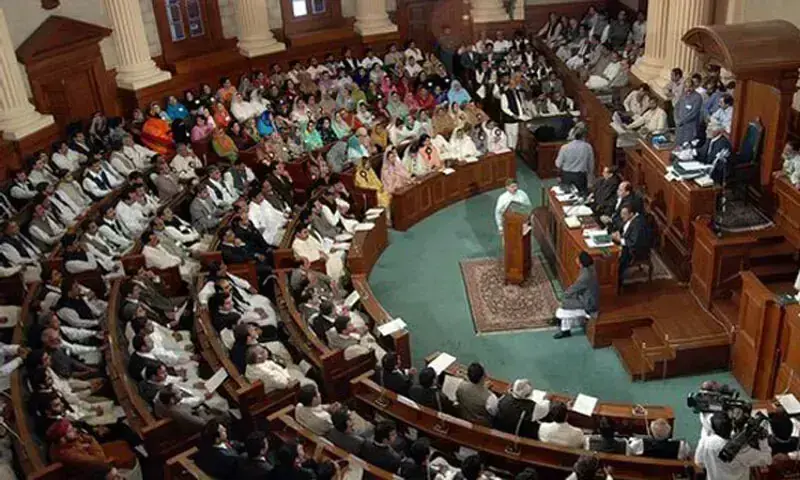
Pakistan's Punjab government is facing strong criticism for proposing a new bill that critics argue echoes colonial-era legislation. The Punjab Control of Habitual Offenders and Anti-Social Behaviour Bill, 2026, has advanced to the Punjab Assembly Standing Committee on Law. The proposed law would empower executive committees, heavily influenced by police and intelligence officials, to take drastic actions against individuals deemed 'habitual offenders' or 'anti-social.' These actions, which can be initiated based on an intelligence committee's assessment, include freezing bank accounts, seizing property, removing online content, confiscating phones, and imposing electronic surveillance, all without requiring a prior criminal conviction in a court of law.
one of the most dangerous pieces of legislation proposed in Pakistan in recent years.
Yousuf Nazar, a former Citigroup executive and author, described the bill as "one of the most dangerous pieces of legislation proposed in Pakistan in recent years." He highlighted the "breathtaking" powers granted to the executive, noting that sanctions can be imposed before guilt is proven in court. Nazar expressed concern that the vague definition of 'anti-social behaviour,' which includes spreading misinformation and causing annoyance, could be expanded through subordinate legislation. He argued that the bill shifts power from judicial oversight to executive discretion, effectively creating 'goonda raj' (rule by thugs) at the local police station level.
It gives executive committees dominated by police and intelligence officials the power to brand citizens as ‘habitual offenders’ or ‘anti-social’ and punish them without first securing a criminal conviction.
Activists, lawyers, journalists, and civil society members have joined the opposition in condemning the bill. They argue that it undermines the presumption of innocence, weakens due process, and concentrates excessive authority in unaccountable bodies. The legislation, they contend, bypasses the fundamental principles of the rule of law by allowing severe penalties to be imposed based on intelligence reports or police records, even without a court conviction. The broad executive powers and the potential for arbitrary application have raised alarms about the future of democratic governance and individual liberties in Pakistan.
The powers are breathtaking. Bank accounts can be frozen. Property can be attached. Electronic devices can be seized. Electronic surveillance can be imposed. Travel documents can be restricted. Social media accounts and online content can be targeted. None of this requires the state to prove guilt beyond a reasonable doubt in a court of law before these sanctions take effect.
DistantNews Editorial
Originally published by Dawn in English. Translated, summarized, and contextualized by our editorial team with added local perspective. Read our editorial standards.
More Stories

From Our Blog

What Gets Lost (and Found) When News Is Translated

The Critical Role of Diaspora Media in Global News

What Travellers Should Know About Countries with Restricted Press

A Digital Nomad's Guide to Following Local News

How the Same Story Looks Different in Different Countries
