

Pacific Regasification Plant: Colombia's $170 Million Plan to Avert Gas Shortage
Translated from Spanish, summarized and contextualized by DistantNews.
At a glance
News
Sources not specified
New plan
- Colombia faces an imminent natural gas deficit, with daily consumption exceeding production by over 400,000 cubic meters.
- The Regasificadora del Pacífico project in Valle del Cauca aims to ensure reliable energy supply and provide a backup for national gas needs.
- This private initiative, supported by the government, utilizes a virtual pipeline system with isocontainers to transport liquefied natural gas.
Colombia is confronting a critical energy challenge as a looming deficit in natural gas supply threatens national energy security. Daily consumption hovers around 1.2 million cubic meters, significantly outpacing the current domestic production of less than 800,000 cubic meters, creating a daily shortfall exceeding 400,000 cubic meters.
This vulnerability is compounded by a sharp decline in domestic gas production, a concentration of supply in a few fields, and a heavy reliance on a single transport network. Experts warn that any disruption to this fragile system, whether through accident or blockage, could leave large parts of the country without gas, lacking sufficient operational redundancy or alternative plans.
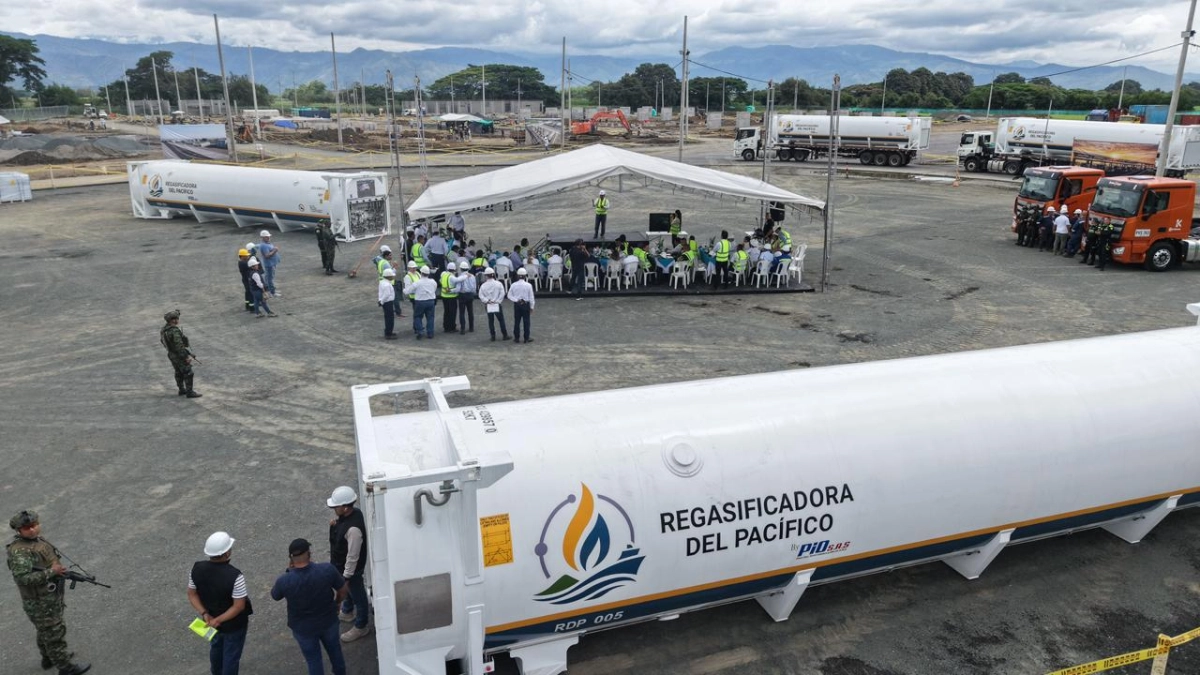
In response, the Regasificadora del Pacífico (RdP) project is underway in Valle del Cauca, spanning the municipalities of Buenaventura and Guadalajara de Buga. This strategic infrastructure aims to secure a reliable energy source and establish a concrete backup route for the nation's energy needs, bolstering continuity and sovereignty.
The initiative is a private venture by PIO SAS, selected for its integrated, secure, and efficient logistical model based on a virtual pipeline. This system transports liquefied natural gas using specialized isocontainers. Ecopetrol and PIOS SAS formalized this "megaproject" with a contract signed in February 2025, marking a significant step towards mitigating the country's energy supply risks.
DistantNews Editorial
Originally published by El Tiempo in Spanish. Translated, summarized, and contextualized by our editorial team with added local perspective. Read our editorial standards.
More Stories

From Our Blog

What Gets Lost (and Found) When News Is Translated

The Critical Role of Diaspora Media in Global News

What Travellers Should Know About Countries with Restricted Press

A Digital Nomad's Guide to Following Local News

How the Same Story Looks Different in Different Countries
