

Pakistan Brickmakers Scorched by Sun above and Fire Below
Summarized and contextualized by DistantNews.
At a glance
News
Named sources
Context piece
- Brickmakers in Pakistan face increasingly unbearable heat due to climate change, exacerbating already extreme conditions at traditional kilns.
- Workers endure temperatures over 1,000C while exposed to scorching sun, earning about $3 a day in a poorly regulated industry.
- Despite health risks and debt cycles, workers feel compelled to continue due to financial pressures, though efforts are underway to modernize kilns.
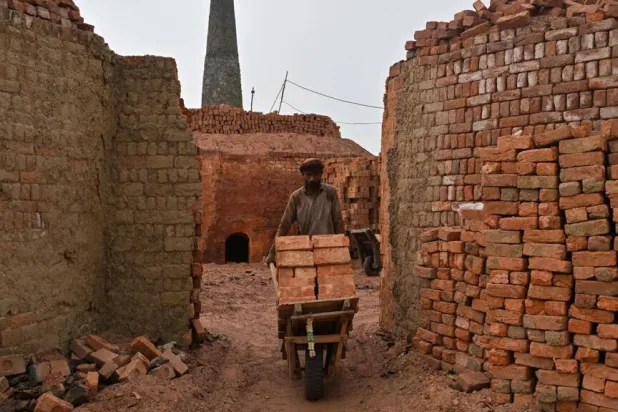
Brickmakers in Pakistan's Sheikhupura district endure extreme heat from both the fiery kilns below and the intensifying sun above, conditions worsened by climate change. Working in temperatures exceeding 1,000C, laborers crush coal into chambers while simultaneously facing rising external temperatures that make summers unbearable in a country already accustomed to heat over 40C.
The heat is undoubtedly extreme but when you think about the financial pressures at home, you have no option but to keep working
Abid Hussain, a 35-year-old laborer covered in soot, described the work as being "trapped between fire below and, increasingly, above." He is one of hundreds of thousands in an industry characterized by poor regulation, low pay (around $3 a day), and escalating danger due to rising global temperatures. Despite the scorching sun and pervasive dust, workers remain on the hot kiln surfaces for extended periods.
I would describe these brick kilns as places of confinement
Syeda Ghulam Fatima, General Secretary of the Bonded Labor Liberation Front Pakistan, calls the brick kilns "places of confinement." She highlighted that workers face relentless heat from both the sun and the kilns, trapping them in a cycle of debt, extreme temperatures, and deteriorating health. Nationwide, over 18,000 brick kilns employ more than a million people, according to 2018 data, placing Pakistan among the countries most vulnerable to climate change impacts.
Workers endure relentless heat from the blazing sun overhead while the intense heat radiating from the kiln rises beneath them.
Financial pressures often leave workers with no choice but to continue, even when ill or facing family matters. Hussain earns approximately $90 a month, barely covering rent and his children's basic needs. While the Punjab provincial government is promoting the adoption of modern "zigzag kilns" to reduce pollution and hazards, extended rest breaks are considered unfeasible, as the work must continue uninterrupted regardless of the weather. Health experts warn of increased vulnerability to skin disorders, respiratory problems, and kidney disease from prolonged heat exposure at traditional kilns.
No matter the situation, whether we are ill or there are family matters, we still have to work. If I take time off, we'll be in trouble.
DistantNews Editorial
Originally published by Asharq Al-Awsat. Summarized and contextualized by our editorial team with added local perspective. Read our editorial standards.
More Stories



From Our Blog

What Gets Lost (and Found) When News Is Translated

The Critical Role of Diaspora Media in Global News

What Travellers Should Know About Countries with Restricted Press

A Digital Nomad's Guide to Following Local News

How the Same Story Looks Different in Different Countries
