

Pakistan clerics from all sects unite in prayer at hardline seminary
Translated from English, summarized and contextualized by DistantNews.
At a glance
News
Named sources
New plan
- Clerics from Pakistan's four mainstream Islamic schools of thought offered joint prayers at a seminary in Karachi, a move aimed at eradicating sectarian strife.
- The gathering, led by Pakistan Ulema Council chairman Hafiz Muhammad Tahir Ashrafi, symbolizes growing tolerance and national unity against extremism.
- The National Paigham-i-Aman Committee, which organized the event, is committed to promoting unity and countering extremism by engaging with various religious communities.
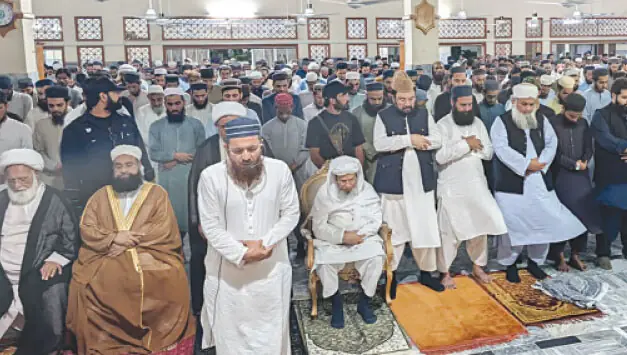
In a significant display of religious harmony, clerics representing Pakistan's four main Islamic schools of thought gathered for joint prayers at the Jamiatur Rasheed seminary in Karachi. This unprecedented event, once considered a hardline institution, marks a crucial step in the nation's campaign against extremism and sectarian violence.
Offering prayers together symbolises growing tolerance in society, especially among religious circles.
Hafiz Muhammad Tahir Ashrafi, chairman of the Pakistan Ulema Council and Prime Minister's Coordinator for the National Paigham-i-Aman Committee (NPAC), highlighted the significance of the gathering. "Offering prayers together symbolizes growing tolerance in society, especially among religious circles," Ashrafi stated. He emphasized that the congregation aimed to foster unity, tolerance, and mutual respect, countering the divisions sown by miscreants and some religious leaders.
This is an unprecedented demonstration of religious harmony and national unity by the National Paigham-i-Aman Committee, bringing together eminent ulema and mashaikh, representatives of major religious seminaries, and leaders from different faith communities.
The NPAC, established in September 2024, comprises senior clerics and leaders from various faith communities. The committee has actively worked to promote the objectives of Paigham-i-Pakistan by engaging in meetings and gatherings across several cities. Their efforts extend beyond Muslim places of worship, including visits to Sikh, Hindu, and Christian religious sites, underscoring a commitment to national cohesion and interfaith dialogue.
The goal of all responsible ulema in Pakistan is to see Muslims offering prayers together, just as they do in the Two Holy Mosques, standing behind one imam.
DistantNews Editorial
Originally published by Dawn in English. Translated, summarized, and contextualized by our editorial team with added local perspective. Read our editorial standards.
More Stories

From Our Blog

What Gets Lost (and Found) When News Is Translated

The Critical Role of Diaspora Media in Global News

What Travellers Should Know About Countries with Restricted Press

A Digital Nomad's Guide to Following Local News

How the Same Story Looks Different in Different Countries
