


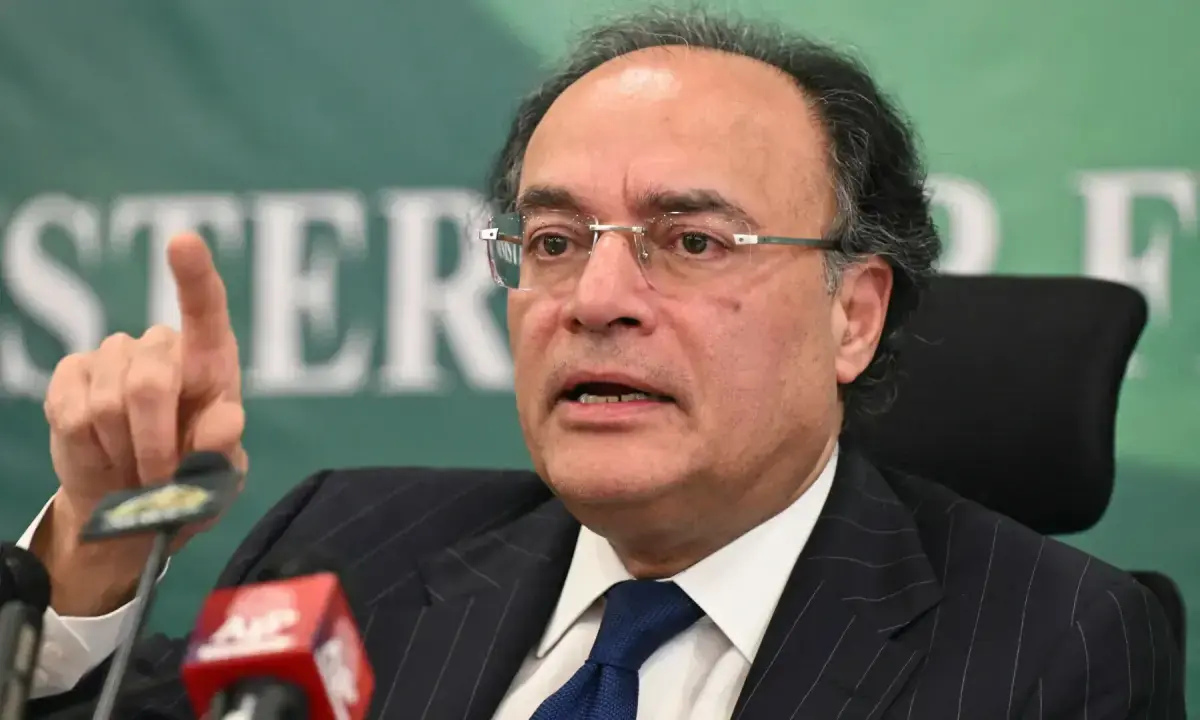
Pakistan committed to reducing tax burden by widening tax net, says Finmin
Translated from English, summarized and contextualized by DistantNews.
At a glance
News
Named sources
New plan
- Pakistan's Finance Minister Muhammad Aurangzeb committed to reducing the tax burden by broadening the tax net.
- The government plans tax relief for exporters, manufacturers, the IT sector, construction, and salaried individuals.
- Measures include tax deepening through compliance and enforcement, alongside structural broadening of the tax base.
Pakistan's Finance Minister Muhammad Aurangzeb reaffirmed the government's commitment to easing the tax burden on specific classes by expanding the tax net.
Exporters, manufacturers, the IT sector, construction and the salaried class, we tried to give them relief. Now the direction of travel is identified, and we will continue working to reduce the disproportionate tax burden by widening our tax net.
Speaking after the unveiling of an Rs18.8 trillion budget for the upcoming fiscal year, Aurangzeb stated that relief measures were provided to exporters, manufacturers, the IT sector, construction, and the salaried class. He emphasized a strategic direction to reduce the disproportionate tax burden by widening the tax base.
The minister outlined a twofold strategy: tax deepening and broadening. Tax deepening involves fixing leakages, combating corruption, and enhancing tax evasion through compliance and enforcement. Structural reforms are also planned to broaden the tax net.
By deepening, I mean that we need to fix leakages, fight corruption and tax evasion through compliance and enforcement. I believe we will get huge upside through this.
Aurangzeb also addressed provincial contributions to security forces due to internal disorder in Khyber Pakhtunkhwa and Balochistan, thanking provincial governments for their cooperation. He noted that no new taxes were announced for the next fiscal year.
The government also needs to structurally move forward in order to broaden its tax net.
Regarding the Federal Board of Revenue (FBR), the minister acknowledged its challenges and is working to replace traditional workflows with AI-led mechanisms to minimize human intervention. He expressed hope for success in de-escalating the US-Israel-Iran conflict, though he anticipates continued economic impact into the next fiscal year.
It was necessary to empower security forces and especially the civil armed forces; that’s why we asked provinces to contribute.
DistantNews Editorial
Originally published by Dawn in English. Translated, summarized, and contextualized by our editorial team with added local perspective. Read our editorial standards.
More Stories

From Our Blog

What Gets Lost (and Found) When News Is Translated

The Critical Role of Diaspora Media in Global News

What Travellers Should Know About Countries with Restricted Press

A Digital Nomad's Guide to Following Local News

How the Same Story Looks Different in Different Countries
