


Pakistan's economic recovery: A gap in perception between government and business
Translated from English, summarized and contextualized by DistantNews.
At a glance
Analysis
Sources not specified
Context piece
- Pakistani businessmen expressed concerns about the investment climate, citing unresolved issues like high taxes and unpredictable policies, despite the government's claims of economic stability.
- Prime Minister Shehbaz Sharif highlighted his government's success in averting sovereign default and reducing inflation, aiming to shift focus to economic growth.
- Business leaders remain unconvinced that the investment climate has improved, pointing to restrictive credit conditions and subdued industrial output, suggesting the government's stabilization strategy has harmed growth and export competitiveness.
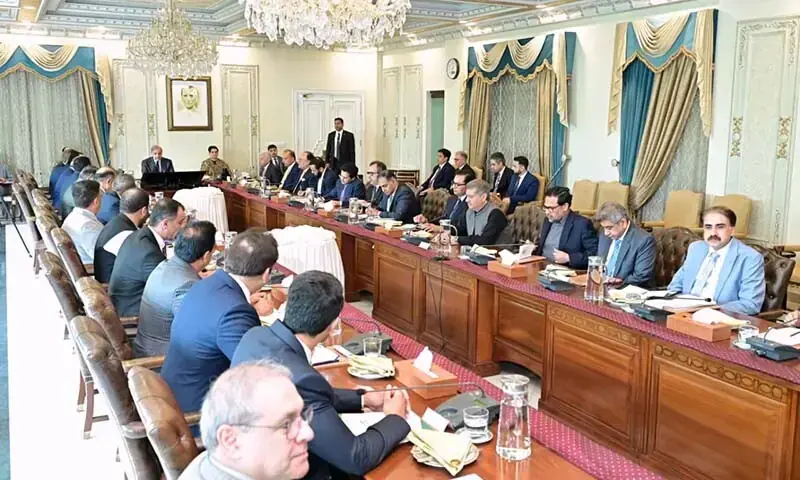
Prime Minister Shehbaz Sharif's recent meeting with leading Pakistani businessmen revealed a significant disconnect in perceptions regarding the country's economic recovery. While the government emphasizes macroeconomic stability achieved after averting sovereign default and controlling inflation, the private sector remains skeptical about the improved investment climate.
Business leaders presented a case for tax relief, faster refunds, and deeper economic reforms, highlighting persistent concerns such as high taxes, bureaucratic hurdles, policy unpredictability, and a lack of reforms to stimulate investment and exports. These issues, they argue, make it difficult to do business, despite the government's narrative of a stabilized economy.
While the businessmen pressed their case for tax relief, faster refunds and deeper economic reforms, Mr Sharif boasted of the stability his government had pulled off and his intention of converting recovery into growth.
Although Sharif acknowledged the need for growth beyond fiscal consolidation, his administration's hands appear tied, particularly under the constraints of an International Monetary Fund program. The upcoming budget is expected to be austere, and the fundamental problems raised by business leaders are likely to remain unresolved.
The government's stabilization strategy, while necessary, has come at a cost to growth and export competitiveness. Sharif did instruct the Federal Board of Revenue to clear pending tax refunds by June 15 and maintain the export refinance scheme rate until June 2027, but these measures are unlikely to fully restore business confidence or boost growth significantly. The private sector's supportive tone during the meeting should not be mistaken for satisfaction with the current economic conditions.
For the government, the economy may be more stable now than it was three years ago, but for manufacturers and exporters, it is still difficult to do business.
DistantNews Editorial
Originally published by Dawn in English. Translated, summarized, and contextualized by our editorial team with added local perspective. Read our editorial standards.
More Stories
From Our Blog

What Gets Lost (and Found) When News Is Translated

The Critical Role of Diaspora Media in Global News

What Travellers Should Know About Countries with Restricted Press

A Digital Nomad's Guide to Following Local News

How the Same Story Looks Different in Different Countries
