

Pakistan's Budget 2026-27: A Tightrope Walk Between Lenders and Households
Translated from English, summarized and contextualized by DistantNews.
At a glance
Analysis
Named sources
Context piece
- Pakistan's economy faces a dilemma between maintaining macroeconomic stability and reviving growth, with little room for expansion under the IMF program.
- IMF-mandated austerity measures have stabilized the economy but at a high social and economic cost, leaving industries underutilized and consumers struggling.
- Analysts predict low GDP growth for FY27, with the upcoming budget expected to adhere to IMF austerity measures rather than stimulate significant economic recovery.
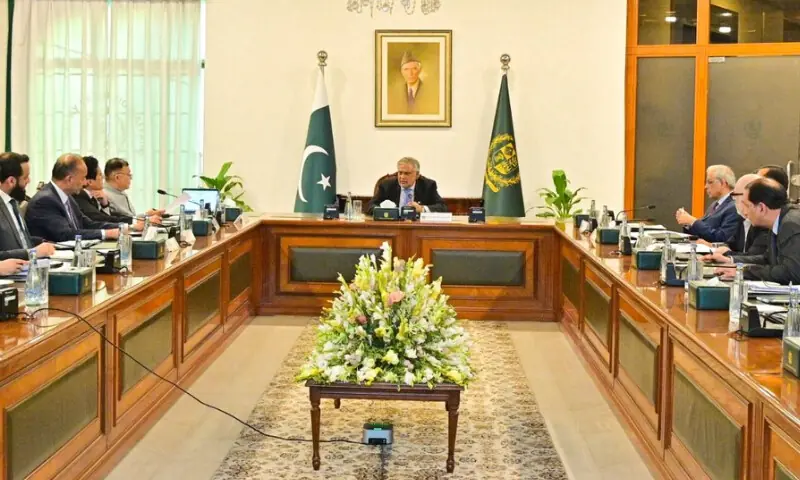
Pakistan's economy is caught in a difficult balancing act, striving to maintain fragile macroeconomic stability while simultaneously attempting to reignite growth. The upcoming budget is expected to continue the path of austerity, largely dictated by the International Monetary Fund (IMF) program, leaving little room for significant expansion.
For the past three years, Pakistan has focused on crisis management rather than fostering sustainable growth drivers. While IMF-mandated policies, including tight monetary controls, fiscal contraction, and energy price hikes, have successfully restored external stability and narrowed deficits, the social and economic consequences are increasingly apparent. Industries operate below capacity, investment remains hesitant, and consumers grapple with diminished purchasing power, painting a harsher reality than official recovery narratives suggest.
Deep-seated weaknesses continue to hinder a transition to sustainable growth. Exports remain sluggish, high energy costs and inefficiencies plague industrial competitiveness, policy inconsistencies deter investment, and elevated interest rates stifle private sector activity. A substantial portion of government revenue is consumed by debt servicing, defense, and subsidies, leaving limited fiscal space for development initiatives.
Economic forecasts offer little optimism. Analysts anticipate GDP growth for the fiscal year 2027 to hover around 3-3.5%, well below the government's target of 4.1%, especially if Middle East tensions keep crude oil prices high. This projection follows an average growth rate below 2% over the last three years. The upcoming budget is therefore expected to align with the IMF's Extended Fund Facility, focusing on revenue mobilization and fiscal restraint rather than growth-oriented policies.
We don’t really have any room. This budget will be an
DistantNews Editorial
Originally published by Dawn in English. Translated, summarized, and contextualized by our editorial team with added local perspective. Read our editorial standards.
More Stories

From Our Blog

What Gets Lost (and Found) When News Is Translated

The Critical Role of Diaspora Media in Global News

What Travellers Should Know About Countries with Restricted Press

A Digital Nomad's Guide to Following Local News

How the Same Story Looks Different in Different Countries
