


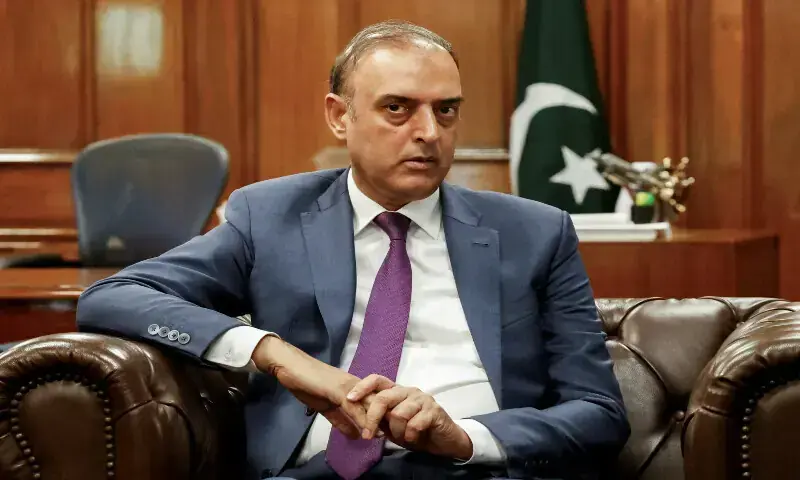
Pakistan's Economy Can Withstand Iran War Risks: SBP Chief
Translated from English, summarized and contextualized by DistantNews.
TLDR
- Pakistan's economy shows signs of improvement with faster-than-expected macroeconomic indicator growth at the start of the fiscal year.
- Prudent monetary and fiscal policies have helped stabilize inflation and strengthen the country's external financial position.
- Despite new risks from the Middle East conflict, Pakistan's economy is considered better positioned to manage challenges compared to previous crises.
The State Bank of Pakistan (SBP) Governor Jameel Ahmad's recent engagements with global financial institutions, including JP Morgan, Barclays, and major credit rating agencies like Fitch and Moody's, underscore Pakistan's efforts to project economic stability and resilience. Speaking at the IMF-World Bank spring meetings, Ahmad highlighted the significant progress made in stabilizing the economy, attributing it to prudent monetary and fiscal policies. This narrative, as presented by Dawn, emphasizes the government's commitment to managing inflation and strengthening foreign exchange reserves, which have seen a notable increase. The SBP's projection of reserves reaching $18 billion by June 2026 further signals confidence in the country's financial outlook. From a Pakistani perspective, these developments are crucial. While international coverage might focus on the risks posed by global geopolitical events, such as the Middle East conflict, the local narrative emphasizes proactive domestic policy measures. The improved macroeconomic stability, reflected in a 3.8% GDP expansion in the first half of FY26, is presented as a testament to Pakistan's enhanced capacity to weather external shocks, a stark contrast to its vulnerability during previous crises like the Russia-Ukraine conflict. The SBP's cautious yet positive monetary policy stance and the government's commitment to fiscal discipline are key elements of this narrative, aiming to reassure investors and the public alike about the nation's economic trajectory.
The country’s key macroeconomic indicators have improved faster than anticipated at the start of the fiscal year, owing to a prudent mix of monetary and fiscal policies that helped stabilise inflation and strengthen external positions.
DistantNews Editorial
Originally published by Dawn in English. Translated, summarized, and contextualized by our editorial team with added local perspective. Read our editorial standards.
More Stories

From Our Blog

What Gets Lost (and Found) When News Is Translated

The Critical Role of Diaspora Media in Global News

What Travellers Should Know About Countries with Restricted Press

A Digital Nomad's Guide to Following Local News

How the Same Story Looks Different in Different Countries
