


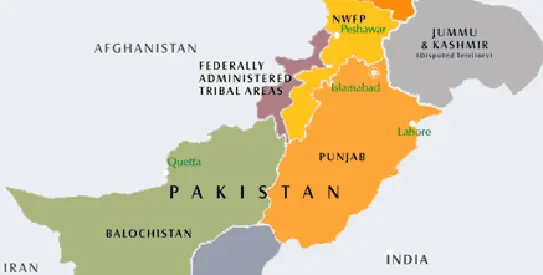
Pakistan's plan for new provinces faces political minefield
Translated from English, summarized and contextualized by DistantNews.
At a glance
News
Named sources
Context piece
- Pakistan's government plans to create new provinces, but faces significant political and constitutional hurdles.
- Political parties are urging the government to follow constitutional procedures, warning against bypassing them.
- Key challenges include building consensus on the number and boundaries of new provinces and potential constitutional amendments.
Pakistan's government is moving forward with plans to carve out new provinces, a move that promises to be a complex undertaking. The incumbent administration appears unprepared for the task, struggling to build consensus among the nation's political forces.
First, all political parties will be taken on board.
Political parties are demanding adherence to the constitutional process for creating new administrative units. They caution that any attempt to circumvent these procedures could provoke a severe backlash the government cannot afford. Minister of State for Law and Justice Barrister Aqeel confirmed the government's intention, stating that all political parties would be consulted first.
Estimates suggest the plan could result in anywhere from seven to 27 new provinces, but significant constitutional, legal, and political challenges lie ahead. These issues necessitate extensive political consultation. While most stakeholders agree the federation is too large, there is no agreement on the new boundaries or the government's capacity to manage such a contentious process.
A referendum is held on matters on which the Constitution is silent. However, there is a proper way prescribed in the Constitution for the creation of new provinces.
Speculation is rife that the government might seek constitutional amendments to bypass a requirement for consent from the relevant provincial assembly when a new province is created from an existing one. Such an amendment would require a two-thirds majority in parliament. Experts suggest the government might consider a referendum, but this also requires parliamentary approval. Pakistan Peoples Party Parliamentarians Secretary General Nayyar Bukhari emphasized the need for the issue to be discussed in the federal cabinet and for all political parties to be taken into confidence. He noted that amending Article 239(4) of the Constitution would also necessitate amending Article 1, requiring broad parliamentary support.
Any constitutional amendment would require a two-thirds majority in Parliament, for which the government would need the support of the PPP and other political parties.
DistantNews Editorial
Originally published by Dawn in English. Translated, summarized, and contextualized by our editorial team with added local perspective. Read our editorial standards.
More Stories



From Our Blog

What Gets Lost (and Found) When News Is Translated

The Critical Role of Diaspora Media in Global News

What Travellers Should Know About Countries with Restricted Press

A Digital Nomad's Guide to Following Local News

How the Same Story Looks Different in Different Countries
