

Pakistan's Trade Deficit Widens, Highlighting Structural Economic Issues
Translated from English, summarized and contextualized by DistantNews.
At a glance
News
Documents & data
Context piece
- Pakistan's trade deficit widened significantly in the first 11 months of the fiscal year.
- Export earnings decreased while import costs increased.
- This persistent gap highlights structural economic constraints, making the country reliant on external funding.
Pakistan's external trade balance continues to widen beyond normal cyclical fluctuations, indicating deeper structural economic constraints that have accumulated over decades. Despite intermittent policy interventions and short-term stabilization efforts, the underlying pattern remains unchanged: import growth consistently outpaces export earnings, leaving the economy dependent on external inflows to bridge a persistent gap.
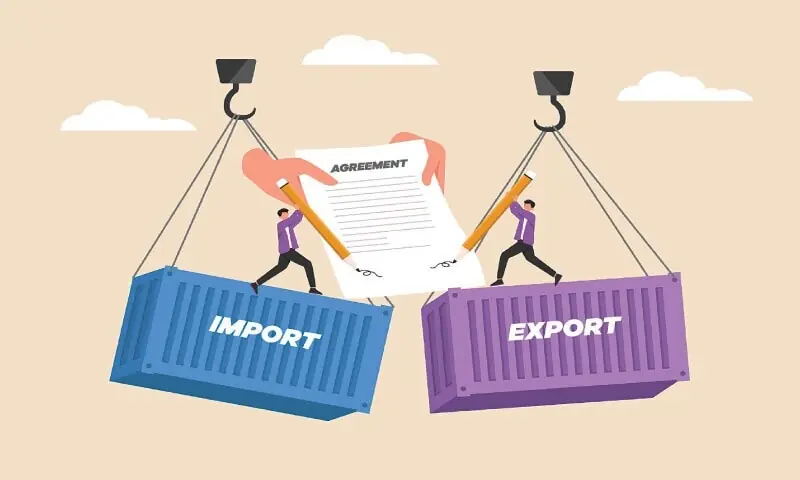
During the first 11 months of the current fiscal year, the trade deficit expanded by 17.48 percent year-on-year, reaching $34.76 billion. This is an increase from the $29.58 billion recorded in the corresponding period of the previous fiscal year. The widening deficit is attributed to a decline in export earnings, which fell by 5.61 percent to $27.91 billion, while imports saw a rise of 5.94 percent, reaching $62.66 billion.
This persistent imbalance underscores Pakistan's ongoing struggle with its external accounts. The economy's reliance on foreign borrowing to finance the gap creates vulnerability to external shocks and can hinder long-term sustainable growth. Addressing these deep-seated structural issues in trade competitiveness and export diversification remains a critical challenge for Pakistan's economic stability.
DistantNews Editorial
Originally published by Dawn in English. Translated, summarized, and contextualized by our editorial team with added local perspective. Read our editorial standards.
More Stories

From Our Blog

What Gets Lost (and Found) When News Is Translated

The Critical Role of Diaspora Media in Global News

What Travellers Should Know About Countries with Restricted Press

A Digital Nomad's Guide to Following Local News

How the Same Story Looks Different in Different Countries
