


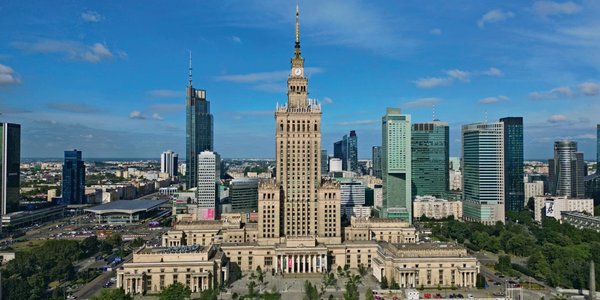
Palace of Culture and Science: Warsaw's Unwanted Symbol Endures
Translated from Polish, summarized and contextualized by DistantNews.
At a glance
In-depth
Sources not specified
Context piece
- The Palace of Culture and Science in Warsaw, a controversial landmark, has endured despite public opposition.
- Built during the Soviet era, it was intended as a
The Palace of Culture and Science in Warsaw, a structure often described as an unwanted symbol, has persisted not out of public affection but due to the sheer difficulty of its removal.
"I survived. Not because people wanted me, but because they couldn't get rid of me," the Palace seems to declare, embodying its complex legacy.
Gifted by the Soviet Union in the 1950s, the Palace was intended as a symbol of Soviet-Polish friendship. However, its imposing Stalinist architecture and the circumstances of its construction made it a contentious element in the Warsaw cityscape for decades. Despite numerous proposals and discussions over the years about its demolition or transformation, the sheer scale and cost of such an undertaking have always prevented any concrete action.
Its enduring presence has sparked ongoing debate about national identity and historical memory. While some see it as a painful reminder of Soviet domination, others have come to accept it as an integral, albeit controversial, part of Warsaw's skyline, hosting various cultural institutions and offering panoramic views of the city.
DistantNews Editorial
Originally published by Rzeczpospolita in Polish. Translated, summarized, and contextualized by our editorial team with added local perspective. Read our editorial standards.
More Stories


From Our Blog

What Gets Lost (and Found) When News Is Translated

The Critical Role of Diaspora Media in Global News

What Travellers Should Know About Countries with Restricted Press

A Digital Nomad's Guide to Following Local News

How the Same Story Looks Different in Different Countries
