


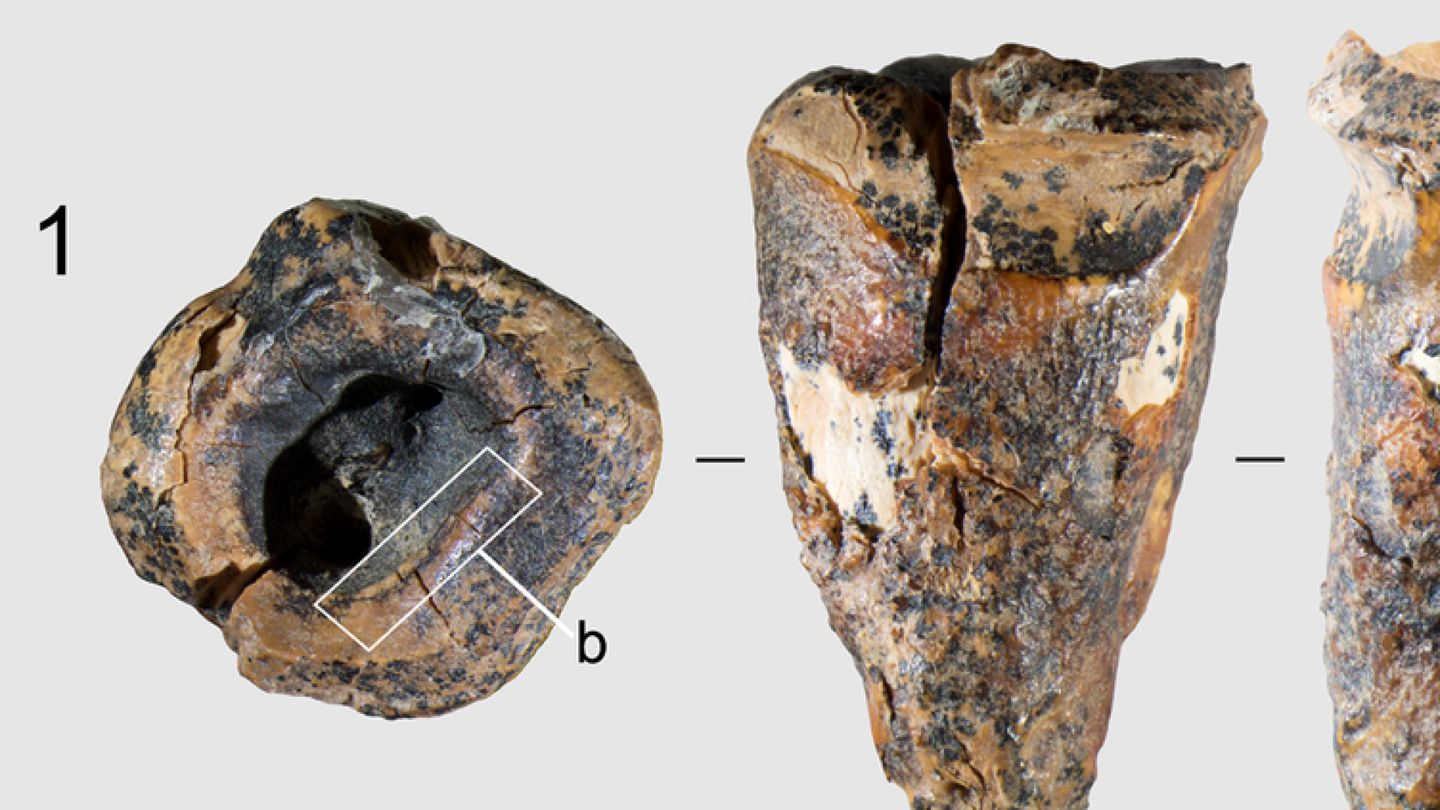
Paleontology: Neanderthals may have removed tooth decay, a cavity in an ancient tooth suggests
Translated from Finnish, summarized and contextualized by DistantNews.
At a glance
News
Sources not specified
Context piece
- A fossilized Neanderthal tooth found in Siberia suggests they may have practiced a form of dental care.
- The tooth, nearly 60,000 years old, shows a deep cavity that researchers believe was intentionally worked, possibly to treat caries.
- This finding, if confirmed, would be the earliest evidence of dental treatment, predating similar findings in Homo sapiens by thousands of years.
Evidence from a nearly 60,000-year-old Neanderthal molar discovered in Siberia suggests these ancient hominins may have possessed rudimentary dental care practices. Researchers analyzing the tooth identified a deep cavity that appears to have been intentionally worked, potentially as an attempt to treat caries, or tooth decay.
The findings, published in PlosOne, indicate that Neanderthals might have understood how to alleviate the pain associated with tooth problems. The deep hole in the molar, measuring between 2 and 4 millimeters wide and over 2 millimeters deep, shows signs of being worked, possibly with a small stone tool like chert or jasper, materials found in the same cave.
The cavity now studied in the molar indicates that Neanderthals realized that a painful tooth problem could be treated. It shows that they had fine motor skills, which are needed to work on a tooth.
This discovery could represent the earliest known evidence of dental treatment, significantly predating similar findings in Homo sapiens, which date back about 14,000 years. While evidence of dental care in ancient human communities has been observed, particularly with the rise of agriculture leading to increased caries, this Neanderthal molar offers a much earlier glimpse into such practices.
Professor emeritus John Olsen, a co-author of the study, noted that the treatment indicates Neanderthals had fine motor skills and a sophisticated understanding of invasive procedures. The analysis also revealed mineral loss on the tooth's surface from acid attacks, consistent with caries. The fact that the tooth's owner was still chewing after the cavity was worked suggests the treatment may have been at least partially successful.
The treatment of the tooth shows that Neanderthals had a rather sophisticated understanding of invasive treatments.
DistantNews Editorial
Originally published by Helsingin Sanomat in Finnish. Translated, summarized, and contextualized by our editorial team with added local perspective. Read our editorial standards.
More Stories


From Our Blog

What Gets Lost (and Found) When News Is Translated

The Critical Role of Diaspora Media in Global News

What Travellers Should Know About Countries with Restricted Press

A Digital Nomad's Guide to Following Local News

How the Same Story Looks Different in Different Countries
