


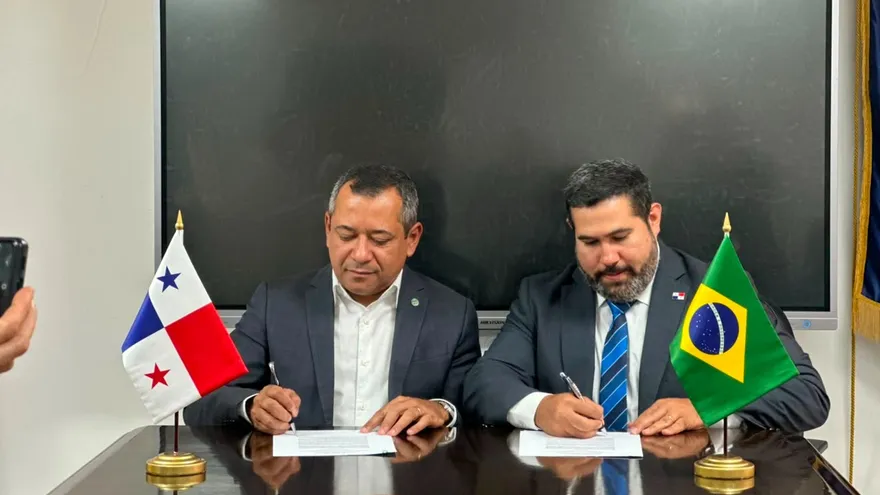
Panama and Brazil strengthen agricultural cooperation in technology, genetics, and fertilizers
Translated from Spanish, summarized and contextualized by DistantNews.
At a glance
News
Named sources
Context piece
- Panama and Brazil are strengthening agricultural cooperation, focusing on technology, genetics, and sustainable production.
- Brazil will assist Panama with fertilizer management, potentially establishing a local plant for distribution.
- The agreement includes technical support for key crops like cocoa and coffee, and knowledge exchange in livestock.
Panama and Brazil have taken a significant step to bolster their agricultural ties, establishing a roadmap centered on technology transfer, genetic improvement, sustainable production, and access to essential inputs for the sector's development. This agenda was discussed during a high-level meeting at the Ministry of Agricultural Development (MIDA) in Panama.
A key focus of the discussions was Brazil's support for fertilizer management. This includes exploring the possibility of a Brazilian fertilizer plant in Panama to ensure better distribution of these crucial supplies to national producers. Panama is already benefiting from Brazilian cooperation in obtaining genetic material for high-value crops such as coconut, robusta coffee, and cashew.
Authorities also advanced preparations for a Memorandum of Understanding on cocoa. This agreement will expand technical assistance from specialized Brazilian institutions like EMBRAPA and the Brazilian Ministry of Agriculture. The goal is to enhance the cocoa production chain through coordinated efforts with MIDA and Panama's Institute of Agricultural Innovation.
Furthermore, phytosanitary requirements were formalized for the commercialization of coffee, coconut, and soybean seeds from Brazil to Panama for human consumption. This measure aims to support the development of these crops, which are considered strategic for Panama's agriculture. Cooperation will also extend to livestock technology transfer, including sharing knowledge on cattle breeds like Nelore, Girolando, and Sindi, and developing tropical pastures adapted to the region.
Discussions also covered the promotion of bio-inputs, such as biofertilizers and biological pest control products. Additionally, training programs for Panamanian technicians in agricultural defense, animal health, and institutional strengthening were analyzed. Brazilian Deputy Minister of Agriculture and Livestock, Cleber Soares, described the meeting as "very positive," highlighting a shared interest in expanding cooperation across agriculture, livestock, sustainable production systems, and technology transfer.
very positive
DistantNews Editorial
Originally published by TVN Panamá in Spanish. Translated, summarized, and contextualized by our editorial team with added local perspective. Read our editorial standards.
More Stories
From Our Blog

What Gets Lost (and Found) When News Is Translated

The Critical Role of Diaspora Media in Global News

What Travellers Should Know About Countries with Restricted Press

A Digital Nomad's Guide to Following Local News

How the Same Story Looks Different in Different Countries
