


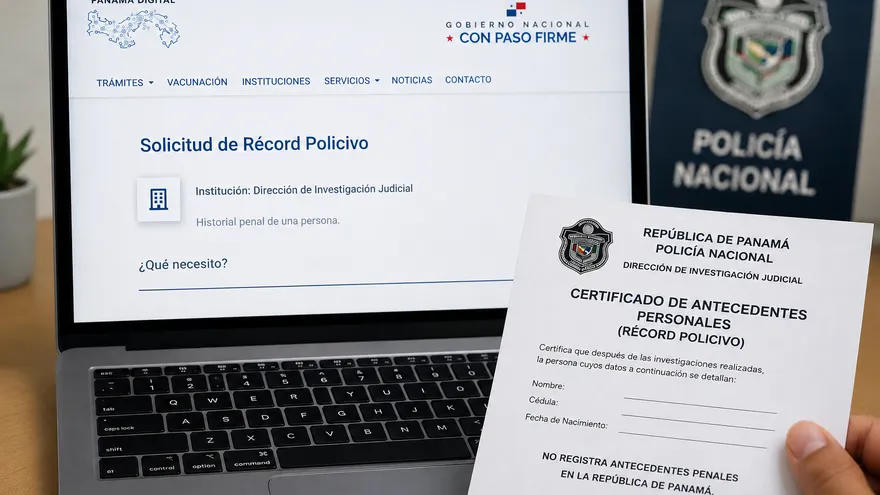
Panama Assembly debates bill to expunge criminal records, sparking criticism
Translated from Spanish and summarized by DistantNews. Read the original for the full story.
At a glance
News
Sources not specified
Ongoing story
- A proposed bill in Panama aims to allow for the administrative expungement of criminal records for individuals convicted of crimes punishable by up to three years in prison.
- Proponents argue the bill promotes human dignity and facilitates employment opportunities for ex-offenders.
- Critics question the bill's effectiveness for resocialization and raise concerns about inconsistencies regarding certain crimes, such as corruption and money laundering.
A legislative proposal in Panama's National Assembly is generating divided opinions as it seeks to regulate the administrative cancellation of police records for individuals who have served sentences of up to three years. The bill, recently approved by the Government Commission and championed by Deputy Isaac Mosquera, is presented as a measure to foster human dignity and help those who have made mistakes re-enter society by providing access to employment and personal development.
However, the initiative faces significant opposition. Deputy Alexandra Brenes voted against the bill's approval, arguing that it falls short of truly addressing the resocialization of former inmates. "Resocialization goes far beyond the forgetting of sentences or what a judge may impose. It primarily involves a comprehensive approach that includes work and real opportunities," Brenes stated, questioning the bill's sufficiency in achieving meaningful rehabilitation.
The bill outlines procedures for administrative cancellation of police records for convictions under three years. It specifies that this cancellation would not erase judicial warnings or historical records maintained by courts or the National Police for investigative purposes. This distinction aims to balance the opportunity for a fresh start with the need for continued law enforcement oversight.
Concerns have also been voiced by civil society groups. Leah de Boersner, a representative of Civil Society, pointed out inconsistencies within the bill, particularly concerning the exclusion of certain crimes. While the bill mentions excluding corruption offenses, its specific application and definitions have drawn criticism. De Boersner noted that while corruption is listed as excluded, other articles seem to imply its inclusion under certain conditions, creating ambiguity. The proposal also includes offenses related to public administration, some money laundering cases under $100,000, and fraud in public contracts.
Critics suggest that the bill requires substantial revision, with some advocating for a complete redraft due to the noted inconsistencies. This marks the second attempt by Deputy Isaac Mosquera to introduce similar legislation. The bill must now proceed through the legislative process, including three debates, before potentially becoming law.
Resocialization goes far beyond the forgetting of sentences or what a judge may impose. It primarily involves a comprehensive approach that includes work and real opportunities.
About this summary
Originally published by TVN Panamá in Spanish. Translated, summarized, and contextualized automatically by DistantNews, with a note on how the source frames the story. Not individually reviewed before publishing. How this works.
More Stories

From Our Blog

What Gets Lost (and Found) When News Is Translated

The Critical Role of Diaspora Media in Global News

What Travellers Should Know About Countries with Restricted Press

A Digital Nomad's Guide to Following Local News

How the Same Story Looks Different in Different Countries
